
The brass key sat in my palm like a piece of shrapnel. Small. Cold. Ordinary. Yet my father had sounded terrified of it. Across the parking lot, rain slid down the windows of the country club where my grandfather’s funeral reception continued without me. Through the glass, I could still see Richard Monroe standing near the hallway.
My father. Perfect suit. Perfect posture. One hand wrapped around a whiskey glass he had forgotten to drink. Thomas Whitmore stood beside me beneath the awning. Three security agents waited farther down the steps, deliberately giving us privacy. I looked at the key.
“Where does it go?” Whitmore glanced toward the building. “Not here.” “Then where?” “Your grandfather kept a private records box at a law firm in Arlington.” “A law firm?” “Yes.” “Why give me a key?” “Because the box was left to you.” My heart tightened. “To me?” Whitmore nodded. “Arthur insisted.”
I looked back at the country club.
“What’s in it?”
“I know some of it.”
“Not all.”
That answer did nothing to calm me.
Whitmore stepped closer.
“Colonel, before we go any further, you need to understand something.”
“What?”
“Whatever is in that box, you are not being asked to investigate your family.”
“I’m a physician.”
“Exactly.”
“You are not law enforcement.”
“You are not an auditor.”
“You are not responsible for proving anything.”
His voice softened.
“Your grandfather knew what kind of pressure they might put on you.”
I almost laughed.
“They already disowned me.”
“People can still pressure someone they claim not to need.”
That sounded like experience.
I stared at him.
Then asked the question that had been hurting since he mentioned Kandahar.
“How did Grandpa know?”
Whitmore’s expression changed.
“About you?”
“Yes.”
“He never called.”
“No.”
“He never wrote.”
“I know.”
“Then how did he know what happened?”
Whitmore exhaled slowly.
“Because my son told him.”
I froze.
“The adviser?”
Whitmore nodded.
“David.”
Three years disappeared.
Dust.
Blood.
Fluorescent lights.
A generator failing twice.
Two nurses working past exhaustion.
A young civilian adviser with metal fragments in his abdomen asking whether he was going to die.
David Whitmore.
I remembered his face.
Not his father.
His.
He had been number seven that night.
The seventh person wheeled into our surgical area after the attack.
“I didn’t know he was your son.”
“He asked us not to announce it.”
“Why?”
“He thought people would treat him differently.”
I almost smiled.
“That sounds inconveniently honorable.”
Whitmore did smile.
“His mother says he gets that from her.”
Then he became serious.
“When David returned, Arthur attended a dinner where several people from the deployment were present.”
“Someone mentioned the attack.”
“David asked who Arthur’s granddaughter was.”
My throat tightened.
Whitmore continued.
“When Arthur said your name, David went quiet.”
“Then he said, ‘Colonel Monroe kept me alive.’”
I looked away.
Rain had begun pooling along the curb.
Whitmore said:
“Arthur thought David meant you had been part of the medical team.”
“David corrected him.”
“He told your grandfather you ran the response.”
“He told him you stayed in surgery until people had to order you to sit down.”
“He told him you personally operated on him.”
“He told him eleven soldiers and two civilians left alive who might not have otherwise.”
My eyes burned.
“Thirteen.”
Whitmore nodded.
“Thirteen.”
I swallowed.
“What did Grandpa say?”
Whitmore looked toward the parking lot.
“For a long time?”
“Nothing.”
Then:
“He cried.”
That hurt.
I hated that it hurt.
I wanted anger.
Anger was easier.
Instead I saw General Arthur Monroe as I remembered him when I was nine.
Teaching me how to polish a brass buckle.
Telling me never to confuse a uniform with the person inside it.
Showing me how to fold a flag.
Then ten years of silence.
I whispered:
“He could have called.”
“Yes.”
“He knew my number.”
“Yes.”
“He knew where I was stationed.”
“Yes.”
Whitmore did not defend him.
Good.
That made it possible to keep listening.
“He told David he had made a mistake with you.”
“What mistake?”
Whitmore looked directly at me.
“He said he had allowed family pride to become a punishment.”
I said nothing.
“He said he thought if he stayed neutral, eventually you and Richard would reconcile.”
I laughed bitterly.
“Neutral.”
Whitmore nodded.
“He used the same word.”
“And?”
“Later he told me neutrality had been cowardice.”
That sounded like Grandpa.
Not because he had been cowardly.
Because he would have hated admitting it.
I closed my fist around the key.
“Take me to the box.”
The law office occupied the seventh floor of a brick building overlooking Arlington.
No dramatic vault.
No secret government bunker.
Just muted carpet, framed photographs, and a receptionist who looked as though dead generals arrived with brass keys every Tuesday.
An attorney named Margaret Keene met us in a conference room.
She was in her early sixties, silver-haired and unsmiling.
“Colonel Monroe.”
“Ms. Keene.”
“Your grandfather spoke highly of you.”
I had heard enough versions of that sentence for one afternoon.
I sat.
“He had a strange way of showing it.”
Margaret nodded once.
“He knew.”
That disarmed me.
She placed a long gray security box on the table.
My key opened it.
Inside were four things.
A thick black ledger.
A sealed envelope with my name.
A flash drive.
And Grandpa’s old leather field notebook.
I touched the notebook first.
The cover was cracked.
I remembered seeing it on his desk when I was a child.
Grandpa wrote everything down.
Appointments.
Names.
Questions.
Things people said when they thought he wasn’t listening.
Richard used to joke that Dad’s father trusted paper more than people.
Maybe he had reason.
Margaret said:
“Before you open anything, there is something you should know.”
I looked up.
“Your grandfather provided the original financial records to federal investigators before his death.”
I stared.
Whitmore said nothing.
Margaret continued.
“These are duplicate records he preserved for his estate.”
My breath left me.
“So Dad…”
“Cannot stop the investigation by persuading you to destroy this box.”
The key suddenly felt less dangerous.
“And Grandpa knew he might try.”
“Yes.”
I looked at Whitmore.
“That’s why you brought me here.”
“In part.”
I almost laughed.
My father had called me in terror because he believed I held the switch that could turn off the consequences.
Grandpa had made certain I didn’t.
Margaret pushed the sealed envelope toward me.
“This is personal.”
I opened it.
Three pages.
Grandpa’s handwriting.
The first line stopped me.
Evie, if you are reading this, I have already failed to say these things while looking at you.
I closed my eyes.
Then continued.
That failure belongs to me.
No excuse.
No illness.
No Richard.
No family pressure.
Him.
I kept reading.
When you chose Army medicine, your father called it rebellion. I told myself he would calm down. When he said you had embarrassed the family by choosing service over private practice, I should have stopped him. When he told you not to return until you “grew out of it,” I should have opened my own door to you.
My vision blurred.
Instead, I waited.
I told myself a grandfather should not interfere between father and daughter.
That was a lie I used because intervention would have cost me peace with my son.
I pressed my lips together.
Whitmore looked away.
Margaret gave me privacy without leaving.
Grandpa continued.
You paid the price for my peace.
I could not read for a moment.
Ten years.
Birthdays.
Promotions.
Deployments.
My wedding.
My divorce.
My mother’s death anniversary.
Silence.
I finally continued.
Then I learned what you did in Kandahar.
I learned from a man whose son came home because you did not quit.
I wish I could say that was the moment I became proud of you.
My breath caught.
It was not.
I had been proud from the beginning.
I covered my mouth.
I was simply too weak to let my son see me choose you.
I had to stop.
That sentence hurt worse than rejection.
Because it meant I had not imagined love where there had been none.
The love had existed.
It had simply failed to act.
And love that never acts can wound almost as deeply as hatred.
I read the next line.
A uniform does not make a person honorable.
Neither does wealth.
Neither does a family name.
I taught you that when you were a child and then behaved as though I had forgotten it myself.
My tears fell onto the paper.
I am sorry.
Not because you became successful.
Not because a Pentagon official knows your name.
Not because you earned rank.
I am sorry because you were my granddaughter before you proved anything.
I stopped reading.
There are apologies that arrive too late to repair the relationship.
And still arrive exactly on time to repair something inside the person receiving them.
I did not forgive Grandpa in that moment.
But for the first time in ten years, I stopped wondering whether I had been unlovable.
The black ledger contained no confession.
No page titled:
CRIMES COMMITTED BY RICHARD AND CALEB.
Reality is rarely considerate enough to label itself.
Instead, it contained columns.
Dates.
Contract names.
Invoice numbers.
Amounts.
Initials.
Questions in Grandpa’s handwriting.
What service was actually provided?
Why no deliverable?
Who owns CRG?
Richard says “relationship fee.” Legal?
Ask Helen about duplicate billing.
Caleb authorized without board review.
Then names of companies I did not recognize.
Cedar Ridge Global.
Falcon Bridge Advisory.
Northstar Risk Solutions.
Whitmore pointed to several entries.
“Those entities received consulting payments from firms that were also clients of Monroe Strategic Advisors.”
“How much?”
Margaret answered.
“Investigators are still sorting what was legitimate.”
“But the transactions your grandfather flagged relate to roughly twelve-point-four million dollars in contract and consulting activity.”
I stared.
“Twelve million?”
“Contract activity.”
She corrected me immediately.
“Not twelve million stolen.”
“How much is suspected to have been improperly paid?”
“Your grandfather’s records suggest approximately three-point-six million may have involved false or unsupported consulting work, undisclosed related-party payments, or duplicate charges.”
I looked at the ledger.
“And who owned the companies?”
Margaret opened a separate file.
“Cedar Ridge was controlled through an LLC associated with one of Caleb’s former college roommates.”
“Falcon Bridge received money that later moved to an entity managed by Richard.”
“Northstar had a consulting relationship with Diane’s brother.”
I looked up.
“My stepmother’s brother?”
“Yes.”
“Did she know?”
“Unknown.”
I hated that word.
Unknown was honest.
Unknown was also unbearable.
“What exactly was Grandpa’s company doing?”
Margaret answered.
“Monroe Strategic Advisors began as a legitimate consulting firm.”
“Your grandfather advised defense suppliers on logistics, organizational risk, and navigating government processes lawfully.”
“As he stepped back, Richard expanded the business-development side.”
“Caleb joined later.”
I knew that much.
Richard had always loved proximity to power.
Not public service.
Power.
The country club.
The lobbyists.
People who could answer calls from offices with flags behind the desk.
Margaret continued.
“Your grandfather began noticing invoices for work he did not recognize.”
“Some described strategic reviews.”
“Some market-access consulting.”
“Some technical-advisory work.”
“He asked for work product.”
“In several cases, very little existed.”
My stomach tightened.
“So they billed clients for work they didn’t do?”
“In some instances, that is one allegation.”
“And the government?”
Whitmore finally spoke.
“The key issue is whether those costs were passed into federally reimbursed contracts, whether representations were false, and whether undisclosed relationships influenced decisions.”
I looked at him.
“Influenced whose decisions?”
He held up a hand.
“That part is still under investigation.”
“Do not assume a public official took a bribe.”
“Do not assume anyone in this room knows the final legal characterization.”
I nodded.
That mattered.
A family scandal was not permission to invent crimes.
I asked:
“Did Grandpa know all of this?”
“He knew enough to report it.”
Margaret answered.
“He began cooperating six months ago.”
“Who else knew?”
“His personal attorney.”
“An outside forensic accountant.”
“Federal investigators.”
“And Whitmore?”
“Only some of the background.”
Whitmore said.
“I was not part of the investigative team.”
“Arthur asked me to ensure you received the personal materials if he died before reconciling with you.”
I stared.
“So why were you at the funeral?”
He gave me a tired smile.
“Because he was my friend.”
Of course.
For a few minutes, I had turned every person into evidence.
I hated what suspicion did.
The flash drive contained scans.
Emails.
Invoices.
Board minutes.
Spreadsheets.
Grandpa had highlighted one email from Caleb.
Sent eighteen months earlier.
To Richard.
Arthur won’t read the full deliverables. If we package Cedar as a specialist subcontractor, he’ll approve the consolidated report.
I felt sick.
Another message.
Richard to Caleb:
Keep the old man out of the weeds. He cares about reputation, not mechanics.
Then Caleb:
Reputation is the mechanics. That’s what clients are paying for.
I closed the laptop.
“That’s enough.”
No one argued.
I walked to the window.
Cars moved below us.
People going home.
People buying groceries.
People having ordinary Tuesdays.
My family had always taught me that the Monroe name meant something.
Discipline.
Service.
Patriotism.
Excellence.
The documents on the table suggested Richard and Caleb had found a simpler definition.
Access.
Grandpa’s reputation had become a product.
His name had opened doors.
His military history made people trust the firm.
And his own son had apparently learned to rent that trust.
I whispered:
“He spent forty years building that name.”
Margaret answered quietly.
“Yes.”
“And Dad monetized it.”
“In part.”
I laughed bitterly.
“He mocked me for changing bandages.”
Whitmore looked at me.
“People often mock the work they cannot imitate.”
I shook my head.
“No.”
“Don’t make me noble because they’re ugly.”
He studied me.
Fair.
Then I said:
“I became an Army doctor because I liked medicine.”
“Because I wanted the training.”
“Because I believed in serving.”
“And because my father told me I would never survive military life.”
I smiled faintly.
“So part of it was spite.”
Whitmore smiled.
“That sounds healthier.”
My phone rang.
Richard.
Again.
I watched his name.
Margaret asked:
“Do you want to answer?”
“Yes.”
I put it on speaker.
“Dad.”
His voice was tight.
“Where are you?”
“With Grandpa’s attorney.”
Silence.
Then:
“Evie, listen to me.”
“I’m listening.”
“There are documents in that box that your grandfather misunderstood.”
“You said that already.”
“He was old.”
I looked at Margaret.
Her face hardened.
“How old is old enough to stop understanding your own company?”
“That’s not what I mean.”
“He was under stress.”
“He had health issues.”
“What health issues affected his judgment?”
Silence.
I continued.
“Dad?”
“He was ninety-one.”
“That is an age.”
“Not a diagnosis.”
His breathing changed.
“Why are you talking like a lawyer?”
“Because Grandpa hired one.”
“Evie.”
His voice softened.
The voice he used when I was sixteen.
The reasonable father.
The one who turned my anger into childishness.
“I know you’re hurt.”
I almost laughed.
“Hurt?”
“About the past.”
“This is not about the past.”
“It is.”
“You’ve resented us for years.”
“No.”
“I grieved you for years.”
Different.
He ignored it.
“You come back in uniform.”
“Whitmore salutes you.”
“Everyone suddenly treats you like some hero.”
“And now you find a box that makes us look bad.”
I stared at the phone.
“Dad.”
“What?”
“The originals are already with federal investigators.”
Silence.
Not ordinary silence.
Impact.
I heard something clink.
Maybe his glass.
Maybe the world he thought I could still protect.
Finally:
“What?”
“Grandpa turned them over six months ago.”
Richard breathed once.
Then twice.
“Who told you that?”
“His attorney.”
“Put her on.”
Margaret shook her head.
I said:
“No.”
“Evie.”
“No.”
“You don’t understand the exposure here.”
That sentence almost made me laugh.
There it was.
Not:
You don’t understand the truth.
Not:
Your grandfather was wrong.
Exposure.
“What exposure?”
He caught himself.
“You know what I mean.”
“I don’t.”
“Some accounting issues.”
“Consulting arrangements.”
“Things that look worse on paper.”
“Did Caleb create false deliverables?”
Silence.
“Did you move consulting money through Falcon Bridge?”
“Who showed you that?”
Not denial.
Question.
I closed my eyes.
“That’s enough.”
“Evie, wait.”
“No.”
“Listen.”
“No.”
“I need you to understand—”
“Dad.”
I spoke quietly.
“I have spent ten years hearing that I embarrassed this family because I chose to serve in uniform.”
“You built your identity around being more important than people like me.”
“More connected.”
“More sophisticated.”
“More powerful.”
I looked at Grandpa’s ledger.
“And now you’re calling because you think I can protect you from paperwork.”
His voice broke.
“You’re my daughter.”
That hurt.
I answered:
“I was your daughter before the investigation.”
Then I hung up.
Caleb found me that night.
I was staying at a hotel near Arlington because the idea of sleeping in my childhood home had always been impossible.
He knocked at 11:17 p.m.
I opened the door but did not invite him in.
He looked terrible.
Tie gone.
Shirt collar open.
Eyes bloodshot.
“Can we talk?”
“Here.”
He glanced down the hall.
“Evie.”
“Here.”
He exhaled.
“Fine.”
For a moment we stared at each other.
My little brother.
Four years younger.
The boy who used to climb into my bed during thunderstorms.
The man who raised his whiskey while Dad mocked me.
Both.
He whispered:
“Grandpa gave you the files.”
“Yes.”
“How much did you see?”
“Enough.”
His face tightened.
“Then you know it isn’t what it looks like.”
I almost laughed.
“You and Dad are using the same script.”
“I’m serious.”
“So am I.”
He rubbed his face.
“Cedar Ridge did work.”
“What work?”
“Business development.”
“Technical support.”
“Market analysis.”
“Do you have deliverables?”
“Some.”
“Some?”
“Evie, consulting isn’t always a report.”
“Sometimes it’s relationships.”
I looked at him.
“Grandpa wrote that down too.”
He froze.
“He wrote ‘relationship fee.’”
Caleb closed his eyes.
“Jesus.”
“Was he wrong?”
“No.”
The answer surprised me.
Caleb leaned against the wall.
“He wasn’t wrong that the documentation was terrible.”
“Was he wrong about the related companies?”
Silence.
“No.”
“Was he wrong that you knew?”
Caleb looked at me.
“I didn’t think it was criminal.”
“Did you think it was honest?”
That landed.
He looked away.
I waited.
Finally:
“No.”
There.
A beginning.
He continued.
“Dad said this is how business works.”
“Did you believe him?”
“I wanted to.”
“Why?”
He laughed bitterly.
“Because it paid.”
Honest.
Ugly.
Useful.
I asked:
“How much did you make?”
“Personally?”
“Yes.”
He rubbed his forehead.
“Maybe six hundred over three years.”
“Six hundred thousand?”
“Yes.”
I felt sick.
“Through salary?”
“Some bonus.”
“Some distributions.”
“Some consulting payments.”
“From Cedar?”
He said nothing.
I had my answer.
“Did Grandpa confront you?”
“Yes.”
“When?”
“Seven months ago.”
“What did he say?”
Caleb’s mouth twisted.
“He asked whether I knew the difference between using a name and honoring it.”
That sounded exactly like Grandpa.
“What did you say?”
“I got angry.”
“Why?”
“Because I thought he was judging me from some moral mountain.”
I almost smiled.
“He liked mountains.”
Caleb laughed once.
Then his eyes filled.
“I told him the whole company existed because of his connections.”
“He said that didn’t mean we owned everyone’s trust.”
I looked away.
That sentence hurt.
Caleb continued.
“We fought.”
“He told me to leave.”
“I left.”
“Did you talk again?”
“No.”
My throat tightened.
Caleb whispered:
“I didn’t know he was sick enough to die.”
“He was ninety-one.”
“I know.”
“But he still seemed…”
“Permanent?”
Caleb nodded.
Yes.
Grandparents have a way of becoming architecture until suddenly they are gone.
He looked at me.
“Did he say anything about me?”
I could have hurt him.
For ten years, Caleb had chosen Dad.
Mocked me.
Ignored promotions.
Forgot birthdays.
Never defended me.
One sentence could have cut him open.
Instead I told the truth.
“Not in the letter I read.”
His face fell.
“I’m sorry.”
“For what?”
“That he didn’t leave you something there.”
Caleb laughed bitterly.
“Maybe I didn’t deserve it.”
“Maybe deserving is the wrong question.”
He stared at me.
Then:
“Are you going to testify?”
“If I’m asked about facts I know.”
“You don’t know anything.”
“Then apparently my testimony won’t be very exciting.”
He smiled despite himself.
Good.
Then his face collapsed.
“I’m scared.”
There.
My brother.
Not the executive.
Not the golden son.
Scared.
I said:
“I know.”
“Can you help me?”
“With what?”
He hesitated.
That answer mattered.
“Finding a lawyer.”
I exhaled.
“Yes.”
He looked shocked.
“Really?”
“Yes.”
“I’ll give you names.”
“I won’t pay.”
“I won’t lie.”
“I won’t call Whitmore.”
“I won’t intervene.”
“But I’ll give you names.”
His eyes filled.
“That’s more than I deserve.”
“Stop measuring everything that way.”
I closed the door gently.
Not slammed.
That mattered to me.
The funeral ended on Friday.
The investigation did not.
Within two weeks, federal subpoenas reached Monroe Strategic Advisors and several contractors.
The company announced an independent review.
Richard stepped down temporarily.
Caleb went on leave.
“Temporarily” lasted three months.
Then the board removed both of them.
The Monroe name stayed on the building for another year.
Then the company rebranded.
I saw the news on my phone between surgeries.
I felt nothing.
Then I felt everything.
Grandpa’s name was gone.
Perhaps that was right.
Names should not be preserved at the expense of truth.
My own career became complicated for a while.
Not because I had done anything wrong.
Because family financial investigations involving defense contractors create questions.
I reported the situation through my chain of command and ethics channels.
My security office reviewed whether I had undisclosed financial ties.
I didn’t.
Investigators asked whether I had ever advocated for Monroe Strategic Advisors.
I had not.
Whether I had accepted money.
No.
Whether I held ownership.
No.
Whether I had shared nonpublic information.
Never.
Still, for several weeks, I felt as though every hallway conversation changed when I entered.
That may have been paranoia.
Or reality.
Both feel identical from inside.
One evening, my commanding officer, Major General Elaine Sutton, called me into her office.
I stood.
“Colonel Monroe.”
“Ma’am.”
“Sit down.”
I did.
She closed a folder.
“You know why I called you.”
“My family.”
“Yes.”
My stomach tightened.
She studied me.
“Do you know what I care about?”
“No, ma’am.”
“Whether you disclosed what you were required to disclose.”
“I did.”
“Whether you cooperated.”
“I am.”
“Whether there is evidence you participated.”
“There isn’t.”
“Correct.”
I exhaled.
She leaned back.
“Then stop walking around the hospital like you’re awaiting execution.”
I almost smiled.
“Yes, ma’am.”
She continued.
“Your father’s decisions are not a secret evaluation of your character.”
That sentence hit harder than it should have.
She saw it.
Her voice softened.
“You’ve spent your entire adult life proving you’re not your family.”
“Maybe.”
“That’s exhausting.”
I looked down.
“Yes, ma’am.”
She nodded toward the door.
“Go be a doctor.”
Simple.
Useful.
Three months after Grandpa’s funeral, Margaret Keene called.
“The will is ready for formal reading and estate administration.”
I almost laughed.
“People still do readings?”
“Mostly in fiction.”
“Then why are you calling everyone together?”
“Because your grandfather specifically requested a family meeting.”
Of course he did.
Arthur Monroe would turn his will into a briefing.
We met in Margaret’s office.
Richard.
Diane.
Caleb.
Me.
Two independent trustees.
Margaret.
No Whitmore.
No bodyguards.
No politicians.
Just family.
Richard looked older.
The confidence had drained from him.
Diane sat beside him, back straight.
She had not contacted me since the funeral.
Caleb looked at me once.
Nodded.
I nodded back.
Margaret began.
Arthur’s personal property was straightforward.
Several military artifacts to museums and veterans’ organizations.
Books divided among grandchildren.
A modest amount to long-serving staff.
His home to be sold.
Proceeds into the estate.
Richard’s jaw tightened.
He had expected the house.
Then came Monroe Strategic Advisors.
Grandpa still owned a significant minority interest through a holding trust.
Richard visibly leaned forward.
Margaret read:
“The decedent directs that no beneficiary who served as an officer, director, employee, contractor, or compensated adviser of Monroe Strategic Advisors during the period under federal investigation shall receive control of, voting authority over, or direct distribution from those interests until all pending legal and compliance matters are resolved.”
Richard stood.
“This is absurd.”
Margaret looked up.
“Sit down.”
He stared.
She did not blink.
He sat.
Margaret continued.
Grandpa’s company interest would remain under independent fiduciary management.
Any proceeds surviving legal liabilities, taxes, and legitimate obligations would ultimately fund two trusts.
One for military medical education and trauma-care scholarships.
Another for families of wounded service members.
My throat tightened.
Richard laughed bitterly.
“Of course.”
I looked at him.
“What?”
“He gives it to the Army.”
Margaret answered before I could.
“He gives it to charitable trusts.”
Richard looked at me.
“This is you.”
I almost laughed.
“I didn’t know.”
“You think I’m stupid?”
“No.”
I stared.
“I think you’re frightened and looking for someone alive to blame.”
That shut him up.
Margaret continued.
Caleb received a personal trust funded only from nonbusiness assets.
Not enormous.
Not nothing.
Subject to claims from creditors if legally required.
Richard received the same.
Diane received a separate bequest Grandpa had made years earlier.
Then Margaret looked at me.
“Evelyn Monroe receives…”
Richard’s face hardened.
I hated that I noticed.
“…General Monroe’s personal medical field chest, service journals, silver lighter, and all correspondence designated for her.”
That was it.
No millions.
No company.
No control.
I felt relief so intense I almost laughed.
Margaret continued.
“And a cash bequest of fifty thousand dollars.”
Richard blinked.
Caleb looked at me.
I smiled.
Not because fifty thousand meant nothing.
Because Grandpa had understood.
If he had left me the company, everyone would have said I benefited from the investigation.
If he had left me millions, Richard would have rewritten the story as inheritance warfare.
Instead he left me his journals.
His field chest.
His lighter.
And enough money to be personal, not dynastic.
The gift was not power.
It was memory.
I cried.
Richard stared.
“You’re crying over a box?”
I looked at him.
“Yes.”
He shook his head.
“You never understood this family.”
“No.”
I smiled through tears.
“I think I finally do.”
Diane followed me into the hallway after the meeting.
“Evie.”
I stopped.
She had never called me that.
Always Evelyn.
Formal.
Cold.
“What?”
She clasped her handbag.
“I owe you an apology.”
I waited.
Good.
She continued.
“I knew your father exaggerated the story about why you left.”
“What story?”
“That you rejected the family.”
I laughed.
“He told people I rejected you?”
“Yes.”
“He said you became radical about the Army.”
I nearly laughed again.
“What does that even mean?”
“I don’t know.”
“He said you told him civilian medicine was corrupt.”
“I never said that.”
“I know that now.”
I stared.
“How?”
“Arthur showed me one of your old emails.”
My heart tightened.
“What email?”
“One you sent your father before you left.”
I remembered.
Twenty-eight years old.
Accepted into an Army residency pathway.
Dad furious.
I wrote:
I’m not rejecting medicine. I’m choosing where I want to practice it. I love you. I hope you can love me without choosing my career.
Diane looked ashamed.
“I read that six months ago.”
“Grandpa had it?”
“Your father forwarded it to him years ago.”
Of course.
“And?”
“I realized Richard had lied.”
I looked toward the conference room.
“You stayed.”
“Yes.”
“Why?”
She looked down.
“Because by then leaving would have required admitting what I had tolerated.”
That was not enough.
But it was honest.
“Did you know about the consulting payments?”
Her face changed.
“Not the false work.”
“My brother received fees.”
“Did you know?”
“Yes.”
“How much?”
“I thought about forty thousand.”
“It was more.”
She nodded.
“I know now.”
“Did you ask questions?”
“No.”
“Why?”
“Because Richard said Arthur approved it.”
I almost laughed.
Everyone had used Grandpa as an invisible permission slip.
Diane continued.
“I am cooperating.”
“Good.”
She looked at me.
“I’m not asking you to forgive me.”
“Good.”
Then she walked away.
For once, I respected her more for not begging.
The federal case took almost two years.
That surprised everyone except the lawyers.
People wanted raids.
Handcuffs.
Breaking news.
Instead there were months of documents.
Emails.
Accounting.
Interviews.
Contract files.
Expert analysis.
Disputes over which consulting work had value.
Which invoices were false.
Which disclosures were inadequate.
Which payments were personal.
Which were business.
Some allegations disappeared.
Others became stronger.
No one proved some enormous conspiracy controlling the Pentagon.
No senator was secretly bought.
No generals went to prison.
The truth was less cinematic.
And ugly enough.
Richard had authorized related-party consulting arrangements without proper disclosure.
He had approved invoices for work that investigators concluded was unsupported or materially overstated.
He had allowed costs associated with those arrangements to flow into pricing and billing connected to government-funded work.
He had also caused false certifications to be made regarding certain conflicts and subcontractor relationships.
Caleb had helped create some of the supporting materials.
He had approved invoices.
He had received indirect financial benefits.
The three-point-six-million-dollar figure shrank after legitimate work and expenses were separated.
The government’s final disputed-loss calculation was lower.
Still substantial.
The twelve-point-four million referred to the larger volume of affected business.
Important distinction.
I learned to stop repeating numbers without context.
Numbers can be dramatic and still misleading.
Richard was indicted.
So was Caleb.
Several business associates faced charges or civil actions.
Diane was not charged.
Her brother entered a civil settlement relating to payments his firm had received.
The company paid penalties and restitution under a negotiated resolution.
It survived.
Barely.
Then changed its name.
Richard’s photograph disappeared from the lobby.
Grandpa’s too.
Maybe that was merciful.
The night the indictment became public, my father called.
I answered.
“Hi.”
He was silent.
Then:
“I’m going to prison.”
I sat on the edge of my bed.
“You don’t know that yet.”
“Yes, I do.”
“Dad.”
“My lawyer says there may be a plea.”
“That is different.”
“You sound like a doctor.”
“What does that mean?”
“Precise even when nobody wants precision.”
I smiled despite myself.
“Occupational hazard.”
He exhaled.
Then:
“Can I ask you something?”
“Yes.”
“Did you ever hate me?”
I closed my eyes.
“Yes.”
His breath caught.
“When?”
“The first Christmas.”
“What first Christmas?”
“After you disowned me.”
Silence.
“I was stationed in Germany.”
“I worked a shift.”
“Everyone else had packages.”
“I had one from a college roommate.”
“I called home.”
“You had changed the number.”
Richard whispered:
“I didn’t know you called.”
“I know.”
“How?”
“Because Grandpa later told me Mom still had the old voicemail.”
My mother had died seven years ago.
Before reconciliation.
Another unfinished relationship.
I continued.
“I hated you for about six months.”
“Then?”
“Then it was too exhausting.”
He laughed once.
“So you stopped?”
“No.”
“I changed it.”
“Into what?”
“Distance.”
Silence.
Then my father said:
“I thought you were trying to embarrass me.”
“How?”
“Joining the Army.”
I laughed.
“Dad.”
“I know.”
“No.”
“You need to say it.”
He was quiet.
Then:
“You had spent your whole life doing what I expected.”
“College.”
“Medical school.”
“Everything.”
“When you chose military medicine, I experienced your choice as rejection.”
“Instead of independence.”
“Yes.”
“Why?”
His voice broke.
“Because my father was the general.”
There it was.
The shadow.
Arthur Monroe.
The man everyone saluted.
Richard grew up being introduced as General Monroe’s son.
Never just Richard.
He had spent his entire life trying to become powerful without wearing a uniform.
Contracts.
Boards.
Donors.
Officials.
Money.
Then I chose the exact institution he had spent his life escaping.
I whispered:
“You thought I chose Grandpa over you.”
“Yes.”
That was the family secret hiding in plain sight.
Not fraud.
Jealousy.
A son who spent sixty years trying not to be his father.
A daughter who accidentally reopened the wound by choosing service.
Richard cried.
“I was proud of you.”
My chest tightened.
“No.”
“I was.”
“Then why mock me?”
“Because if I respected what you did…”
He stopped.
“What?”
“I had to respect him too.”
I looked toward the dark window.
There it was.
The same failure in another generation.
Love trapped behind resentment.
He continued.
“And then your rank went up.”
“People knew your name.”
“You did deployments.”
“I heard things through others.”
“Every accomplishment felt like evidence that you didn’t need me.”
I laughed bitterly.
“I was never asking to need you.”
“I was asking you to be my father.”
He cried harder.
“I know.”
I believed he did.
Too late.
Still real.
Richard ultimately pleaded guilty to felony fraud-related offenses involving false statements and improperly supported consulting charges.
The final plea did not include every accusation in the indictment.
That mattered.
He accepted responsibility for specific conduct.
Not every rumor.
He received a sentence of thirty-four months in federal custody, followed by supervised release and financial penalties.
Caleb entered a separate plea.
His role was smaller.
Still knowing.
He received twelve months and one day, followed by supervised release, plus restitution obligations tied to his conduct.
People called me asking whether the sentences were enough.
I stopped answering.
Punishment was not my specialty.
Trauma surgery was.
I had spent enough of my life being asked to explain systems I did not control.
I visited Caleb first.
Months into his sentence.
He looked thinner.
No expensive watch.
No tailored suit.
Just my brother.
We sat.
He smiled weakly.
“So.”
“So.”
“You outrank the room.”
I laughed.
“Not how prison works.”
“It should.”
I shook my head.
Then he became serious.
“Thanks for the lawyer names.”
“You chose your own.”
“One was on your list.”
“Then you owe me five percent.”
He laughed.
Good.
Then:
“I’m sorry.”
I waited.
“For the funeral?”
“For ten years.”
That hit.
He continued.
“I was twenty-four when Dad cut you off.”
“You were old enough.”
“I know.”
“I told myself it wasn’t my fight.”
I almost smiled.
The family motto.
Not my fight.
Neutral.
Peace.
Silence.
All different costumes for fear.
Caleb continued.
“Then I started benefiting.”
“Mom and Dad focused on me.”
“Grandpa gave me more responsibility.”
“The company.”
“The clients.”
“I liked being the good child.”
“You were the good child.”
“No.”
He shook his head.
“I was the available child.”
That was different.
He looked at me.
“I mocked your uniform because Dad did.”
“I know.”
“I knew you were a colonel.”
I froze.
“What?”
He laughed sadly.
“You thought I didn’t?”
“At the funeral you acted like—”
“I knew.”
“How?”
“I looked you up years ago.”
My chest tightened.
“Why?”
“Because you were my sister.”
I stared.
“I followed your promotions.”
“Your hospital commands.”
“When you published.”
“I knew about Kandahar before Dad did.”
My mouth fell open.
“You knew?”
“Yes.”
“And said nothing?”
His eyes filled.
“I was ashamed.”
“Of me?”
“Of myself.”
He looked down.
“The longer I waited, the harder it became to call.”
“So at the funeral…”
“I panicked.”
“Dad joked.”
“I joined him.”
“Because that’s what I knew how to do.”
I sat back.
That hurt differently.
Not ignorance.
Cowardice.
Caleb whispered:
“I’m sorry.”
I nodded.
Not forgiveness.
Acknowledgment.
Then:
“Do you remember when you were eight and afraid of thunder?”
He looked up.
“Yes.”
“You used to sleep on my floor because you thought Dad would laugh if you went to him.”
He smiled through tears.
“You remember that?”
“Yes.”
“You were annoying.”
He laughed.
I continued.
“You were my brother before you became Dad’s favorite.”
His face broke.
“So what are we now?”
I looked at him.
“I don’t know.”
He nodded.
“Can we find out?”
“Yes.”
That was enough.
I waited another four months before visiting Richard.
Partly anger.
Partly fear.
Mostly because I wanted to go for myself, not because guilt scheduled it.
When I finally sat across from him, he looked older than Grandpa had at seventy.
He smiled.
“Colonel.”
I rolled my eyes.
“Don’t.”
“Sorry.”
We sat.
Then he said:
“Do you still have the lighter?”
“Yes.”
“Dad never let anyone touch that thing.”
“I know.”
“He used to flick it when he was thinking.”
“I remember.”
Silence.
Then:
“Did he leave a letter about me?”
The question was small.
I hated it.
I could lie.
Say no.
Say private.
Instead:
“Yes.”
Richard’s face changed.
“What did he say?”
“That’s between you and him.”
“He’s dead.”
“Yes.”
“I’m asking you.”
I thought.
Grandpa’s journals included pages about Richard.
Angry pages.
Sad pages.
One line returned to me.
I taught Richard to fear being ordinary, then blamed him for worshiping importance.
I looked at my father.
“He blamed himself for some of who you became.”
Richard stared.
“For what?”
“For making achievement feel like oxygen.”
My father looked away.
I continued.
“He was angry about what you did.”
“But he did not write as though you were born bad.”
Richard cried.
That mattered to him more than I expected.
He whispered:
“I hated being his son.”
“I know.”
“No.”
“You don’t.”
He looked at me.
“Every room.”
“Every school.”
“Every coach.”
“Every boss.”
“Arthur Monroe.”
“Your father is General Monroe?”
“Your father did this.”
“Your father knows that.”
“Your father could help.”
“I built the company because I wanted one room where people stood when I walked in.”
I thought of the funeral.
Whitmore walking past him.
Saluting me.
Suddenly I understood why that moment had hit Richard like a physical blow.
The room he thought belonged to him had turned toward someone else.
His daughter.
In uniform.
Arthur’s granddaughter.
History repeating the one thing he had tried to escape.
I said:
“That doesn’t excuse anything.”
“I know.”
“Good.”
He looked at me.
“Did you enjoy it?”
“What?”
“The funeral.”
“When Whitmore saluted you.”
I thought.
“For about two seconds.”
Richard almost smiled.
“Then?”
“Then Grandpa was still dead.”
He nodded.
Power is very small next to grief.
I continued visiting.
Not often.
Three times in total.
Enough.
When Richard was released, he did not return to consulting.
Couldn’t, realistically.
Not the way he had before.
He moved into a smaller house.
Diane remained with him for another year.
Then they separated.
Not because of the sentence alone.
Because once the social architecture around their marriage disappeared, neither knew what remained.
They eventually divorced quietly.
Diane moved to North Carolina.
We exchanged Christmas cards.
Life is strange.
Caleb rebuilt differently.
After release, he worked for a manufacturing company in operations.
Not business development.
Not government contracting.
No lobbyists.
No country club.
He hated it initially.
Then discovered he was good at solving ordinary problems.
Inventory.
Schedules.
Suppliers.
People.
He called me one evening.
“I fixed a loading problem.”
“Congratulations.”
“No.”
“You don’t understand.”
“We were losing six hours a week because nobody wanted to tell the plant manager his layout was stupid.”
I laughed.
“So?”
“I told him.”
“What happened?”
“He changed it.”
“Revolutionary.”
Caleb laughed.
Then became quiet.
“I spent years in rooms where everyone’s job was to make powerful people feel correct.”
“That sounds exhausting.”
“It was.”
“Now?”
“Now a forklift either fits or it doesn’t.”
I smiled.
“Welcome to reality.”
Grandpa’s medical scholarship trust began three years after his death.
Not huge at first.
Legal liabilities reduced the value of his business interest.
Some people seemed disappointed.
As if charitable meaning required a dramatic number.
The trust funded fellowships in trauma care, military-civilian medical research partnerships, and support for physicians transitioning from service.
I served no controlling role.
By design.
I agreed to sit on an advisory committee only after ethics review and only in a limited capacity.
At the first award ceremony, Whitmore attended.
So did David.
I had not seen him since Kandahar.
He walked with a slight limp.
Older.
Alive.
That was enough.
He hugged me.
“You look less terrifying without blood on you.”
I laughed.
“You look less perforated.”
His wife stared at us.
“Doctors are strange.”
“Yes,” we said together.
Whitmore approached.
“Arthur would have liked this.”
I looked around.
Young physicians.
Nurses.
Researchers.
Families.
No chandeliers.
No defense contractors.
No networking disguised as grief.
“Maybe.”
Whitmore studied me.
“You still angry with him?”
“Yes.”
“Good.”
I looked at him.
He smiled.
“Forgiveness without memory is just poor recordkeeping.”
I laughed.
“Grandpa say that?”
“No.”
“I did.”
“Much worse.”
He put a hand over his heart.
“Cruel.”
Five years after the funeral, I was promoted.
Not because of my family.
Not because of Whitmore.
Not because of Kandahar alone.
Years of work.
Commands.
Boards.
Patients.
Administration.
Mentoring.
The ceremony was small.
Caleb came.
Richard asked if he could.
I hesitated.
Then said yes.
He sat in the second row.
No special seat.
No introductions.
No powerful friends.
Just my father.
When the new insignia was pinned, I saw him crying.
Afterward, he approached.
“Congratulations.”
“Thank you.”
He looked at the uniform.
Then:
“I used to think this meant you chose a life smaller than ours.”
I almost smiled.
“And now?”
He looked around at soldiers waiting to congratulate me.
Doctors.
Nurses.
Patients’ families.
People who knew me without knowing Monroe Strategic Advisors had ever existed.
“I think I had the measuring stick backward.”
That was enough.
Then he said:
“I’m proud of you.”
The sentence arrived twenty years late.
Still, some part of me had been waiting.
I hated that.
I also accepted it.
“Thank you.”
Not:
I forgive you.
Not:
It’s okay.
Thank you.
Grandpa’s field chest stayed in my home office.
Inside were medical supplies from another era.
Bandage scissors.
Old tourniquet straps.
Field dressings sealed decades ago.
A cracked stethoscope.
Grandpa had not been a physician.
But early in his career, he carried basic field medical equipment because officers were trained to understand what their soldiers needed.
Taped inside the lid was another note.
I found it years after the funeral.
Maybe I had missed it.
Maybe I was finally ready to see it.
One sentence.
Rank tells people where you stand. Service tells them why.
I sat on the floor for a long time.
Then laughed.
“Still dramatic, Grandpa.”
He would have liked that.
The silver lighter became my favorite object.
Not because it was valuable.
Because of one dent near the hinge.
When I was twelve, I had dropped it on his driveway.
He had been furious.
I cried.
Then he made me polish it.
“Things get damaged,” he told me.
“That does not mean we throw them away.”
For years, I remembered that as a lesson about objects.
Later I realized it was incomplete.
Some damaged things can be repaired.
Some cannot.
Some should not be returned to their original use.
The lighter still worked.
My relationship with Richard became something else.
Not what it had been.
Not what I once wanted.
But real.
That counted.
One Thanksgiving, nearly seven years after Grandpa’s funeral, Richard came to my house.
Caleb was already there.
So was his wife.
My niece.
A few Army friends.
No contractors.
No political donors.
No senators.
Richard stood in my kitchen watching me carve turkey.
“You’re doing that wrong.”
I looked up.
“Excuse me?”
He froze.
Then we both started laughing.
Old Richard would have corrected.
New Richard heard himself.
He raised both hands.
“Never mind.”
Caleb shouted from the dining room:
“Personal growth!”
Richard yelled:
“Shut up.”
For one second, we were a family.
Not healed.
Not erased.
Just alive in the same room without performing.
That was more than I expected.
Later that night, Caleb and I sat on the porch.
He asked:
“Do you ever think about what would’ve happened if Grandpa hadn’t found the invoices?”
“Yes.”
“Would Dad still be running the firm?”
“Probably.”
“Would I?”
“Maybe.”
Caleb looked into the dark.
“I might have become worse.”
I considered that.
“Maybe.”
“You’re supposed to say no.”
“I’m a physician.”
“Evidence-based.”
He laughed.
Then:
“Do you think Grandpa saved us?”
I shook my head.
“No.”
“He exposed you.”
“That is not the same thing.”
Caleb nodded.
“What saved us?”
I thought.
“Consequences.”
He groaned.
“That sounds terrible.”
“It usually does.”
Then I added:
“And what you did afterward.”
He looked at me.
“That sounds better.”
“It should.”
Accountability is not the consequence alone.
It is what you build once excuses stop working.
Years passed.
Whitmore retired.
David sent Christmas cards.
Margaret Keene retired to Maine.
The federal case became old news.
Monroe Strategic Advisors became MSA Integrated Advisory, then eventually merged into a larger firm.
Grandpa’s name disappeared entirely from corporate documents.
But his scholarship trust continued.
Interesting.
The company name died.
The useful thing remained.
There was a lesson in that.
Legacy is not necessarily the thing that keeps your name attached.
Sometimes it is what still helps people after your name is gone.
Richard grew ill in his seventies.
Heart failure.
Nothing dramatic.
Nothing connected to prison.
Just age and biology.
I did not become his doctor.
Important.
I helped him understand questions.
I attended appointments when he asked.
But I did not manage his care.
One afternoon, he sat in a hospital bed and watched me read a cardiology note.
He smiled.
“What?”
I asked.
“Still changing bandages?”
I stared.
Then laughed.
He did too.
The joke had finally become ours instead of his weapon.
I said:
“Sometimes.”
He nodded.
“Good.”
Then he became serious.
“I was wrong.”
“About what?”
“Doctors.”
“The Army.”
“You.”
“That narrows it.”
He smiled.
Then:
“I thought people who controlled budgets had power.”
“I thought people who knew officials had power.”
“I thought money was power.”
He looked toward the IV pole.
“Then you get sick.”
I said nothing.
“And suddenly power is the nurse who notices your pressure is wrong.”
“The tech who gets you to imaging.”
“The doctor who stays.”
He looked at me.
“I wish I had understood service before I mocked it.”
My eyes filled.
“Grandpa tried to teach you.”
“I was too busy trying not to be him.”
We sat quietly.
Then Richard whispered:
“Did you ever wish I went to prison longer?”
I looked at him.
“No.”
“Shorter?”
“No.”
He frowned.
“What does that mean?”
“It means I stopped trying to make your sentence carry my feelings.”
He stared.
Then smiled faintly.
“That sounds expensive.”
“Therapy.”
“Of course.”
Richard died two years later.
Not in prison.
Not disgraced and alone.
Also not restored to his old status.
Reality refused both clean endings.
Caleb was there.
I was there.
Diane came the day before.
Richard died holding my hand.
I did not suddenly forget what he had done.
I also did not use his last breath to punish him.
He whispered:
“Evie.”
“Yes.”
“I’m sorry I made you leave.”
I looked at him.
“You didn’t make me leave.”
He frowned.
“I did.”
“No.”
“You closed the door.”
“I chose what I did next.”
His eyes filled.
“That matters to me.”
He squeezed my hand weakly.
“You always were stubborn.”
I smiled.
“Army training.”
He almost laughed.
Then:
“I love you.”
This time, the love acted.
Too late for childhood.
In time for goodbye.
“I love you too.”
He died that night.
At his funeral, no Pentagon official walked across the room.
No security agents.
No senators standing straighter.
No dramatic salute.
Just family.
A few old colleagues.
People from his later life.
Caleb gave the eulogy.
He did not lie.
He said:
“My father was ambitious.”
“He was charming.”
“He could be generous.”
“He could also confuse importance with worth.”
I watched people shift.
Good.
Caleb continued.
“He made serious mistakes.”
“He paid for some of them.”
“He spent the final years of his life learning that apology is not a press release.”
I almost laughed.
Then:
“He loved us badly for a long time.”
“He learned to love us better.”
That was fair.
At the cemetery, I stood between Caleb and Diane.
No uniform.
Just a black coat.
Afterward Caleb asked:
“Do you think Grandpa would’ve come?”
I looked toward the sky.
“Only if he could criticize the catering.”
Caleb laughed.
That ended the conversation exactly where it needed to.
I retired from the Army years later.
Not at a glamorous age.
Not after some final battlefield miracle.
After enough.
Enough deployments.
Enough command meetings.
Enough nights under fluorescent hospital light.
Enough forms.
More forms than war.
At my retirement ceremony, Whitmore was too old to travel.
David came instead.
Caleb sat in front.
My niece brought her children.
One little boy asked why everyone kept calling me Colonel if I was a doctor.
I crouched.
“Because the Army likes confusing children.”
His mother apologized.
I laughed.
“No.”
“It’s a fair question.”
Then he asked:
“Did you fix soldiers?”
My throat tightened.
“Sometimes.”
“Like bandages?”
I smiled.
“Yes.”
“Sometimes bandages.”
Across the room, Caleb heard.
His face changed.
He remembered.
So did I.
Still changing bandages?
The insult that opened Grandpa’s funeral.
Decades later, I finally understood why it had hurt.
Not because bandages were beneath me.
Because Richard thought they were.
Bandages stop bleeding.
Small things do not become unimportant simply because powerful people fail to notice them.
After the ceremony, David handed me a package.
“From my dad.”
Whitmore had sent a letter.
Inside was a photograph.
Grandpa.
Whitmore.
David.
Taken after the dinner where David told Grandpa about Kandahar.
Grandpa’s eyes were red.
On the back, Whitmore had written:
He asked me that night whether it was too late to become your grandfather again.
I stopped breathing.
Below:
I told him I didn’t know.
I still think that was the right answer.
I laughed through tears.
Of course.
No false comfort.
No:
It is never too late.
Sometimes it is.
Sometimes people die before repair.
Sometimes apologies arrive only on paper.
Sometimes the person you needed finally understands when there is not enough time left to prove it.
That does not make understanding worthless.
It simply makes delay expensive.
I drove to Grandpa’s grave alone the next morning.
The silver lighter was in my pocket.
I sat on the damp grass.
“Hi.”
Ridiculous.
I continued anyway.
“I retired.”
Wind moved through the trees.
“I suppose you know.”
No answer.
“Richard is dead.”
“You probably know that too.”
Still nothing.
I took out the lighter.
Flicked it.
Flame.
Closed it.
Flicked it again.
“You caused a lot of trouble with this thing.”
The stone remained unimpressed.
I smiled.
Then became serious.
“You were wrong.”
My voice shook.
“Silence wasn’t neutral.”
“You knew that at the end.”
“But I needed you to know it sooner.”
Tears came.
“And I was angry at you for being proud of me after Kandahar.”
“Because I didn’t want to have to save thirteen people to earn my grandfather.”
I pressed the lighter into my palm.
“You said you were proud before.”
“I believe you now.”
That mattered.
I placed my hand against the stone.
“I forgive you.”
The words surprised me.
Not because I had planned not to.
Because forgiveness arrived without drama.
No choir.
No warmth from the sky.
Just a sentence.
Then I added:
“I’m still mad.”
That felt more honest.
I laughed.
“I assume you understand.”
I did not leave the lighter.
People always leave symbolic objects at graves in stories.
I kept mine.
The dead do not need heirlooms.
The living do.
Years later, I gave Grandpa’s field chest to my niece.
Caleb’s daughter.
She had become a physician.
Not military.
Pediatrics.
When she graduated, Caleb cried so hard he embarrassed everyone.
Good.
She opened the chest.
“What am I supposed to do with this?”
“Keep it.”
“It’s old.”
“Yes.”
“None of this is usable.”
“Correct.”
She stared.
“Then why?”
I pointed to the note inside the lid.
Rank tells people where you stand. Service tells them why.
She read it.
Then looked at me.
“That’s dramatic.”
“Family trait.”
She smiled.
“Was Great-Grandpa really that intense?”
“Yes.”
“Was Grandpa Richard?”
“Different kind.”
“Dad says the family was a disaster.”
“Your father is unusually accurate.”
She laughed.
Then:
“Do you wish I joined the Army?”
“No.”
“Really?”
“Yes.”
“Why?”
“Because your career is not a vote about mine.”
She became quiet.
That sentence ended something.
Not in her.
In me.
The old family habit.
Children as extensions.
Choices as loyalty.
Careers as obedience.
Gone.
At least there.
Caleb heard about that conversation and called me.
“You told her you don’t care if she joins?”
“I care.”
“I just don’t need her to.”
He was silent.
Then:
“Dad would’ve hated that.”
“Yes.”
“Grandpa too?”
I thought.
“Early Grandpa?”
“Maybe.”
“Late Grandpa?”
“No.”
Caleb nodded through the phone.
“Good.”
Then:
“I’m proud of her.”
“I know.”
“I’m proud of you too.”
I smiled.
“Careful.”
“I have a reputation.”
“Former felon?”
“Operations manager.”
“Much worse.”
He laughed.
We had become siblings.
Late.
Still counted.
People told my story incorrectly for years.
At military events, someone would whisper:
“Isn’t she the colonel whose family was caught in that contractor scandal?”
At medical conferences:
“Wasn’t her grandfather some famous general?”
At family weddings:
“Didn’t a Pentagon official salute her and expose everything?”
No.
The salute exposed nothing.
It only embarrassed my father.
The documents exposed the financial problems.
Grandpa exposed himself by choosing truth over his own company’s reputation.
Investigators did their work.
Lawyers did theirs.
Caleb made choices.
Richard made choices.
I made mine.
Stories become cleaner when repeated.
Lives do not.
And Kandahar?
People turned that into legend too.
Nineteen hours.
Thirteen survivors.
Colonel Monroe saving everyone.
That is not how medicine works.
I was not alone.
Surgeons.
Anesthetists.
Nurses.
Medics.
Technicians.
Blood-bank staff.
People moving oxygen.
People cleaning floors.
Someone found a replacement part when a monitor failed.
Someone held a phone to a soldier’s ear while he spoke to his wife.
I led.
Yes.
I operated.
Yes.
I made decisions.
But no one person saved thirteen lives.
That myth would have made Richard proud.
One important person.
One heroic name.
Reality was better.
A team.
That became the deepest difference between the world my father admired and the world I chose.
His world asked:
Who gets credit?
Mine asked:
Who needs help?
I thought about that often when remembering the funeral.
Richard in his suit.
Caleb with his whiskey.
Me in uniform.
Whitmore crossing the room.
My father’s smirk disappearing when he heard:
Colonel Monroe.
For years, I enjoyed that memory.
A little.
I am human.
But the older I got, the less important the salute became.
The thing I remember most now is what happened before it.
My father looked at my medical insignia and said:
Still changing bandages?
At the time, he thought he was reducing me.
Now I hear the sentence differently.
Yes.
I changed bandages.
I changed dressings over wounds that smelled of infection.
I held pressure on arteries.
I checked drains.
I watched young soldiers wake from anesthesia and realize they were alive.
I told parents their child survived.
I told spouses when they did not.
I trained residents who later saved people I would never meet.
I sat beside men who were not generals.
Not senators.
Not executives.
Not anyone the country club would notice.
And I tried to leave them with less pain than they had when they reached me.
Still changing bandages?
Yes.
For as long as people bled.
That was enough.
More than enough.
Grandpa had spent the end of his life trying to repair a name.
I spent mine learning a name is not the thing worth protecting.
A name can open a door.
Close one.
Get printed on a building.
Removed from it.
Spoken with respect.
Spoken with disgust.
None of that tells you who you are when nobody is watching.
Grandpa learned late.
Richard learned later.
Caleb nearly learned too late.
I was lucky enough to learn while I still had time to live differently.
The last page of Grandpa’s field notebook contained no financial figures.
No company names.
No investigation notes.
Just a list.
Things I should have said sooner.
Underneath:
Richard — I love you without your success.
My heart broke.
Next:
Caleb — being useful to powerful men is not the same as becoming one.
Then:
Evie — come home.
Nothing after it.
No date.
No explanation.
Just:
Come home.
For years, that sentence would have destroyed me.
By the time I read it, home meant something different.
Not the Monroe house.
Not the country club.
Not Grandpa’s approval.
Not Richard’s acceptance.
Home was the life I had built after they closed their door.
The people who knew me without needing me to perform.
The soldiers who called me Doc.
The residents who argued with me.
The nurses who told me when I was wrong.
The brother who finally learned to tell the truth.
The father who apologized too late but not never.
The dead grandfather whose silence wounded me and whose final honesty helped me name the wound.
Home was not the place that finally invited me back.
Home was the place I stopped waiting to be invited into.
So when people ask me what happened at my grandfather’s funeral, I tell them this:
A senior Pentagon official saluted me.
My father was embarrassed.
My grandfather left a key.
The key opened a box.
The box contained evidence.
The evidence helped confirm an investigation already underway.
My family’s company lost its name.
My father went to prison.
My brother did too.
People apologized.
Some relationships survived.
Some did not.
And none of that was the most important thing.
The most important thing was a letter from a ninety-one-year-old man admitting that silence had not been peace.
That he had loved me.
That he had failed me.
And that I had been his granddaughter before I ever became a colonel.
I carried that sentence longer than I carried the brass key.
Because rank eventually comes off.
Uniforms go into garment bags.
Medals gather dust.
Power changes hands.
Buildings change names.
Even family reputations disappear.
But if you are fortunate, somewhere beneath all of that, you learn the difference between being admired and being loved.
Grandpa learned too late to tell me in person.
Dad learned barely in time.
Caleb and I learned together.
And I learned something else.
The day my father mocked me for “changing bandages,” he thought he was reminding me how small my work was.
Instead, he reminded me why I chose it.
Because service was never small.
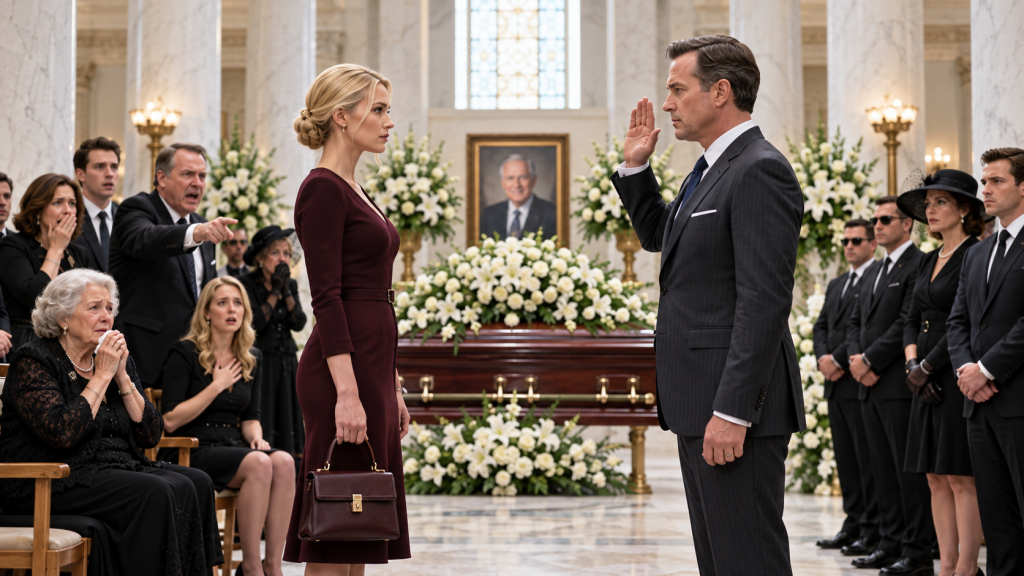
Only the people measuring it that way were.