
Fabrice Luchini: The Man Who Made the French Language Come Alive
Before you even see him, you recognize his voice. His distinctive diction lies somewhere between the breath of a poet and the rhythmic force of a stage actor. His unique cadence transforms every sentence into a little piece of music, a manifesto. Fabrice Luchini is not merely an actor; he is an institution, a cinematic oddity, and a passionate guardian of a particular vision of the French language.
From his hesitant beginnings to his status as a living legend, Fabrice Luchini’s story is that of a man who transformed his neuroses, his love of books, and his openly embraced eccentricity into an extraordinary art form. Let us explore the fascinating stories that shaped the legend of this man of a thousand faces.
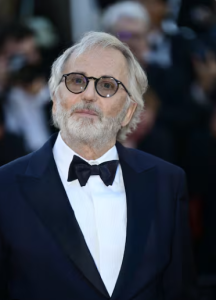
The Beginning: From Hairdresser to Actor
The story begins long before the red carpets. Robert Luchini, born in 1951 into a family of Italian immigrants, was initially a young man searching for his identity. Working as a hairdresser, he encountered fate in a nightclub and found himself in front of Éric Rohmer’s camera. This marked the beginning of a long love affair with independent cinema.
But Luchini’s true story—the one that would define his soul—was written on the stage.
Rather than following conventional paths, he decided to make the greatest works of French literature his own. He does not simply perform them; he devours them, chews them over, and delivers them with tremendous energy. His solo performances based on Molière, Céline’s Journey to the End of the Night, and Proust’s explorations of memory became legendary.
This is where the public persona of Fabrice Luchini emerged: a colorful man of letters with abrupt gestures, capable of moving from uncontrollable laughter to profound melancholy in a fraction of a second. He created an entire genre of his own: literary and philosophical stand-up.
The Tender-Hearted Bourgeois: The Women on the 6th Floor
If audiences admire his intellect, it is his humanity that moves them to tears. One of the films closest to the public’s heart is The Women on the 6th Floor (2010).
Luchini plays Jean-Louis Joubert, a Parisian stockbroker from the bourgeois class who lives in an apartment on Rue de Vaugirard.
The film tells a story of personal liberation. When Joubert discovers the Spanish maids living on the building’s service floor, his narrow-minded world gradually opens up. He begins to embrace their joy, warmth, and freedom.
Luchini is excellent in his initial stiffness and his gradual rediscovery of tenderness. This hugely successful film tells the story of a man who learns how to breathe again, proving that beneath bourgeois arrogance there can be a soul searching for light.
In a similar vein, but with a sharper comic edge, comes François Ozon’s Potiche (2010). Luchini plays Robert Pujol, a cynical and outdated factory boss who is outmaneuvered by his wife, played by Catherine Deneuve, and his union rival, played by Gérard Depardieu.
Luchini is magnificent as an old-fashioned macho man who is nevertheless strangely touching, delivering a master class in French social comedy.
The Misanthrope and the Master of the Game
Is there a boundary between Fabrice Luchini and the characters he plays? Sometimes, he seems to be performing a caricature of himself—and that is when he is at his most brilliant.
Consider Cycling with Molière (2013). Luchini plays Philippe Le Tallec, a once-famous actor who has abandoned everything to live in seclusion on the Île de Ré, avoiding the world and other people.
When a former colleague, played by Lambert Wilson, begs him to return to the stage, the film explores ego, friendship, and the refusal to compromise.
The story is deeply self-referential. Luchini, who is known for avoiding social events in real life, plays a man who also shuns the spotlight. The film’s brilliance lies in this fascinating, distorted mirror.
Then there is the chilling and brilliant In the House (2012), also directed by François Ozon.
Luchini plays Germain, a fascinating and manipulative literature teacher who takes a gifted student under his wing. Through stories within stories, fiction gradually consumes reality, and Luchini embodies the extraordinary power of words.
He is no longer simply an actor. He becomes a director of the human soul, a teacher whose intentions remain uncertain. Is he a benevolent mentor or an intellectual predator?
The Literary Detective: The Mystery of Henri Pick
It is impossible to tell Luchini’s story without mentioning The Mystery of Henri Pick (2019), a role that seems tailor-made for him.
Adapted from David Foenkinos’s novel, the film features Jean-Michel Rouche, a literary investigator who investigates an unusual mystery. Could a famous novel really have been written by a deceased Breton pizza maker who had supposedly never read a book in his life?
In this role as a kind of “Maigret of literature,” Luchini is at his peak. He combines his natural erudition, impeccable comic timing, and a poetic appreciation of everyday life.
The film is a heartfelt tribute to literature, small publishers, and books forgotten in drawers. Luchini is not merely playing a detective; he is expressing his own unconditional love for the printed word.
The Final Word: An Immortal Legacy
What should we take away from these stories?
Fabrice Luchini has traveled through French cinema without ever denying who he is. He has refused to become a conventional character actor in the American style. Instead, he has made his face, his voice, his expressive hands, and his unconditional love for the language of Molière, Céline, and La Fontaine his trademarks.
His most famous stories are not merely those told through his films. They tell of a man who accomplished the remarkable feat of making high literature accessible to ordinary people and making bourgeois comedy deeply human.
Today, when language can become weakened by the speed of digital screens, Fabrice Luchini remains a remarkable standard of excellence. He proves that a story told with passion, flair, and a touch of madness can still conquer the world.
But understanding Luchini requires more than listing successful films. It means examining the workings of a singular genius who transformed his own contradictions into the driving force behind his art.
Here is the next part of this portrait, exploring how the son of immigrants became one of the great champions of the French language.
The Rohmer School and the Birth of the Magnificent Talker
Before becoming the star we know, Luchini was raw material that Éric Rohmer patiently shaped.
During the 1980s, Rohmer’s cinema revolved around long conversations, walks in nature, and philosophical and moral debates that seemed to continue endlessly. He needed an actor who could carry this language without overwhelming it. Luchini became that actor.
In Four Adventures of Reinette and Mirabelle (1987), he plays an art-gallery owner. The final scene is a masterpiece of social tension and comedy.
When the young Mirabelle tries to sell him a painting created by her friend Reinette, Luchini deploys false politeness, bourgeois manners, and intellectual condescension. He is not playing a villain so much as a man who uses language as a shield.
Then comes The Tree, the Mayor and the Mediatheque (1993). Rohmer pushes verbal excess to the extreme. Luchini plays a village mayor who is talkative, egocentric, and convinced that he possesses the truth about ecology and urban planning.
The dialogue overlaps, the characters interrupt one another, and the result is magnificent verbal chaos.
Here, Luchini finds his true voice: that of a man who believes he is always right, speaks rapidly, becomes passionately animated, and whose quick intelligence sometimes conceals profound loneliness.
Through Rohmer’s cinema, Luchini learns to make speech itself a dramatic action.
The Dramatic Transformation and the Triumph of La Discrète
If Rohmer taught Luchini how to speak, Jean-Pierre Mocky and, above all, Christian Vincent taught him how to remain silent—or at least how to let silence speak.
In 1990, Christian Vincent gave him the role of Gilles in La Discrète. It was a decisive turning point.
Luchini plays a failed writer, an awkward and insecure man who falls in love with a married woman. Far removed from his arrogant bourgeois characters, he reveals extraordinary vulnerability.
In one memorable restaurant scene, he attempts to seduce the heroine while stammering, nearly knocking over his glass, and desperately searching for the right words.
The scene remains unforgettable. It proves that Luchini is not merely a character actor or a comedian who excels at dialogue. He is an actor capable of fully inhabiting a role and conveying raw, almost painful emotion through the slightest movement of an eyebrow.
He explores this vulnerability even further in Rien sur Robert (1998), directed by Pascal Thomas-Duthuron.
He plays Didier Temple, an obsessive and neurotic screenwriter who almost religiously worships a fictional actor named Robert. Luchini is hilarious, but the laughter is uncomfortable because it exposes a deep neurosis.
The film explores idolatry, artistic failure, and jealousy, and Luchini delivers a performance as precisely calibrated as a Swiss watch.
The Solitary Theatre: When the Stage Becomes a Philosophical Boxing Ring
To understand Luchini, one must understand what happens when he stands alone onstage, facing a dark auditorium with nothing but a book in his hands.
His solo performances are not simple readings. They are acts of emotional release.
Consider Le Seul véritable amour (2008), based on the writings of Marcel Proust.
Luchini does not merely read In Search of Lost Time. He wrestles with the text. He sweats, stands up, sits down, and looks directly into the audience’s eyes, as if asking everyone to witness the beauty of a sentence.
He transforms Proust’s complex, labyrinthine prose into a musical composition. He helps audiences understand that literature is not a dead object sitting on a library shelf. It is living, pulsating material that must be brought to life from the page.
Then there is L’Émigré de Brisbane (2013), based on the work of Louis-Ferdinand Céline.
Here, the tone changes. Céline’s language is violent, full of slang, and despairing. Luchini discovers a restrained fury within it. His gestures become more abrupt, and his voice seems to break.
He demonstrates that French is not merely the language of bourgeois drawing rooms, which he often portrays in cinema. It is also the language of instinct, mud, and rebellion.
These performances helped establish his legend. They show that he is one of the last great interpreters of French literature, a man who carries the weight of words on his shoulders and offers them to ordinary people as precious treasures.
Ozon’s Muse and the Mirror of the Bourgeois Soul
François Ozon is the filmmaker who best understood how to use Luchini’s dual nature: his cool intelligence and his remarkable ability to mock himself.
After Potiche and In the House, Ozon gave him a striking role in The New Girlfriend (2014).
Luchini plays René, the husband of his wife’s deceased best friend. He discovers that the deceased woman’s husband, played by Romain Duris, has a secret: he enjoys dressing in women’s clothing.
Luchini is deeply moving in the role. He passes through disgust, confusion, anger, acceptance, and unexpected tenderness.
His performance is beautifully restrained. He never overacts. Instead, he allows the silences of his character to create discomfort and emotion.
The result proves that, under the direction of a great filmmaker, Luchini can disappear behind a character and become a pure instrument of cinema.
The Shadows of Melancholy: When Laughter Hides Tears
Fabrice Luchini’s story would be incomplete without examining his darker side.
Behind the laughter and brilliant remarks on television lies a man who has admitted to suffering from depression.
In Costa-Gavras’s Le Capital (2012), he plays a powerful bank executive who is cold, calculating, and willing to do anything to save his company, including carrying out mass layoffs.
Luchini is terrifyingly cynical. Yet what makes the character fascinating is his gaze. Sometimes, in the middle of a ruthless negotiation, his eyes darken. Fatigue and self-disgust seem to emerge.
He plays a monster who knows he is monstrous.
More recently, in Tristan Séguet’s Un homme heureux (2023), he plays an aging man who takes stock of his life while confronting illness and mortality.
Luchini brings a deeply affecting honesty to the role, drawing on his own fears and melancholy.
In interviews about the film, he reportedly stated with disarming frankness: “Suffering serves me.”
He explains that sadness and doubt provide fuel for his comedy. Without that underlying melancholy, his laughter would be nothing more than noise.
His awareness of human tragedy gives his comic performances their rare depth.
The Man in Public: Interviews, Arguments, and Love for His Mother
Luchini’s story also involves his unique relationship with the media and the public.
In an age when actors are expected to reveal everything about their private lives—from breakfast habits to romantic breakups—Luchini responds with a wall of elegance and irony.
He dislikes trivial questions. If a journalist asks what he ate the previous day, he might respond with exaggerated arrogance or nearly walk away.
But if the conversation turns to Victor Hugo’s syntax, Molière’s theatrical staging, or Pascal’s philosophy, he becomes endlessly talkative, passionate, and almost mystical.
He has established his own rules for media appearances. People do not come to hear him talk about himself; they come to listen to him discuss what he loves.
And what he loves above all is his mother.
Emilia, his Italian-born mother, is the woman of his life. He speaks of her with infinite tenderness and a devotion that borders on the sacred.
This deeply close relationship, which he kept private for many years before discussing it discreetly, is a cornerstone of his psychology. She passed on to him his love of language, his respect for hard work, and the high standards that define him.
His rejection of marriage and traditional social conventions may perhaps be connected to his profound devotion to his mother and to art.
The Last Bulwark: A Defender of the French Language
What remains after examining all the films, performances, and interviews?
The image of a man who has transformed his life into a complete work of art.
Fabrice Luchini is not merely an actor. He is a resister.
In a world that prizes speed, constant switching, and extreme simplification, he guards the temple of complexity. He reminds us that the French language is an instrument of precision, a powerful tool of persuasion, and a refuge from stupidity.
His most famous stories are not merely the stories of his films. They tell of a boy from the Paris suburbs who, armed with nothing but his voice and love of books, managed to take his place among the giants of literature.
They tell of a man who accepted being misunderstood and being called eccentric or snobbish, provided that he could make the human soul resonate during a film or an evening onstage.
Fabrice Luchini is one of French cinema’s most wonderful paradoxes: a man who speaks constantly yet reveals more about us through his silences and glances than many others could with a thousand words.
As long as there are darkened cinemas, wooden stages, and pages to turn, his legend will continue to grow.
But the story does not end there. To grasp the full scale of the Luchini phenomenon, we must explore his other worlds, examine the armor he has forged over decades, and understand how he became one of the most quotable figures in contemporary French popular culture.
The Dandy’s Armor: The Suit as a Second Skin
There is a silhouette that has become part of France’s visual heritage: a slightly stooped man with feverish eyes, hands drawing shapes in the air, dressed in a suit that is a little too large, a white shirt, and an almost invariably crooked bow tie.
Fabrice Luchini has invented his own public persona: a suburban dandy, an intellectual entertainer.
His bow tie is not simply a fashion accessory. It is armor, a symbol of a man who rejects the conventional Hollywood image of the handsome leading man.
He accepts his unruly hair, pale complexion, and drawn features. He has transformed his physical insecurities into extraordinary elegance, in the manner of Jacques Tati or Sacha Guitry.
When he walks onstage or enters a film frame, we no longer see only an actor. We see his entire body serving thought.
His hands, often mocked or imitated, are like the batons of his inner orchestra. They punctuate, hesitate, and explode. They are the visible extension of a mind in constant motion.
The Genius Chameleon: From Molière to the Contemporary World
If Luchini is often thought to be confined to sharp-tongued bourgeois characters or cynical professors, this overlooks the fact that he is a chameleon who continues to take extraordinary risks, even late in his career.
Consider Molière (2007), directed by Laurent Tirard.
Playing Molière is almost sacrilegious for a French actor because it invites comparison with the greatest figures in theatre.
Yet Luchini accepts the challenge. He does not portray the marble statue of Molière found in schoolbooks. Instead, he plays a man of the earth: a traveling performer who coughs, sweats, suffers from back pain, outwits bailiffs, and loves women with tragic intensity.
His vulnerability is deeply moving. He presents genius not as a divine gift, but as an incurable illness—an obsession that consumes a person from within.
In Yvan Attal’s Le Brio (2017), Luchini confronts modernity and youth.
He plays Pierre Mazard, a cynical, racist, sexist, and politically incorrect law professor who faces a student from an immigrant background, played by Camélia Jordana.
The film is a brilliant comedy, and Luchini is fascinating because his performance walks a razor-thin line. His character’s words make him detestable, yet his methods make him compelling.
He represents the uncompromising demands of republican civic ideals: the belief that language and rhetoric can serve as weapons for overcoming social disadvantage.
It is a masterful balancing act between provocation and humanism.
And what about his surprising collaboration with provocative filmmaker Bruno Dumont in L’Empire (2024)?
At over 70 years old, Luchini agrees to plunge into absurdity, strangeness, and science-fiction parody. He proves that he is not a monument frozen in marble, but an actor still willing to take risks and break his own image to serve a filmmaker’s vision.
The Master of Words: When an Interview Becomes a Performance
Luchini’s story also involves his conquest of television studios.
During the 2000s and 2010s, when talk shows needed excitement, Luchini would arrive—and take control.
He transformed the promotional interview format. Instead of answering questions directly, he turns them around, ignores them, or overwhelms them with his erudition.
He has become a master of the sharp one-liner. His appearances on On n’est pas couché and La Grande Librairie have become events in themselves.
Journalists both fear and admire him. He can transform the promotion of a minor film into a master class on the human condition, the foolishness of our age, or the beauty of a line by Racine.
For younger generations, he has become a living meme, a voice to sample, and almost a social-media personality before social media existed.
He has made culture and sophistication seem cool—or at least deeply desirable—to young people searching for points of reference.
Epilogue: The Last of the Mohicans of French Eloquence
One day, inevitably, the spotlights will go out. Cinemas will empty, theatre stages will be packed away, and Fabrice Luchini’s voice—the voice that has rumbled, whispered, and roared—will enter the silence of history.
What will remain of Robert Luchini, the boy from Aubervilliers with Italian roots?
The echo of an era when people took time to weigh their words will remain. So will dozens of films capturing the spirit of their times, the French bourgeoisie, its neuroses, and its laughter.
Above all, the indelible mark of a man who refused to take the easy path will remain.
Fabrice Luchini is the last of the Mohicans of French eloquence. In a world that has replaced rhetoric with hashtags, nuance with confrontation, and literature with endless scrolling, he has stood firm like a rock.
With delightful arrogance and infinite tenderness, he has reminded us that the French language is not merely a communication tool.
It is a territory. It is a battle. It is a refuge.
He has been our teacher, our tormentor, our sad clown, and our guide. He has taken the dust of libraries and transformed it into sparks on our faces in the darkness of cinemas.
When we think back on him, we will not need to close our eyes to see him. We will only need to listen—to that unique music, that abrupt rhythm, and that extraordinary ability to suspend the world before biting into it with gusto.
Fabrice Luchini will not merely have entered the legend of cinema. He will have entered the grammar of France.
As long as someone, somewhere in the world, opens a book, searches for the right word, and tries to speak it with passion, Fabrice Luchini will still be there, standing with his bow tie crooked, whispering to us.
The Ultimate Bow: Silence and Echo
Imagine, for a moment, an empty auditorium.
The spectators have left. The red velvet seats are silent. The work light—a small, bare, ghostly bulb left burning onstage so the theatre is never plunged into complete darkness—has just been switched on.
A stagehand’s broom sweeps away the final traces of footsteps from the stage.
It is there, in the sacred silence that follows the storm of applause, that Fabrice Luchini’s true destiny unfolds.
An actor’s body is temporary by definition. It is made of flesh, fatigue, wrinkles, and passing time. But the spoken word is immortal.
Luchini has always understood this. He has never fought merely for his own glory; he has fought for the survival of words.
He has become the unknown soldier of French literature, carrying the souls of vanished writers to audiences of today.
When the time comes for him to leave the stage, he will not leave emptiness behind.
He will leave an echo.
An echo that will ring out whenever a teacher in a provincial high school reads The Imaginary Invalid to students and unknowingly hears the exact intonation Luchini gave the text.
An echo that will vibrate in the mind of a solitary walker in a forest, who suddenly finds themselves murmuring Baudelaire’s alexandrines or Céline’s cutting phrases in the distinctive musical rhythm and clipped cadence that Luchini made his own.
An echo that will survive on film reels and digital servers, preserving forever the intensity of a gaze, the tremor of a lip, and the elegance of a hand searching the air for truth.
He will join the great pantheon of unforgettable faces in French cinema. He will sit at the table with Jean Gabin, Michel Simon, Louis de Funès, and Jean Rochefort.
But unlike the others, he will not take a seat at the bar. He will pull up a chair in a corner beneath a streetlamp, open a book with yellowed pages, and begin reading aloud to the ghosts.
And the ghosts, hanging on his every word, will forget that they are dead.
Fabrice Luchini will not merely have marked his era. He will have inhabited the French language. He will have restored its taste, its scent, its danger, and its splendor.
He will have taught us that speaking well is not a sign of bourgeois status, but an act of resistance; that literature is not a school punishment, but the greatest of human adventures; and that a person can be a clown, a recluse, a snob, a genius, and a wonderstruck child all at once, within a single speech.
So when the curtain falls for the final time, let us not mourn the actor. Let us listen to the silence.
For in that silence, if we listen closely, we will still hear him. He will be there, hiding in the smallest comma and every ellipsis, ready to leap out and surprise us, make us laugh, or break our hearts.
He played at acting. But above all, he played France.
And with him, France has never been so mad, so demanding, or so profoundly alive.
THE END