
The sound of the front door unlocking made my entire body go cold. I was standing in the hallway outside my five-year-old son’s bedroom, holding a photograph of a woman my husband had told me was dead. Daniel was supposed to be away on a business trip. His sister Rachel was supposedly buried somewhere in Pennsylvania. And beneath Noah’s mattress, I’d just discovered dozens of kitchen forks arranged around an envelope containing secrets my husband had been keeping for years.
Then came the soft click of the front door closing. “Hello?” a woman’s voice called from downstairs. I froze. Noah appeared behind me, clutching his stuffed dinosaur. “Mommy?” I put a finger gently against my lips. He immediately fell silent. The footsteps downstairs moved toward the kitchen. Then the woman called again. “Daniel? Are you here?” My heart pounded. She sounded nervous.
Not threatening. But I didn’t know who she was or why she had entered my house. I took Noah’s hand and led him back into his bedroom. “Stay here for a minute, sweetheart.” His eyes widened. “Is Daddy home?” “I don’t know who’s downstairs yet.” He tightened his grip on my fingers. “Don’t go.” I knelt beside him. “I’m going to make sure everything is okay. You stay right here, and I’ll come back.” I closed his door gently and called out from the top of the stairs.
“Who is that?”
The footsteps stopped.
A woman appeared at the bottom of the staircase.
She was in her early forties, with dark hair falling around her shoulders.
Her eyes were red.
She held a small handbag against her chest.
And although I’d never met her before, I recognized her immediately.
She was the woman in the photograph.
Rachel.
Daniel’s supposedly dead sister.
She looked up at me.
“You’re Emily.”
It wasn’t a question.
I gripped the banister.
“How did you get into my house?”
Her expression changed.
“Daniel gave me a key.”
I stared at her.
“When?”
She swallowed.
“Three weeks ago.”
Something inside me tightened.
My husband had given a key to a woman I’d never met.
A woman he’d told me died as a teenager.
And now she’d entered our house while he was away.
“Why are you here?” I asked.
Rachel looked toward the hallway.
“Because Daniel called me.”
My stomach dropped.
“He just called you?”
She nodded.
“He said you found the envelope.”
I looked down at the photographs in my hand.
“Then he can come home and explain it himself.”
Rachel’s eyes filled.
“He should have explained everything years ago.”
She looked at me for a long moment.
Then whispered, “Emily, before you decide what to believe, there’s something you need to understand.”
I waited.
Rachel took a trembling breath.
“Our mother didn’t simply disappear.”
The house seemed to grow silent around us.
Rachel continued.
“Daniel helped her leave.”
Then she said the words that changed everything.
“And he knew she was coming back for me.”
My name is Emily Harper.
I’m thirty-seven years old, and until that evening, I believed I knew nearly everything important about my husband.
Daniel and I had been married for eleven years.
We met at a bookstore café where he worked part-time while finishing his degree.
He was kind.
Patient.
Quietly funny.
He remembered small things about people.
The way I liked cinnamon in my coffee.
The names of my coworkers.
The exact date we first went hiking together.
When Noah was born, Daniel cried harder than I did.
He held our son against his chest and whispered that he would never let anything happen to him.
I’d always considered him a devoted father.
And in many ways, he was.
He made pancakes on Sunday mornings.
Read Noah stories before bed.
Taught him to ride a bicycle with training wheels.
And kissed his forehead every morning before leaving for work.
But there were parts of Daniel’s life he never discussed.
His childhood.
His parents.
And especially his sister.
When we first started dating, he told me Rachel had died when they were teenagers.
He said it was painful to talk about.
I respected that.
Later, when we married, he explained that his parents were no longer part of his life.
I didn’t press him for details.
I thought I was being a loving wife by allowing him privacy around painful memories.
Now I was beginning to understand that the silence had concealed something far larger than grief.
Rachel remained at the bottom of the staircase.
I looked toward Noah’s bedroom.
Then back at her.
“Before we discuss anything, I need you to understand something.”
She nodded.
“You entered my house without asking. I have a small child upstairs. That’s not acceptable.”
Her face crumpled.
“You’re right. I’m sorry.”
She reached into her handbag and removed a key.
“I shouldn’t have used it.”
She placed it on the small table beside the front door.
“I can leave.”
I looked at her.
There was desperation in her expression.
But also something painfully familiar.
The same dark eyes Daniel had.
The same slight crease between her eyebrows when she worried.
I took a breath.
“Noah doesn’t need to hear this conversation. If we speak, it will be quietly, and you’re going to tell me the truth.”
Rachel nodded.
“Okay.”
I checked on Noah first.
He was sitting on his bed holding his dinosaur.
“Who was downstairs?” he whispered.
“A woman who knows Daddy.”
His eyes widened.
“Is she the secret?”
I felt my heart break.
I sat beside him.
“Sweetheart, you haven’t done anything wrong.”
He stared at me.
“Are you mad at Daddy?”
I struggled to answer.
“I’m upset about some choices Daddy made. But that’s something the grown-ups need to work out.”
His lower lip trembled.
“Is it because of the forks?”
I shook my head.
“No, Noah. You are not in trouble for the forks.”
I gently brushed his hair away from his forehead.
“And you never have to hide things because you’re afraid Mommy or Daddy will be sad.”
He nodded uncertainly.
I kissed his cheek.
Then I asked him to stay upstairs with his storybook while I spoke to Rachel.
I left his door open enough that he could call me.
And I went downstairs to hear the truth.
Rachel sat at our kitchen table.
The photographs were spread between us.
There was one of Daniel standing outside a hospital.
Another showed Rachel beside a woman whose face was partly turned away.
A third was a picture of an old brick house with a white porch.
On its back, someone had written an address in Pennsylvania.
Rachel touched the hospital photograph.
“This was taken last month.”
I stared at her.
“Why was Daniel at a hospital?”
“Our mother was there.”
I felt my stomach tighten.
“Is she sick?”
Rachel nodded.
“She’s been receiving treatment for a serious heart condition. She’s stable now, but she needs continued care.”
I sat down.
“Daniel told me his mother disappeared when he was young.”
Rachel lowered her eyes.
“She did.”
“Then why is she suddenly contacting him?”
Rachel took a breath.
“Because I found her.”
I stared.
“After all these years?”
She nodded.
“And because when I found her, I learned Daniel had known where she was for much longer than I had.”
The room seemed to tilt.
“How long?”
Rachel looked at me.
“Nearly twenty-five years.”
I couldn’t speak.
Then I whispered, “Start at the beginning.”
Rachel folded her hands.
“Our father’s name was Richard.”
I knew that much.
Daniel had mentioned him only a few times.
Always with a tight expression.
“He worked in commercial construction,” Rachel continued. “He made good money when projects were going well, but when things fell apart, he became angry.”
She stopped.
Then said quietly, “He hurt our mother.”
I felt my stomach tighten.
Rachel looked toward the window.
“Not every day. Sometimes months would pass and we’d convince ourselves things were getting better. Then something would happen. A bill. A phone call. A mistake at dinner.”
Her eyes filled.
“And we’d hear the shouting.”
I thought of Noah upstairs.
Rachel continued.
“Daniel was sixteen when it got really bad. I was eleven.”
She swallowed.
“One night, Dad came home furious because he’d lost a contract. Mom tried to calm him down. He shoved her, and she struck her head against the kitchen counter.”
I covered my mouth.
“Daniel called for help. Dad told him not to.”
Her voice trembled.
“But Daniel did anyway.”
I stared at her.
Rachel wiped her cheeks.
“Mom was taken to the hospital. A social worker spoke with her. And for the first time, she admitted she was afraid to go home.”
I waited.
“She decided to leave.”
I looked at the photographs.
“And Daniel helped her?”
Rachel nodded.
“He helped gather some clothes and important documents.”
“Where were you?”
Her expression changed.
“At our aunt’s house.”
I leaned forward.
“Did you know your mother was leaving?”
“No.”
Rachel’s voice broke.
“That’s the part I could never forgive.”
Rachel told me their mother, Evelyn, had initially planned to take both children.
But the situation became complicated.
Their father had learned she was considering leaving.
He threatened to accuse her of taking the children unlawfully.
And because Rachel was temporarily staying with a relative who believed Richard’s version of events, Evelyn couldn’t simply collect her without a confrontation.
Rachel’s eyes filled.
“Mom went into a shelter and started getting legal help. Daniel knew where she was staying for a while.”
I nodded slowly.
“He was sixteen.”
“Yes.”
“Still a child.”
Rachel looked at me.
“I know that now.”
She wiped her cheeks.
“But I didn’t know it when I was eleven and nobody came to get me.”
I felt tears gathering.
Rachel continued.
“Richard told me Mom had abandoned us. He said she didn’t want the responsibility of raising children anymore.”
I closed my eyes.
“I believed him.”
Her voice trembled.
“Then he told me Daniel had chosen Mom over us.”
I looked up.
“What happened to Daniel?”
“He left the house after another argument. He stayed with a friend’s family and eventually moved away.”
I stared.
“Did you see him?”
“Not for years.”
Rachel shook her head.
“Richard said Daniel was selfish and didn’t want anything to do with me.”
She looked down at the photograph.
“And I spent most of my childhood believing my mother and brother had both abandoned me.”
I sat quietly for a long time.
Then asked the question I couldn’t stop thinking about.
“Why did Daniel tell me you were dead?”
Rachel closed her eyes.
“Because by the time he met you, he’d convinced himself there was no way to explain what happened.”
I shook my head.
“That doesn’t make sense.”
“No,” she whispered. “It doesn’t.”
She took a breath.
“Daniel and I reconnected about six years ago.”
I stared at her.
“Six years?”
She nodded.
“After you and Daniel were already married.”
My chest tightened.
“And he never told me?”
“No.”
I thought about every holiday.
Every birthday.
Every conversation about our families.
All those years, he’d had a living sister.
A sister he’d been communicating with.
And he’d allowed me to believe she was dead.
I felt anger rise.
“Why?”
Rachel looked at me.
“Because he told you the lie before we found each other again. Once we reconnected, he was ashamed to admit he’d invented a death.”
I stared at her.
“He could have told me.”
“I know.”
“He could have said he’d lied because his childhood was painful.”
“I know.”
“He could have told me you were alive.”
Rachel began crying.
“Emily, I asked him to tell you. More than once.”
I sat back.
The silence between us was heavy.
Then I looked at the photographs again.
“And what happened when you found your mother?”
Rachel’s expression changed.
“That’s when we discovered the letters.”
There were thirty-seven letters.
Rachel said the number so quietly that I almost missed it.
“Thirty-seven?”
She nodded.
“Mom wrote to me for years.”
My heart tightened.
“Where are they?”
“Most of the originals are still in a box at her apartment. I have copies.”
Rachel opened her handbag.
She removed a thick envelope and placed it on the table.
Inside were photocopies of handwritten pages.
Some were dated nearly twenty-five years earlier.
Others were from later years.
The handwriting changed slightly over time.
But the message repeated.
Rachel, sweetheart, I love you.
I’m trying to find a safe way for us to be together.
Please don’t believe anyone who tells you I stopped loving you.
I stared at the letters.
Then I looked at Rachel.
“You never received them?”
She shook her head.
“Not one.”
I felt tears filling my eyes.
“What happened?”
Rachel swallowed.
“Richard intercepted some. Others were returned because he moved us without telling her.”
I looked down at the pages.
Then saw a letter addressed to Daniel.
Its date was almost twenty years old.
Rachel followed my gaze.
“That one is different.”
I looked up.
“Why?”
“Because Daniel received it.”
I stared at her.
Rachel’s voice broke.
“Mom asked him to tell me she was still trying to reach me.”
I looked at the letter.
Then back at Rachel.
“And he didn’t?”
She shook her head.
“No.”
The room went silent.
I could hear the refrigerator humming.
The faint ticking of the kitchen clock.
And upstairs, Noah turning a page in his storybook.
I stared at the letter in front of me.
“Why would he do that?”
Rachel wiped her cheeks.
“He says he was afraid.”
“Of what?”
“That Richard would find out where Mom was.”
I took a breath.
“Was that a real concern?”
Rachel nodded.
“Richard had threatened her after she left. She was receiving help to remain safe and address custody through legal channels.”
I studied the letter.
“But Daniel could have told you she loved you without giving away her location.”
Rachel looked down.
“Yes.”
I didn’t need to say anything else.
She’d waited decades to hear those words from somebody.
A mother who’d loved her.
A brother who’d known more than he’d said.
And a childhood shaped by silence.
Rachel continued.
“Daniel says he panicked. He was young. He’d already seen what Richard could do. By the time we reconnected, it was too late to undo all the years.”
I shook my head.
“It wasn’t too late to tell the truth.”
Rachel looked up.
“No,” she whispered.
“It wasn’t.”
That was when I noticed the writing on the back of the hospital photograph.
You promised she’d never know.
I held it toward Rachel.
“Who wrote this?”
Her expression changed.
“I did.”
I stared at her.
“Why?”
She looked ashamed.
“After I found Mom, Daniel begged me not to tell you anything until he could explain.”
I waited.
“He said he’d tell you himself.”
“And you believed him?”
Rachel lowered her eyes.
“For a while.”
I looked at the photograph.
“Then why write that?”
Rachel swallowed.
“Because I was angry. I wanted him to understand that the secret was getting bigger every time he asked somebody else to keep it.”
I studied her.
“How did the photographs end up under Noah’s mattress?”
She shook her head.
“That was Daniel.”
I felt my anger rising again.
“He hid the envelope in our child’s bed?”
Rachel nodded.
“I told him that was wrong when he admitted it.”
I leaned back.
Then I asked, “What are the forks?”
Rachel looked confused.
“The forks?”
“Dozens of kitchen forks. Daniel told Noah they were guards protecting the envelope.”
Her expression collapsed.
“Oh, Emily.”
She covered her mouth.
“He involved Noah?”
I nodded.
Rachel began crying.
“I didn’t know that.”
For the first time that evening, I believed her without hesitation.
Because the look on her face wasn’t the look of someone protecting a lie.
It was the horror of someone realizing a child had been made responsible for one.
Rachel left shortly before nine.
Before she went, she gave me her phone number and the copies of the letters.
She didn’t ask me to forgive Daniel.
She didn’t ask me to keep her presence secret.
And she didn’t try to meet Noah.
At the door, she paused.
“Emily?”
I looked at her.
“I’m sorry I used the key.”
I nodded.
“Thank you for saying that.”
She looked toward the staircase.
“Daniel loves his son.”
My throat tightened.
“I know.”
Her eyes filled.
“But love doesn’t make every decision a good one.”
I looked at her for a long moment.
“No,” I said. “It doesn’t.”
After she left, I locked the door and stood in the hallway.
My home looked exactly as it had that morning.
The pictures on the wall.
Noah’s shoes beneath the bench.
The little blue sweater Daniel had left draped over the chair.
Yet everything felt unfamiliar.
My husband had a living sister.
A mother he’d kept in contact with.
A past he’d deliberately rewritten.
And somehow he’d persuaded our five-year-old son to guard evidence of his lies.
I went upstairs.
Noah was still awake.
He looked at me anxiously.
“Is the lady gone?”
“Yes, sweetheart.”
He nodded.
Then whispered, “Are you going to take away my guards?”
My heart broke.
I sat beside him.
“Can you tell me what you thought the forks were protecting?”
He looked toward the mattress.
“Daddy said the papers were important.”
“Okay.”
“He said if they got lost, people might get sad.”
I swallowed.
“And then?”
“I said we could put guards around them.”
His small face brightened for a moment.
“Like the knights in my castle.”
I nodded slowly.
“So you thought the forks were like knights?”
“Yes.”
He looked down.
“First we used six. Then I thought they needed more guards because there were lots of papers.”
I closed my eyes.
My son hadn’t been stealing forks because he was naughty.
He’d been trying to protect something his father had told him was important.
With the tools available to a five-year-old imagination.
“Did Daddy ask you to keep the forks hidden?” I asked.
Noah nodded.
“He said it could be our special secret.”
My eyes filled.
“Did he tell you not to tell me?”
Noah’s lower lip trembled.
“Yes.”
I took both his hands.
“Sweetheart, listen carefully. You never have to keep a secret from me because a grown-up tells you to. Not even Daddy.”
He stared at me.
“Will Daddy be mad?”
“That’s Daddy’s responsibility to manage. You haven’t done anything wrong.”
A tear slipped down his cheek.
“I wanted to be a good helper.”
I pulled him into my arms.
“You are a good helper.”
He began crying against my shoulder.
And I held him until he fell asleep.
The next morning, I called Daniel.
He answered immediately.
“Emily.”
I sat at the kitchen table with the letters in front of me.
“Rachel came here.”
He went silent.
“She told me about your mother.”
No response.
“She told me about the letters.”
I heard him exhale.
“Emily, please let me explain.”
“That’s what I’ve been asking you to do.”
His voice trembled.
“I didn’t know how.”
I looked toward the staircase.
“You knew how to tell our son to hide an envelope beneath his mattress.”
Daniel began crying.
“I know.”
“You knew how to tell him not to tell me.”
“I know.”
“You knew how to make him believe the papers needed protecting.”
His breathing became uneven.
“Emily, I’m sorry.”
I closed my eyes.
“Daniel, our son was frightened of me finding kitchen forks.”
The silence that followed was unbearable.
Then he whispered, “I never meant to scare him.”
“But you did.”
He began sobbing.
I let him cry.
For years, I’d rushed to comfort Daniel whenever he became overwhelmed.
This time, I needed him to understand that his distress didn’t erase what he’d done.
After a while, he asked, “Can I come home?”
I looked at the photographs.
“Not today.”
He went quiet.
“Emily—”
“I need space to think, and Noah needs reassurance. We can arrange for you to speak to him in a way that doesn’t put him in the middle of this.”
His voice broke.
“You’re keeping him from me?”
“No. I’m saying we need to handle this carefully.”
I took a breath.
“And Daniel?”
“Yes?”
“No more secrets involving Noah.”
He whispered, “Never again.”
I hoped he meant it.
But a promise was no longer enough.
Over the next two days, I gathered the missing forks.
I lifted the mattress and removed them one row at a time.
There were sixty-three.
Some were from the original silverware set.
Others were from the new box I’d ordered.
A few had fallen between the mattress and the bed frame.
I placed them in a large container.
Then I checked the bed carefully to make sure no sharp metal objects remained where Noah could be injured.
I didn’t make him watch.
I didn’t scold him.
Instead, I told him we were retiring the guards because the grown-ups were taking care of the papers now.
He thought about that.
“Can they have a party first?”
I almost laughed.
“A party?”
He nodded.
“Knights get parties when they finish their jobs.”
So we put six clean forks on the kitchen table and arranged his toy knights beside them.
Noah gave each knight a tiny paper crown.
Then we ate strawberries and crackers.
When the party was finished, he helped me put the forks in the drawer.
For the first time in weeks, he didn’t look frightened when I opened it.
He simply smiled.
“The guards are off duty.”
I kissed his forehead.
“Yes, sweetheart.”
And silently, I promised myself that he would never again be asked to protect an adult’s secrets.
Rachel called on Wednesday.
“How’s Noah?”
“Better,” I said.
She sounded relieved.
“I’m glad.”
I hesitated.
“Rachel, can I ask you something?”
“Anything.”
“Why did your mother contact Daniel for money?”
She went quiet.
Then said, “That’s complicated.”
I looked toward the window.
“I’m beginning to think everything in this family is complicated.”
Rachel gave a tired laugh.
“You’re not wrong.”
She took a breath.
“Mom’s medical expenses have been difficult, even with the assistance she’s received. She needed help with transportation, some household costs, and care arrangements.”
I nodded.
“Okay.”
“But there was another problem.”
My stomach tightened.
“What?”
“Richard found her.”
I stared at the wall.
“Your father?”
“Yes.”
I swallowed.
“I thought he was out of your lives.”
“He was. For years.”
Rachel’s voice hardened.
“Then he learned Mom was ill.”
I waited.
“He started contacting her again, saying he wanted to make things right.”
My chest tightened.
“Did she believe him?”
“At first, she wanted to.”
Rachel paused.
“Then he began asking about money.”
I looked down at the letters.
“What money?”
“Mom had inherited a small amount from an aunt. It wasn’t a fortune, but it helped her keep an apartment after she stopped working.”
I listened.
“Richard claimed she owed him for expenses from their marriage. He sent letters demanding repayment.”
My stomach tightened.
“Did she actually owe him?”
“Her legal adviser told her not to assume those claims were valid. They were reviewing the documents.”
Rachel sighed.
“But Mom was frightened. When she contacted Daniel, she was asking for help with the medical expenses and guidance about Richard.”
I closed my eyes.
Daniel had been trying to deal with a father who had frightened him as a child.
A mother who was ill.
A sister who wanted answers.
And a wife who knew none of it.
I could understand why he’d felt overwhelmed.
But I couldn’t understand why he’d made Noah part of the burden.
The following Friday, Daniel returned to Raleigh.
We arranged to meet at a family counseling office after I’d spoken with a therapist about how best to support Noah.
I wasn’t ready to have Daniel simply walk back into the house as though nothing had happened.
He looked exhausted when he entered the room.
His eyes were red.
His shoulders slumped.
For a moment, I remembered the man I’d married.
The one who used to bring me coffee during long study sessions.
The one who stayed awake with Noah when he had a fever.
The one who cried when our son was born.
Then I remembered the forks.
I remained seated.
Daniel sat opposite me.
Our counselor, Dr. Miriam Lane, began by explaining that the purpose of the meeting was not to force a decision about our marriage.
It was to establish what had happened and how Noah’s emotional safety would be protected.
Daniel nodded.
Then turned toward me.
“Emily, I’m sorry.”
I looked at him.
“For what?”
He swallowed.
“For lying about Rachel.”
I waited.
“For hiding the letters.”
Another pause.
“And for involving Noah.”
His face crumpled.
“I made him responsible for something he couldn’t understand.”
I nodded.
“Yes.”
Daniel wiped his cheeks.
“He thought we were playing a game.”
I took a breath.
“You told him not to tell me.”
“I know.”
“That’s what made it frightening. He knew there was something he wasn’t allowed to say to his mother.”
Daniel began crying.
“I was afraid you’d find the envelope before I could explain.”
I looked at him.
“Then you should have kept it somewhere secure and told me the truth.”
He nodded.
“You’re right.”
The counselor asked Daniel to explain why he’d hidden the envelope beneath Noah’s mattress.
He stared at his hands.
“I’d brought the photographs home because Rachel wanted me to look at the letters again. I couldn’t bear to read them.”
His voice trembled.
“I left everything on my desk. Noah found the envelope and asked about the pictures.”
I listened.
“I told him they were old family photographs and that I needed to keep them safe.”
Daniel swallowed.
“He suggested hiding them where nobody would look.”
“Under his mattress,” I said.
Daniel nodded.
“He thought it was clever. I knew it was wrong, but I let him.”
He began crying again.
“Then he started arranging forks around them.”
I looked at him.
“Why didn’t you stop him?”
Daniel shook his head.
“At first, I thought it was harmless. Then I realized he’d taken far more forks than I expected, and I was afraid you’d ask questions.”
I stared.
“So instead of telling me, you told our son to keep pretending he didn’t know?”
Daniel closed his eyes.
“Yes.”
The counselor let the silence remain.
Finally, Daniel whispered, “I was acting like my father.”
I looked up.
He shook his head quickly.
“Not in the same way. But I was teaching Noah to protect a grown-up’s secrets because I couldn’t face the truth.”
His voice broke.
“That’s what Richard taught us.”
For the first time, I saw that Daniel understood the connection.
He’d grown up in a house where children were expected to conceal what adults did.
Then he’d recreated a smaller version of that silence in our son’s bedroom.
Not because he wanted to hurt Noah.
But because he hadn’t faced how deeply the old pattern had shaped him.
I asked Daniel about the letter his mother had written to Rachel.
The one he’d received nearly twenty years earlier.
He sat quietly.
Then said, “I read it.”
I felt my chest tighten.
“What did it say?”
He wiped his face.
“Mom said she loved Rachel. She said she was still trying to establish safe contact. She asked me to tell Rachel that she hadn’t abandoned her.”
I looked directly at him.
“And you didn’t.”
He shook his head.
“No.”
“Why?”
He stared at the floor.
“Richard had found me a few weeks earlier.”
I waited.
“He told me that if I helped Mom contact Rachel, he’d make sure she regretted it.”
His voice trembled.
“I was nineteen. I believed he could hurt her.”
I took a breath.
“Were you still in contact with Rachel then?”
“No. Richard had moved her. I didn’t know where she was.”
I stared at him.
“So you didn’t know how to reach her?”
“Not directly. But I could have asked Mom’s lawyer to help. I could have given the letter to someone who knew the situation.”
He shook his head.
“I didn’t.”
I looked at the counselor.
Then back at Daniel.
“Your fear was real. But so was Rachel’s loss.”
He nodded.
“I know.”
I swallowed.
“Have you told her all this?”
“Yes.”
“What did she say?”
Daniel’s eyes filled.
“She said she believed I was frightened, but she didn’t want fear used as an excuse anymore.”
I looked down.
I liked Rachel more with every new thing I learned about her.
Then I asked the question I’d been carrying since the night she appeared at our door.
“Why did you tell me she died?”
Daniel covered his face.
For a long time, he couldn’t answer.
Finally, he whispered, “Because I didn’t want you asking about my family.”
I stared at him.
He continued.
“When we met, you talked about your parents and your childhood. Your family had problems, but you had photographs. Holidays. Stories.”
His voice broke.
“I didn’t know how to explain mine.”
I listened.
“So I told you my sister had died. I thought you’d stop asking about her.”
I shook my head.
“You could have said you were estranged.”
“I know.”
“You could have said it was painful.”
“I know.”
“Instead, you told me she was dead.”
He nodded.
“Yes.”
I took a breath.
“And when you reconnected with Rachel six years ago?”
Daniel stared at his hands.
“I should have told you.”
“Why didn’t you?”
“Because by then the lie had become enormous.”
I watched him.
“I thought you’d never trust me again.”
My eyes filled.
“And now?”
He looked up.
“I don’t know if you will.”
For the first time, his voice contained no defense.
Only the truth.
“I’ve given you reasons not to.”
That night, after the counseling appointment, I drove home alone.
I didn’t hate Daniel.
I didn’t even know whether I wanted our marriage to end.
I knew he loved Noah.
I knew he had lived through frightening things as a child.
I knew he had made decisions out of shame and fear.
But I also knew those explanations didn’t erase the damage.
Our son had been frightened of telling me the truth.
I’d spent eleven years believing my husband’s sister was dead.
And Daniel had allowed me to build our marriage around a story that wasn’t real.
I parked in the driveway and sat for a while.
Then I went inside.
Noah ran toward me.
“Mommy!”
I lifted him into my arms.
He wrapped his legs around my waist.
“Did you see Daddy?”
“Yes.”
He looked worried.
“Is he okay?”
I carried him to the couch.
“Daddy’s working through some things.”
Noah nodded.
“Is he still my daddy?”
My heart broke.
I sat down with him on my lap.
“Of course he is.”
He studied my face.
“Even if you’re mad?”
“Even then.”
He seemed relieved.
Then asked, “Is he mad about the forks?”
I kissed his forehead.
“No, sweetheart. Daddy knows he made a mistake by asking you to keep a secret.”
Noah looked down.
“I didn’t mean to make trouble.”
I held him closer.
“You didn’t make trouble. The grown-ups are responsible for sorting out their own problems.”
He leaned against me.
And for a long time, we sat quietly.
Over the following weeks, Daniel began individual therapy.
He also agreed that we needed to rebuild trust through actions rather than promises.
He stopped asking me to keep things quiet for his comfort.
He answered questions honestly, even when the answers embarrassed him.
And he accepted that I wasn’t ready to resume our old routines immediately.
We arranged regular time for him and Noah to spend together, guided by the need to keep our son out of adult disagreements.
During one of those visits, Daniel sat beside Noah at the kitchen table.
I remained nearby.
Noah had brought out his toy castle.
The little knights were arranged around the drawbridge.
Daniel looked at them.
“Buddy, can I tell you something?”
Noah nodded.
“I was wrong to ask you to keep those papers secret.”
Our son stared at him.
Daniel continued.
“I should never have made you feel like you had to protect Daddy from Mommy finding something.”
Noah looked down.
“Did the forks do a bad job?”
Daniel’s eyes filled.
“No, sweetheart.”
He reached for his son’s hand.
“The forks weren’t the problem. I was the grown-up, and I made a mistake.”
Noah thought about that.
Then whispered, “I just wanted to help.”
Daniel began crying.
“I know you did.”
He took a breath.
“And you don’t have to do that again. You can always tell Mommy or another safe grown-up if something worries you.”
Noah nodded.
Then held up a plastic knight.
“Can Daddy still play castle?”
Daniel laughed through his tears.
“Of course.”
And for the first time in weeks, I watched my husband and son sit together without a secret between them.
Rachel and Evelyn visited Raleigh that spring.
Their reunion had taken time.
Rachel still struggled with the knowledge that her mother had written letters she’d never received.
Evelyn carried guilt over the years they’d lost.
Daniel struggled with the choices he’d made as a frightened teenager and the lies he’d continued telling as an adult.
Nobody tried to make the past disappear.
There were tears.
Difficult conversations.
And long silences.
But there were also moments of unexpected tenderness.
The first time Evelyn met Noah, she knelt carefully beside him.
“Hello, sweetheart.”
He looked at her.
“Are you Daddy’s mommy?”
She smiled through tears.
“Yes.”
He considered that.
“Then you’re my grandma?”
Her face crumpled.
“If you’d like me to be.”
Noah smiled.
“Okay.”
Then he handed her a toy dinosaur.
“His name is Pickles.”
Evelyn laughed.
And I watched a woman who had lost decades of ordinary family moments gently accept a plastic dinosaur from the grandson she’d only just met.
Richard’s attempts to obtain money from Evelyn were addressed through legal advice and firm boundaries.
Evelyn didn’t have to handle his demands alone.
Rachel helped her review the correspondence, and Daniel supported her efforts to obtain appropriate assistance without concealing the situation from me.
The old threats and financial claims didn’t vanish simply because the family reunited.
But they no longer controlled every conversation.
Evelyn was learning that asking for help wasn’t the same thing as surrendering her decisions.
Rachel was learning she could love her mother while still grieving the childhood they’d lost.
And Daniel was learning that protecting someone didn’t mean keeping everyone else ignorant.
One afternoon, Rachel and I sat on the back porch while Noah played in the yard.
She watched him chase bubbles across the grass.
Then smiled.
“He’s a wonderful little boy.”
I nodded.
“He is.”
Rachel looked toward the kitchen.
“Daniel was like that when he was young.”
I turned.
“Really?”
She smiled sadly.
“He used to make elaborate forts out of couch cushions. He told me we could hide there whenever Dad was angry.”
My throat tightened.
Rachel continued.
“He was always trying to protect somebody.”
I looked at Noah.
Then said quietly, “Maybe he never learned when protection became too much responsibility.”
Rachel nodded.
“Maybe.”
For a while, neither spoke.
Then she looked at me.
“Emily, I want you to know something.”
I turned.
“I’m not asking you to forgive Daniel because of what happened to us.”
I nodded.
“Thank you.”
She looked down.
“I lost years with my mother because people were afraid to tell the truth. I don’t want you and Noah losing yourselves inside another secret.”
My eyes filled.
I reached for her hand.
And for the first time, I felt that I wasn’t simply meeting my husband’s sister.
I was gaining someone who understood why honesty mattered.
As summer approached, Daniel and I continued counseling.
There were days when I felt hopeful.
And days when a simple question brought back everything he’d hidden.
Sometimes I wondered how many ordinary conversations had been shaped by the lie.
Sometimes I looked at our wedding photographs and remembered that Rachel had been alive somewhere in the world while I believed Daniel was mourning her death.
Trust didn’t return in one dramatic moment.
It came slowly.
Through truthful answers.
Respect for boundaries.
And Daniel’s willingness to tolerate my disappointment without demanding that I reassure him.
Eventually, we decided to continue working on our marriage.
It wasn’t a decision made because Noah needed his parents under one roof.
Children need safety and dependable care far more than they need adults pretending everything is fine.
We chose to keep trying because Daniel was taking responsibility, because I still loved him, and because the changes he was making had become consistent enough for me to consider a future together.
We agreed that if honesty or safety broke down again, we’d have to reconsider.
For the first time in our marriage, that agreement felt like something we both understood.
The following Christmas, Rachel came to dinner.
Evelyn joined us.
There were photographs, homemade cookies, and far too much food.
Noah insisted on setting the table himself.
He placed the plates carefully.
Then arranged the silverware.
When I entered the dining room, I noticed something unusual.
Every place setting had two forks.
I looked at him.
“Sweetheart, why does everyone have an extra fork?”
Noah grinned.
“Because sometimes people drop one.”
I began laughing.
Daniel looked up from the kitchen.
“That’s very practical.”
Noah nodded proudly.
“Grandma might need one too.”
Evelyn laughed.
Rachel smiled.
And suddenly, the ordinary sound of our family laughing around a dinner table brought tears to my eyes.
For months, I’d associated missing forks with fear.
Now they were simply silverware again.
Nothing hidden.
Nothing guarded.
Just ordinary objects waiting beside plates of food.
After dinner, Daniel found me standing at the kitchen sink.
He took a dish towel.
“Can I help?”
I smiled faintly.
“Please.”
For a while, we worked quietly.
Then he looked at me.
“Emily?”
“Yes?”
“Thank you for giving us another chance.”
I turned toward him.
“Daniel, I didn’t give you another chance so we could forget what happened.”
He nodded.
“I know.”
“I gave us another chance because you’re finally willing to face it.”
His eyes filled.
He took a breath.
“I wish I’d told you everything when we met.”
“So do I.”
He looked toward the dining room.
Rachel was laughing at something Noah had said.
Evelyn sat beside them, holding a photograph of Daniel as a child.
My husband watched for a moment.
Then whispered, “I spent so many years thinking the truth would destroy my family.”
I took his hand.
“And what did you learn?”
He looked at me.
“That hiding it nearly did.”
I nodded.
Then we finished washing the dishes.
Together.
My name is Emily Harper.
For weeks, I searched our house for missing forks.
I thought my five-year-old son was playing a strange game.
I wondered whether he was hiding things simply because he was curious.
But beneath his mattress, I found something much heavier than silverware.
I found the weight of secrets a little boy had never been meant to carry.
There were sixty-three forks under that mattress.
Sixty-three tiny guards arranged by a child who believed he was protecting his father.
He didn’t understand the photographs.
He didn’t understand the old letters.
He didn’t know why the adults were frightened of someone discovering them.
He only knew that Daddy said the papers were important.
And he wanted to help.
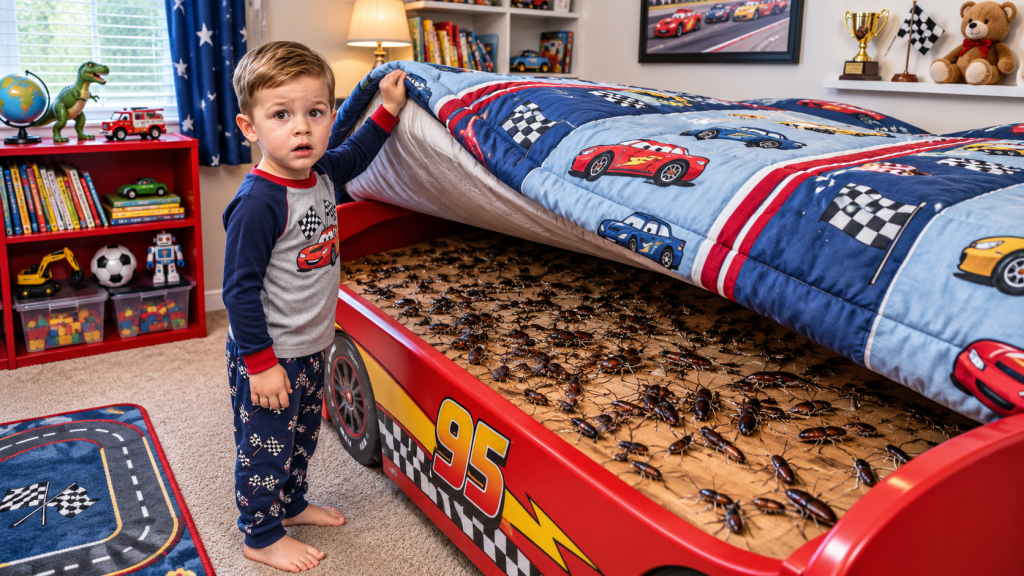
I will never forget the fear in his eyes when I lifted that mattress.
Not because it revealed how many forks he’d hidden.
But because it showed me how much responsibility he’d quietly accepted.
Last Sunday, I was putting away the dishes when Noah approached me with a serious expression.
“Mommy?”
“Yes, sweetheart?”
“Can I tell you something?”
I turned toward him.
“Always.”
He hesitated.
Then whispered, “I broke one of Daddy’s pencils.”
I smiled.
“Okay.”
His eyes widened.
“You’re not mad?”
“It was an accident, wasn’t it?”
He nodded.
“Then we’ll tell Daddy and find another pencil.”
Noah looked relieved.
Then he hugged me.
“I like not having secrets.”
My throat tightened.
I knelt and held him close.
“Me too, sweetheart.”
He smiled.
Then ran back to his toys.
I stood there for a long moment.
Because after everything we’d been through, that simple sentence meant more than any apology I’d received.
My son no longer believed love required him to hide the truth.
And that was the future I wanted for him.
Children should never have to carry the fear, guilt, or secrets that adults are unwilling to face. Real protection begins when grown-ups tell the truth and take responsibility for their own choices.
The forks were back in the kitchen drawer.
The letters were no longer hidden.
And the little boy who had once guarded his father’s secrets could finally sleep without fear of someone discovering them.