
A photograph that immediately catches the eye
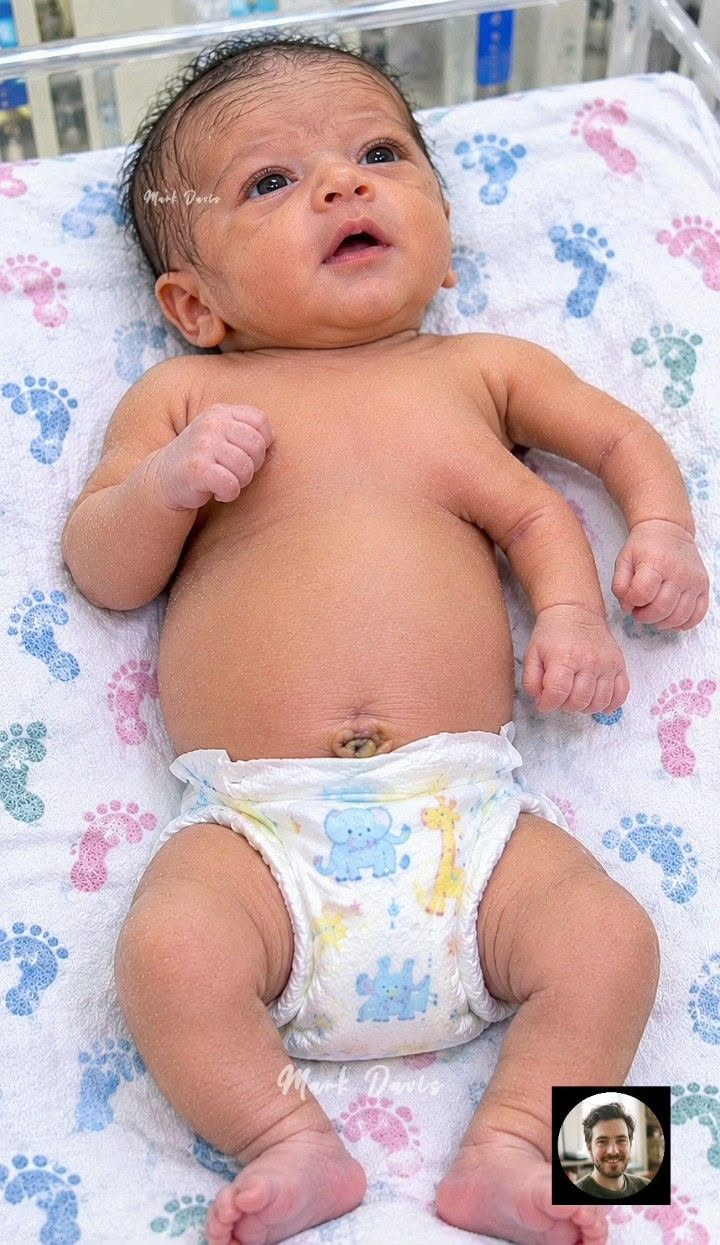
A newborn lies on a blanket decorated with tiny blue and pink footprints. One of the baby’s fists is curled near their chest.
At first glance, it looks like an ordinary photograph taken during a baby’s first few days of life.
Look more closely, though, and an unusual detail appears beneath one of the baby’s arms.
What appears to be an extra arm ends in a small hand with curled fingers.
It immediately raises a question most people have never considered.
How can a child be born with an extra limb?
For doctors, another question is just as important. What lies beneath the skin where the limb joins the rest of the body?
This extremely rare congenital anomaly is called polymelia.
In documented medical cases, an extra limb can take several forms. It may be a small, partially developed segment or a recognizable arm or leg with bones, joints, and sometimes a hand or foot.
Its outward appearance offers some clues, but its internal anatomy is what mainly helps specialists determine what care the child might need.
The origin of this photograph and the baby’s medical history could not be verified.
A photograph alone cannot confirm a diagnosis or establish whether the child underwent surgery.
Several published case reports, however, show how doctors evaluate this type of anomaly and why the most important findings may lie beneath the skin.
How do doctors describe an extra limb?
Polymelia develops before birth.
Doctors often use the term “accessory limb” to describe the extra structure.
An accessory limb can develop near an existing arm or leg or elsewhere on the body.
Published cases have described accessory limbs near the chest, back, or pelvis.
Some clearly resemble an arm or a leg.
Others are much smaller and require closer examination to determine what tissues and bones they contain.