
Marcus opened the folder with the confidence of a man who believed he was about to become eight million dollars richer. Beatrice stood over his shoulder.
I stood across the dining room table and watched both of them. For six months, they had mistaken my silence for weakness. They had mistaken grief for confusion.
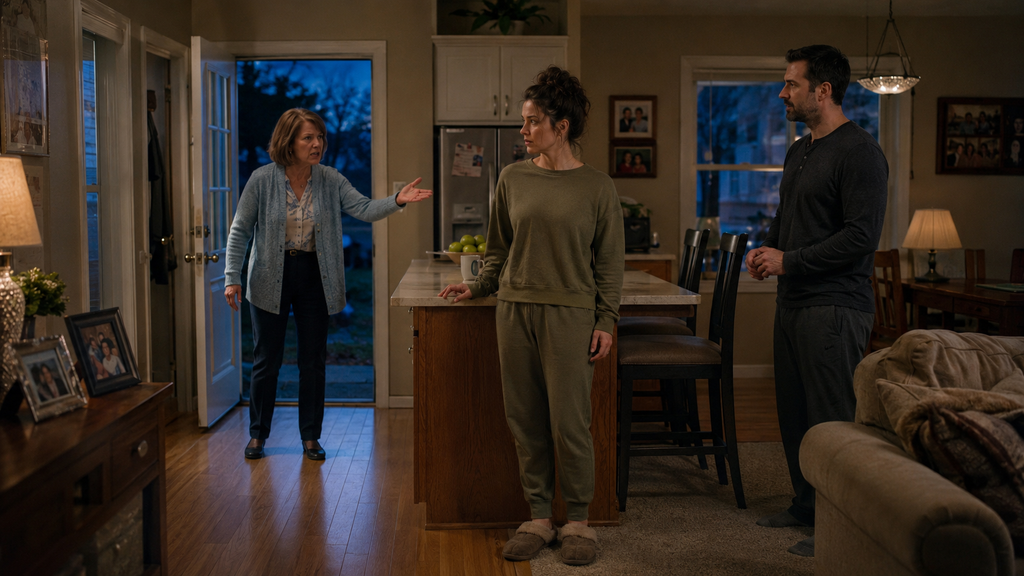
And they had mistaken my willingness to avoid unnecessary arguments for an inability to fight back.
Marcus turned the first page.
His smile disappeared.
Not slowly.
Instantly.
His eyes stopped moving.
Beatrice noticed.
“What?” she demanded.
Marcus didn’t answer.
She leaned over his shoulder.
“What does it say?”
He lifted the page closer to his face, as though changing the distance might somehow change the words.
I folded my arms.
“Read it out loud.”
His eyes rose to mine.
“Camila…”
“Go ahead.”
Beatrice snatched the paper from him.
Her eyes raced across it.
Then her expression changed too.
“What is this?”
I looked at the clock on the wall.
6:08 a.m.
Eight minutes earlier, she had burst into my home demanding my mother’s money.
Now her voice had lost half its certainty.
“That,” I said, “is confirmation that the proceeds from my mother’s apartment were transferred directly into the Elena Rodriguez Family Trust.”
Beatrice stared at me.
“The what?”
“The trust.”
Marcus finally found his voice.
“You made a trust?”
“No.”
I shook my head.
“My mother did.”
That stopped him.
Completely.
I had waited six months to say those words.
My mother did.
Even dead, she had protected me better than the man standing six feet away who had promised before God to do exactly that.
Marcus grabbed the document from Beatrice and started reading again.
The trust had been established several years earlier as part of my mother’s estate plan.
The apartment was one of its primary assets.
When she died, I became its sole beneficiary.
After the sale closed, the proceeds didn’t enter our joint checking account.
They didn’t enter any account Marcus could access.
They didn’t become family money.
They went directly where my mother’s attorney had instructed them to go.
Into an account controlled according to the terms of her estate plan.
For me.
Not Marcus.
Not Beatrice.
And most certainly not Sebastian.
Beatrice slammed the document onto the table.
“This doesn’t mean anything.”
I almost smiled.
“It means quite a lot.”
“No. You’re married. Marcus is your husband.”
“Yes.”
“So your money is his money.”
I looked at Marcus.
He wouldn’t meet my eyes.
Interesting.
Because unlike his mother, Marcus already knew that wasn’t true.
And the reason was sitting beneath the first document.
I nodded toward the folder.
“Keep reading.”
Marcus didn’t move.
Beatrice did.
She flipped to the next page.
Then the next.
Her face tightened.
“What is this?”
“Our prenuptial agreement.”
Her eyes snapped toward Marcus.
His jaw clenched.
Apparently, he had forgotten that document existed.
I hadn’t.
Nine years earlier, when Marcus and I became engaged, my mother had insisted that I speak with an attorney before marrying him.
At the time, I had been embarrassed.
I remember apologizing to Marcus when I brought it up.
I had actually felt guilty.
Can you imagine?
My mother had owned one valuable apartment, several retirement accounts, and a small investment portfolio she had built over forty years of working harder than almost anyone I knew.
Nothing about us had been extravagant.
She wore the same winter coat for eleven years.
She clipped coupons even after she no longer needed to.
She made coffee at home because paying six dollars for something she could make herself offended her on a spiritual level.
But she understood something I didn’t understand when I was twenty-eight.
Money changes people.
Sometimes receiving it changes people.
More often, simply knowing someone else has it does.
So she had insisted.
“Camila,” she told me, “love should survive a piece of paper.”
Marcus hadn’t liked the prenup.
But he had signed it.
Both of us had independent attorneys.
Both of us disclosed our assets.
And one section was painfully clear:
Anything inherited individually by either spouse would remain that spouse’s separate property.
Including proceeds created by the sale of inherited property.
At the time, Marcus joked that the clause didn’t matter because neither of us was rich.
My mother had been sitting across the room.
I remember the way she looked at him.
She didn’t laugh.
Now, nine years later, that clause sat on my dining room table.
And suddenly Marcus understood why my mother had insisted upon it.
Beatrice shoved the agreement aside.
“This is ridiculous. A marriage isn’t supposed to work like this.”
“A marriage also isn’t supposed to involve your mother arriving before sunrise to collect your wife’s inheritance.”
Her nostrils flared.
“Don’t get smart with me.”
I almost laughed.
For years, that sentence had worked.
Don’t get smart with me.
Don’t make this difficult.
Don’t embarrass Marcus.
Don’t upset Sebastian.
Don’t start drama.
Don’t be selfish.
Don’t make everything about you.
I had spent almost a decade swallowing words because keeping the peace seemed easier than demanding respect.
But something changes when the person who taught you how to endure is gone.
You start wondering whether she wanted you to endure everything.
My mother had survived abandonment.
Poverty.
Night shifts.
Eviction notices.
Illness.
Fear.
She had survived because she had no choice.
I had turned survival into a personality.
That morning, I finally understood the difference.
Marcus pushed the folder away.
“Fine.”
His voice was harder now.
“Fine. Technically the money is yours.”
“Technically?”
“You know what I mean.”
“No, Marcus. I don’t.”
He stood.
“We’re husband and wife. Decisions like this should be made together.”
I stared at him.
“You mean like the decision you already made with your mother and brother?”
His face tightened.
“That wasn’t final.”
“You told me ten minutes ago you’d already promised Sebastian.”
“I told him we would discuss it.”
“No.”
I shook my head.
“You said, ‘I already promised Sebastian we’d help him.’”
Beatrice interrupted.
“Because Sebastian is desperate!”
“And somehow that became my emergency?”
“He owes dangerous people money!”
There it was.
The first crack.
Marcus closed his eyes.
“Mom.”
I looked between them.
“Dangerous people?”
Beatrice realized too late that she had said more than Marcus wanted me to know.
She folded her arms.
“It’s complicated.”
“How much does Sebastian owe?”
Marcus stepped toward me.
“Camila, none of this matters right now.”
“How much?”
Silence.
I asked again.
“How much money does your brother owe?”
Beatrice looked at Marcus.
Marcus looked at the floor.
And suddenly the eight million dollar demand made even less sense.
They hadn’t been asking for a little help.
They had been planning a rescue.
“Marcus.”
He finally answered.
“A little over three million.”
For several seconds I couldn’t speak.
Not because I was shocked Sebastian had debt.
Sebastian always had debt.
But three million dollars?
“How?”
“He made some investments.”
I actually laughed.
“Investments?”
“They went wrong.”
“Sports betting?”
Marcus said nothing.
“Crypto?”
Still nothing.
“Borrowed money?”
Beatrice jumped in.
“He made mistakes.”
“Three million dollars worth?”
“You don’t understand how much pressure he’s under.”
“No, Beatrice. What I don’t understand is why you thought my dead mother’s apartment was the solution.”
She slapped her palm against the table.
“Because you have eight million dollars!”
The room went silent.
There it was.
Not grief.
Not family.
Not love.
Arithmetic.
Sebastian needed three million.
I had eight.
Therefore, in Beatrice’s mind, the problem had already solved itself.
My mother had worked forty years.
Sebastian had gambled for five.
Apparently the difference belonged to him.
I looked at Marcus.
“Were you going to give him three million?”
He didn’t answer.
“Four?”
Silence.
“Were you planning to give him all eight?”
“Of course not.”
His response came too quickly.
Which told me the amount had definitely been discussed.
I nodded toward the folder.
“Keep reading.”
This time Marcus looked nervous.
Good.
He should have been.
The third document was not from my mother’s estate attorney.
It was from mine.
Marcus turned the page.
His face went pale.
Beatrice looked over his shoulder again.
Then she gasped.
“What the hell is this?”
I looked directly at my husband.
“A petition for divorce.”
Nothing moved.
Not Marcus.
Not Beatrice.
Not even me.
The sentence sounded strange in my own house.
A petition for divorce.
Nine years reduced to four words.
But I had learned something during the previous six months.
Sometimes ending something isn’t destroying it.
Sometimes you’re simply acknowledging that it has already been destroyed.
Marcus stared at the papers.
Then at me.
“You filed for divorce?”
“Yes.”
“When?”
“Yesterday afternoon.”
“You were in New York.”
“My attorney wasn’t.”
His mouth opened.
Closed.
Opened again.
Beatrice recovered before he did.
“You can’t divorce him over one argument!”
I looked at her.
“This isn’t about one argument.”
“Then what is it about?”
I glanced at Marcus.
He knew.
At least part of it.
He sank slowly into the chair.
I had never seen him look smaller.
Six months earlier, three days after my mother’s funeral, I had been sitting on the bathroom floor at two in the morning because grief had made sleep impossible.
Marcus thought I was asleep.
I heard him speaking downstairs.
At first I assumed it was work.
Then I heard Sebastian’s name.
I walked halfway down the staircase.
Marcus was in the kitchen, whispering into his phone.
“No, don’t panic.”
Pause.
“Yes, the apartment is worth at least seven.”
Another pause.
“Maybe eight depending on the market.”
My body had gone cold.
I remember standing barefoot on the stairs holding the railing.
Marcus continued.
“She isn’t going to keep the apartment. She can’t handle it emotionally.”
Pause.
“I’ll talk to her when things settle.”
Another pause.
“Yes. I know.”
Then he lowered his voice.
“But don’t tell Mom anything yet. Camila gets defensive about her mother’s stuff.”
Her mother’s stuff.
My mother had been dead seventy-two hours.
And my husband was already estimating the sale value of her home for his brother.
I didn’t confront him.
That part surprised even me.
I walked back upstairs.
Closed the bedroom door.
Got into bed.
And stared at the ceiling until sunrise.
The next morning Marcus kissed my forehead and asked whether I wanted pancakes.
For the first time in our marriage, I looked at my husband and wondered how many conversations had happened when I wasn’t in the room.
That question became a thread.
And once I started pulling it, everything unraveled.
I checked our bank statements.
Nothing illegal.
Nothing dramatic.
Just hundreds of small betrayals I had ignored because each one, by itself, seemed easier to forgive.
Five thousand dollars sent to Sebastian.
Then twelve thousand.
Then eight.
Then twenty.
Personal loans Marcus never mentioned.
Credit card payments.
A car repair.
Rent.
A “business emergency.”
Legal fees.
One transfer had been labeled CONSULTING.
It was fifteen thousand dollars.
Sebastian had never consulted for us in his life.
I hired a forensic accountant.
Marcus’s eyes lifted sharply when I said that.
“Yes,” I told him. “That’s the next section.”
Beatrice started flipping pages.
“What did you do?”
“I found out where our money went.”
“Our money?”
Marcus shot to his feet.
“You went through my accounts?”
“Joint accounts.”
“You had no right—”
I laughed.
The sound startled him.
“I had no right to review accounts with my name on them?”
“That isn’t what I meant.”
“No. What you mean is you never expected me to look.”
Over the previous four years, Marcus had transferred a little more than three hundred and seventy thousand dollars from marital accounts to Sebastian.
Some transfers were technically loans.
None had been repaid.
Others were disguised as expenses.
Marcus had occasionally reimbursed part of the money from his salary so I wouldn’t notice.
But the total was undeniable.
Three hundred and seventy thousand dollars.
Money we had supposedly been saving for a second home.
Money we had supposedly been investing for retirement.
Money Marcus had repeatedly told me we couldn’t afford to spend whenever I suggested taking my mother somewhere special.
That number haunted me more than the eight million dollar demand ever could.
Because two years before my mother died, she had asked me to take a trip to Spain with her.
She had always wanted to see Barcelona.
We looked at pictures together.
She bookmarked a small hotel.
She even bought a guidebook.
I asked Marcus whether we could afford the trip.
He opened our budgeting spreadsheet and sighed.
“Maybe next year.”
I believed him.
Mom and I never took the trip.
Cancer came before next year.
During the same month Marcus told me Spain was too expensive, he sent Sebastian twenty-two thousand dollars.
I discovered that transfer six months after my mother’s death.
I sat in my car outside the accountant’s office and cried so violently I couldn’t drive home.
Not because of Spain.
Not really.
Because once a person is dead, every postponed joy becomes permanent.
There is no next year.
There is no someday.
There is no “when things calm down.”
My mother died without seeing Barcelona.
And my husband had helped his brother cover gambling losses instead.
Marcus looked at the accounting summary.
“This isn’t fair.”
I blinked.
“Excuse me?”
“You are presenting this like I stole from you.”
“You hid hundreds of thousands of dollars from me.”
“I helped my brother.”
“With money we agreed to save.”
“He’s my family.”
“So was I.”
“You still are.”
“No, Marcus.”
My voice didn’t rise.
That made him listen harder.
“I was your wife. But every time your mother or Sebastian wanted something, you treated our marriage like an account they were authorized to withdraw from.”
Beatrice scoffed.
“Families help each other.”
I turned toward her.
“My mother helped me.”
She blinked.
“She worked herself sick to give me stability.”
Beatrice opened her mouth.
I continued.
“She took double shifts when I was seven. She went to work with pneumonia because she couldn’t afford to lose hours. She wore shoes until the soles cracked. She saved every dollar she could because she wanted me to have options she never had.”
My throat tightened.
“And six months after she dies, you walk into my bedroom at six in the morning and demand that I hand the result of forty years of her sacrifice to a man who gambled away three million dollars.”
Beatrice’s face hardened.
“You’re twisting this.”
“No.”
I looked at her.
“For the first time, I’m seeing it clearly.”
Marcus walked around the table toward me.
“Camila, please.”
That word.
Please.
Interesting.
He hadn’t used it when asking for eight million dollars.
He hadn’t asked at all.
“Let’s talk privately.”
“We’ve had nine years to talk privately.”
“I made mistakes.”
“Yes.”
“I should have told you about the money I gave Sebastian.”
“Yes.”
“I understand why you’re angry.”
“No.”
My eyes filled unexpectedly.
“You understand that I’m leaving. You still don’t understand why.”
His face changed.
For one fleeting second, I saw fear.
Real fear.
Not fear of losing eight million dollars.
Fear of losing the person who had always absorbed the consequences.
I had spent years being the soft place everyone landed.
Marcus disappointed Beatrice?
I smoothed it over.
Sebastian needed money?
I adjusted our budget.
Family holiday became tense?
I changed the subject.
Marcus forgot an anniversary?
I said it was fine.
Beatrice insulted my mother?
I swallowed it.
Sebastian borrowed money and didn’t repay it?
I told myself relationships were more important.
I had confused peacekeeping with love.
And the people around me had confused my patience with permission.
Marcus reached for my hand.
I stepped back.
The movement hurt him.
I could see it.
Good.
Not because I wanted revenge.
Because consequences are sometimes the only language entitled people understand.
Beatrice pointed at the divorce petition.
“You’ll regret this.”
“Maybe.”
“You’re throwing away a marriage.”
I looked at Marcus.
“No. I’m refusing to pretend there’s still one here.”
At 6:23, the doorbell rang.
All three of us froze.
Beatrice looked toward the hallway.
“Who is that?”
I checked the time.
“Right on schedule.”
Marcus stared at me.
“What did you do?”
I walked toward the front door.
Beatrice followed.
Marcus came behind her.
When I opened it, a process server stood on the porch.
Marcus recognized what was happening before his mother did.
“No.”
The word came out quietly.
The man verified Marcus’s identity.
Then handed him the papers.
Beatrice exploded.
“You planned this!”
“Yes.”
“How long?”
I looked at her.
“Long enough.”
She stared at me as though planning ahead were somehow more offensive than everything they had done.
That was the remarkable thing about people who benefit from your lack of boundaries.
The moment you create one, they experience it as aggression.
Marcus looked down at the papers.
“Camila.”
I picked up my suitcase from behind the hallway console.
His eyes widened.
“You packed?”
“Last night.”
“You’re leaving?”
“For now.”
“This is your house too.”
“I know.”
“Then stay and talk to me.”
“No.”
“Where are you going?”
I smiled sadly.
It was the first question he’d asked that morning that sounded like a husband.
Too late.
“Somewhere quiet.”
Beatrice stepped between me and the door.
“You are not walking out on my son.”
I looked down at the space between us.
“Move.”
She stared at me.
I didn’t blink.
Something in my expression must have convinced her.
For once, Beatrice moved.
I carried my suitcase outside.
Marcus followed me onto the porch.
The sky was beginning to brighten.
Soft blue morning light spread across the street.
Neighbors’ sprinklers clicked against lawns.
Somewhere a dog barked.
The world looked absurdly normal.
My marriage had ended before breakfast, and someone three houses away was dragging recycling bins toward the curb.
“Camila.”
I stopped beside my car.
Marcus stood barefoot on the porch.
He still held the divorce papers.
His hair was messy.
His face was pale.
For nine years, that face had meant home to me.
That realization hurt more than I expected.
“Don’t do this.”
My hand tightened around the suitcase handle.
“I already did.”
“We can fix this.”
“Could we have fixed it yesterday?”
“Yes.”
“Last month?”
“Yes.”
“Last year?”
He hesitated.
I nodded.
“That hesitation is why I’m leaving.”
He came down one step.
“I love you.”
I closed my eyes briefly.
There are sentences you wait years to hear exactly when you need them.
And then there are sentences that arrive only when someone realizes they’re losing access to you.
They sound identical.
But they do not feel the same.
“I believe you think you do.”
He flinched.
“That’s cruel.”
“No.”
I opened the car door.
“Cruel was hearing you price my mother’s apartment three days after her funeral.”
His entire body froze.
The silence between us became enormous.
Behind him, Beatrice stopped moving.
Marcus whispered, “What?”
“I heard you.”
He stared at me.
“The phone call with Sebastian.”
His mouth opened.
I continued.
“You told him the apartment was probably worth seven or eight million. You told him I wouldn’t keep it because I couldn’t handle it emotionally.”
“Camila, I can explain.”
“I know.”
I nodded.
“You’ve been preparing explanations for years.”
“It wasn’t like that.”
“What was it like?”
“He was panicking.”
“My mother was dead.”
“I know.”
“I was sleeping with one of her sweaters because it still smelled like her, and you were downstairs discussing how much money her home could produce.”
Marcus covered his face with one hand.
Beatrice finally spoke.
“He was trying to help his brother.”
I stared at her.
Even then.
Even now.
She couldn’t help herself.
I looked at Marcus.
“That’s your problem.”
He lowered his hand.
“You keep saying Sebastian is your family.”
My voice broke.
“I was supposed to be your family too.”
Then I got into my car.
And drove away.
I didn’t feel powerful.
That’s not how leaving really feels.
Stories often make freedom sound triumphant.
Music swelling.
Perfect final line.
Doors slamming.
But when I drove away from the house where I had spent nine years building a life, I cried so hard I had to pull over two streets away.
I put the car in park.
Rested my forehead against the steering wheel.
And sobbed.
I cried for my marriage.
For my mother.
For Spain.
For every dinner where I had smiled through disrespect.
For every time I called myself overly sensitive because Marcus told me I was.
For every occasion Beatrice entered my home without knocking and I laughed it off.
For every loan to Sebastian.
For every promise.
For every version of myself that had worked harder and harder to become easy to love.
Eventually my phone started ringing.
Marcus.
Then Beatrice.
Then Marcus.
Then Sebastian.
Then Beatrice again.
I turned it off.
And for the first time in six months, silence felt like something other than grief.
It felt like space.
I stayed at a hotel for three nights.
Not because I had nowhere else to go.
Because I wanted anonymity.
I wanted white sheets.
Room service.
A door no member of Marcus’s family could unlock.
I wanted to wake up without anticipating someone else’s mood.
On the second morning, I ordered coffee and toast and sat beside the window watching strangers hurry through traffic below.
My attorney, Naomi Chen, called at nine.
Naomi had been helping me quietly for nearly four months.
She was fifty-two, terrifyingly efficient, and had the rare ability to make a sentence sound comforting and threatening at the same time.
“How are you?”
“Embarrassed.”
“Why?”
“Because I cried after leaving.”
She was silent for a moment.
“Camila, divorce isn’t a competition to see who feels less.”
That sentence stayed with me.
I looked down at the coffee.
“Marcus has called forty-one times.”
“Don’t negotiate directly.”
“I won’t.”
“His attorney contacted me.”
“That was fast.”
“People move quickly when eight million dollars disappears from their imaginary budget.”
Despite everything, I laughed.
Naomi continued.
“There is something else.”
My stomach tightened.
“What?”
“Sebastian has been calling the trust administrator.”
I sat upright.
“He what?”
“He somehow obtained the office number.”
“How?”
“I have a guess.”
Marcus.
Of course.
“What did Sebastian say?”
“He claimed there had been a family agreement entitling him to a distribution.”
I actually laughed.
“A family agreement?”
“Yes.”
“He’s not family to the trust.”
“Correct.”
“He’s not even mentioned.”
“Correct.”
“So what happened?”
“They told him to have his attorney contact us.”
“And?”
“He doesn’t appear to have an attorney anymore.”
That turned out to be the beginning of Sebastian’s collapse.
For years, Beatrice had protected him from consequences.
Every mistake became someone else’s responsibility.
Every debt was bad luck.
Every failed business was sabotage.
Every lost investment was the market’s fault.
Every lie was desperation.
Every broken promise deserved one more chance.
The problem with rescuing someone forever is that eventually they stop believing the ground can hurt them.
Sebastian had not only borrowed money.
He had borrowed based on the promise of more money coming.
My money.
Apparently, Marcus and Beatrice had assured him the apartment sale would solve everything.
Sebastian then told several creditors that funds would become available immediately after closing.
He had delayed payments.
Signed restructuring agreements.
Made promises.
He had even placed a deposit on a new business opportunity.
Using borrowed money.
Again.
When the eight million dollars failed to appear, every promise unraveled at once.
I learned most of this through Marcus’s messages.
The first day, he was apologetic.
Camila, please call me.
Day two:
We need to discuss Sebastian. It’s serious.
Day three:
I understand you’re angry with me but other people are involved now.
That message fascinated me.
Other people are involved now.
As though I had involved them.
Day four:
Mom is having chest pains because of the stress.
I called Beatrice’s sister to make sure she was medically okay.
She was.
Beatrice had apparently spent the afternoon screaming at Sebastian.
Day five:
I’m begging you to release enough money to stabilize this situation. We can work out the marriage separately.
I forwarded the message to Naomi.
She replied with four words.
Do not answer this.
I didn’t.
One week after I left, Marcus came to the hotel.
I don’t know how he found me.
Probably through one of our mutual friends.
He waited in the lobby.
The desk called my room.
I almost refused.
Then something inside me wanted to see him.
Not because I missed him.
I did miss him.
That was the problem.
Missing someone is not evidence that you belong with them.
It only proves they mattered.
I went downstairs.
Marcus stood when he saw me.
He looked terrible.
Unshaven.
Wrinkled shirt.
Dark circles beneath his eyes.
A month earlier, I would have immediately gone to him.
I would have asked whether he had eaten.
Whether he was sleeping.
Whether he needed anything.
Instead, I sat in the chair across from him.
“What are you doing here?”
“I needed to see you.”
“You have an attorney.”
“This isn’t about the divorce.”
“Then what?”
He leaned forward.
“Sebastian is in real trouble.”
I stared at him.
Marcus looked frustrated.
“Please don’t do that.”
“Do what?”
“Look at me like you don’t care.”
“I don’t care about Sebastian’s debts.”
“He could lose everything.”
“So?”
The word shocked both of us.
Marcus sat back.
“So?”
“Yes.”
“He’s my brother.”
“You’ve established that.”
“He has a house.”
“So do millions of people.”
“He could lose it.”
“Then perhaps borrowing millions of dollars was a poor decision.”
“He has kids.”
That stopped me.
Sebastian had two children.
Twelve and nine.
I loved them.
Whatever I thought of their father, they didn’t deserve chaos.
Marcus saw my face soften and seized the opening.
“Exactly.”
I held up one hand.
“No.”
“Camila—”
“I’ll help the children directly if they need something essential. School. Food. Medical care. I will not give Sebastian millions of dollars.”
Marcus stared at me.
“You’d really let him lose his home?”
“I didn’t borrow against it.”
“Family doesn’t think like that.”
I leaned back.
“There it is again.”
“What?”
“Family.”
I looked at him.
“You keep using that word like it means no one should experience consequences.”
“He made mistakes.”
“Your brother’s mistakes cost almost four million dollars, Marcus.”
“He can recover.”
“Then let him.”
“He needs time.”
“Then give him yours.”
His jaw tightened.
“I don’t have eight million dollars.”
And finally, finally, the truth walked into the room.
I stared at him.
“No.”
I said it quietly.
“You don’t.”
Marcus realized what he had said.
His face changed.
I stood.
He reached toward me.
“Camila, wait.”
“You didn’t come here because you miss your wife.”
“Of course I did.”
“You came because your family needs my bank account.”
“That isn’t fair.”
I bent closer.
“Then tell me something.”
He stared up at me.
“If my mother’s apartment had sold for eighty thousand dollars instead of eight million, would Beatrice have been in my bedroom at six in the morning?”
Silence.
“Would Sebastian be calling me?”
Silence.
“Would you be here right now asking me to save your marriage?”
“That’s not—”
“Answer me.”
He couldn’t.
That silence answered everything.
I picked up my bag.
Marcus stood.
“I never married you for money.”
“I know.”
That surprised him.
I believed him.
When we married, neither of us knew what my mother’s apartment would someday be worth.
Marcus hadn’t married me for an inheritance.
That would have been easier to hate.
The truth was more complicated.
He loved me.
He also became comfortable using me.
Comfortable dismissing me.
Comfortable prioritizing his family because he assumed I would remain.
He didn’t need to be a cartoon villain.
He only needed to believe I would never leave.
Sometimes that’s enough to destroy a marriage.
“You loved me,” I said.
His eyes filled.
“I still do.”
“I know.”
“Then why isn’t that enough?”
That question broke my heart.
Because once, I would have asked the same thing.
I sat back down.
“Marcus, love isn’t the only requirement.”
He looked at me.
“I loved my mother. I respected her. I protected her. I didn’t take from her because I loved her.”
He lowered his eyes.
“You say you love me, but you hid hundreds of thousands of dollars. You discussed my inheritance behind my back. You let your mother walk into our bedroom demanding money as though she owned me.”
“I didn’t know she was coming that early.”
I stared at him.
He heard himself.
His face collapsed.
“I didn’t mean it like that.”
“But you knew she was coming.”
Silence.
“That is the entire marriage, Marcus.”
My eyes burned.
“It’s never the big thing you apologize for. It’s always the tiny sentence afterward that reveals the bigger truth.”
He started crying.
I’d seen Marcus cry only twice.
At his father’s funeral.
And when our first pregnancy ended before twelve weeks.
Seeing him cry still hurt me.
I reached across the table instinctively.
Then stopped my hand halfway.
That tiny movement told me more about our marriage than anything else.
I wanted to comfort him.
But I no longer trusted what comforting him would cost me.
“I am sorry,” he whispered.
“I believe you.”
“Can we start again?”
“No.”
“Why?”
“Because your apology came after the money became unreachable.”
He shook his head.
“No.”
“Maybe you’re sincere.”
“I am.”
“I hope you are.”
I stood again.
“But I don’t want to spend another nine years testing it.”
I left him sitting in that lobby.
Three weeks later, Sebastian filed for bankruptcy.
Beatrice blamed me.
Naturally.
She sent me a message that was nearly two thousand words long.
I read the first three paragraphs.
Then stopped.
According to Beatrice, I had destroyed the family.
I had humiliated Marcus.
I had abandoned Sebastian.
I had allowed money to poison me.
The last accusation almost impressed me.
Money had poisoned someone.
Just not me.
I forwarded the message to Naomi and blocked Beatrice’s number.
Then something unexpected happened.
Marcus’s older sister, Natalie, called.
Natalie lived in Seattle and had always kept some distance from the family drama.
We weren’t close, but we were friendly.
“Can I ask you something?” she said.
“Yes.”
“Did Marcus really give Sebastian almost four hundred thousand dollars?”
I hesitated.
“Why?”
“Because Mom told everyone you’re lying.”
I closed my eyes.
Of course she had.
“What exactly did she say?”
“That you’re divorcing Marcus because he asked to loan Sebastian fifty thousand dollars.”
I laughed.
I couldn’t help it.
“Fifty?”
“Yes.”
“Interesting.”
Natalie was quiet.
“Camila, what’s the real number?”
“Three hundred and seventy thousand from joint funds over four years.”
Silence.
Then:
“Oh my God.”
“And they asked for the inheritance.”
“How much?”
“They wanted enough to clear Sebastian’s debts.”
“How much are the debts?”
“A little over three million.”
Another long silence.
Natalie whispered something I couldn’t hear.
Then said, “Mom told me it was two hundred thousand.”
That was the moment I understood something crucial.
Beatrice’s power depended on separate conversations.
She told each person a different version.
Sebastian was unlucky.
Marcus was generous.
I was selfish.
Natalie was uninvolved.
Everyone stayed in their assigned role because no one compared notes.
I said, “I’ll send you the accounting summary if you want it.”
“You don’t have to.”
“I know.”
I sent it anyway.
That evening Natalie called back.
Her voice was different.
She sounded angry.
Not at me.
At her family.
“There are transfers from holidays.”
“Yes.”
“Mom told us you and Marcus couldn’t come to Aspen two years ago because you were saving money.”
“Yes.”
“The next day he sent Sebastian eighteen thousand dollars.”
“Yes.”
“My God.”
I said nothing.
Then Natalie asked the question no one in Marcus’s family had ever asked me.
“Are you okay?”
I cried after we hung up.
Four simple words.
Are you okay?
Grief teaches you who notices your pain.
Money teaches you who notices your wallet.
Divorce teaches you who notices you.
Over the next two months, the family story changed.
Not because I launched some revenge campaign.
I didn’t post anything online.
I didn’t expose Marcus publicly.
I didn’t contact his employer.
I didn’t humiliate Sebastian.
I simply stopped protecting them from the truth.
When someone asked why I left, I answered honestly.
Marcus transferred substantial marital funds to Sebastian without telling me.
Then he and Beatrice attempted to pressure me into using my inheritance to cover Sebastian’s debts.
That’s all.
Facts don’t need decoration when they are ugly enough.
Several relatives apologized.
Some didn’t.
Beatrice never did.
She simply changed tactics.
First I was greedy.
Then unstable.
Then heartless.
Then manipulated by attorneys.
Then supposedly having an affair.
That rumor lasted eleven days until Natalie publicly asked Beatrice to name the imaginary man.
Suddenly Beatrice didn’t want to discuss “private family matters.”
By November, Marcus and I were communicating almost entirely through attorneys.
The house became a negotiation.
Our investments became spreadsheets.
Furniture acquired labels.
His.
Mine.
Joint.
Nine years of life reduced to categories.
The couch where we watched movies.
The dining table where Beatrice demanded eight million dollars.
The bedroom set we chose after our fifth anniversary.
The Christmas decorations.
The cookware.
The framed photographs.
There is something almost obscene about dividing a life by inventory.
I kept very little.
Not because I didn’t care.
Because I cared too much.
I didn’t want a home filled with objects that made me ask whether every happy memory had been real.
Eventually Naomi called me into her office.
She slid a document across the table.
“Marcus is offering settlement terms.”
I read them.
The prenup protected my inheritance exactly as intended.
The trust proceeds were entirely outside the divorce negotiation.
Marcus’s attorney never seriously challenged that.
Our remaining marital assets were divided according to the agreement and applicable law.
The accounting of money given to Sebastian was considered during settlement discussions.
Marcus agreed to accept a smaller portion of certain liquid assets in recognition of the funds he had unilaterally transferred.
He kept the house.
I didn’t want it.
That surprised everyone.
Especially Beatrice.
She apparently told Natalie that I was “letting Marcus win.”
Win what?
The building where my marriage ended?
I wanted no part of it.
Marcus refinanced his obligations.
I took my portion of our savings and investments.
And I walked away.
Naomi looked at me across the desk.
“You understand that you could fight for more.”
“I know.”
“You don’t need to rush.”
“I’m not rushing.”
She studied my face.
“What do you want?”
I thought about it.
Then answered.
“I want to stop paying emotional rent on a life I no longer live in.”
Naomi smiled.
“That might be the healthiest sentence I’ve heard in this office all year.”
I signed.
Six months after that morning in the dining room, the divorce was finalized.
Marcus asked to see me afterward.
I almost declined.
Then agreed.
We met in a quiet park near the courthouse.
Spring had arrived.
Cherry blossoms were beginning to open.
Families pushed strollers.
Two teenagers threw a Frisbee badly enough that it nearly hit us twice.
Marcus looked older.
So did I.
But different.
He looked tired.
I looked like someone who had finally started sleeping.
We sat on a bench.
For a minute neither of us spoke.
Then he said, “It’s done.”
“Yes.”
“I kept thinking you might change your mind.”
“I know.”
He looked toward the trees.
“Mom still says you’ll come back eventually.”
I smiled faintly.
“Your mother has always had confidence.”
He laughed.
Actually laughed.
It felt strange.
Familiar.
For several seconds we were the couple we used to be.
Then the silence returned.
Marcus rubbed his hands together.
“Sebastian is working.”
I turned toward him.
“Really?”
“He got a job managing a warehouse.”
I blinked.
Sebastian hadn’t held a normal job in years.
“That’s good.”
“He hates it.”
“I imagine.”
Marcus smiled faintly.
“Mom hates it more.”
That made me laugh.
He continued.
“He sold the car.”
“The Porsche?”
“Yes.”
“Voluntarily?”
“Court ordered.”
“That sounds more believable.”
We both smiled.
Then Marcus became serious.
“He’s doing better.”
“I’m glad.”
“I mean that.”
“So do I.”
And I did.
Leaving didn’t require me to wish destruction on anyone.
Sebastian learning responsibility was better than Sebastian being destroyed.
Beatrice learning boundaries was better than Beatrice being humiliated.
Marcus learning from our marriage was better than Marcus suffering forever.
I just no longer needed to be the person paying tuition for their lessons.
Marcus stared at the ground.
“I’ve been seeing a therapist.”
“That surprises me.”
“Me too.”
“What made you go?”
He laughed without humor.
“Natalie.”
That made sense.
“She told me I spent my whole life confusing Mom’s approval with responsibility.”
I listened.
“She said every time Sebastian failed, I rushed in because Mom made me feel like fixing him proved I was a good brother.”
Marcus swallowed.
“And every time you objected, I treated you like the obstacle.”
I looked away.
Hearing him understand it mattered.
But it didn’t change anything.
That distinction took me months to learn.
An apology can heal something without restoring it.
“I am sorry,” he said.
“I know.”
“No.”
He looked at me.
“I don’t mean for the money.”
His voice broke.
“I’m sorry I made you feel like you were standing outside my family asking to be let in.”
That sentence went straight through me.
Because that’s exactly what marriage to Marcus had become.
I blinked away tears.
“Thank you.”
“I should have protected our marriage.”
“Yes.”
“I thought because you were strong, you’d always be okay.”
I stared at him.
Strong.
People use that word carelessly.
Sometimes strong means admired.
Sometimes it means abandoned.
I said, “Strong people still need someone on their side.”
“I know that now.”
We sat quietly.
Eventually Marcus asked, “What are you going to do with the money?”
The question should have irritated me.
It didn’t.
Because for the first time, he wasn’t asking as though the answer belonged to him.
I smiled.
“I’m still deciding.”
That wasn’t entirely true.
I had already started.
My mother’s trust remained invested.
Most of it would stay that way.
My mother hadn’t sacrificed her entire adult life so I could burn through her legacy proving some point.
I bought a modest apartment.
Two bedrooms.
Lots of light.
A balcony where I could drink coffee in the morning.
Nothing enormous.
Nothing resembling the life Beatrice imagined eight million dollars should purchase.
Then I created something in my mother’s name.
The Elena Rodriguez Opportunity Fund.
Not a giant foundation.
Not a flashy charity with press releases.
A carefully managed program through an established nonprofit organization.
Each year it would provide small grants to single mothers finishing professional training or higher education.
Childcare expenses.
Certification fees.
Transportation.
Emergency rent assistance.
The kinds of ordinary expenses that had nearly broken my mother when I was young.
The first recipient was a thirty-one-year-old woman named Jasmine.
She had two children.
She worked nights at a hospital.
She was studying to become a registered nurse.
She nearly dropped out because her car transmission failed and she couldn’t get to clinical rotations.
The grant paid for the repair.
That was it.
No eight million dollar rescue.
No dramatic check.
Just enough money at exactly the right time to stop one setback from becoming a catastrophe.
When I read Jasmine’s thank-you letter, I cried for an hour.
She wrote:
“Your help didn’t change who I am. It gave me room to keep becoming who I’m trying to be.”
I framed that sentence.
Because that’s what my mother had done for me.
She never gave me a life without difficulty.
She gave me room.
Room to study.
Room to fail.
Room to leave bad jobs.
Room to dream bigger than survival.
And in the final months of her life, she had unknowingly given me room to leave my marriage too.
Or perhaps she had known.
Because there was one last surprise.
Almost a year after my mother’s death, her estate attorney called.
“Camila, I found something.”
My heart stopped.
“What?”
“A letter.”
Apparently, while reviewing archived estate documents, his assistant discovered an envelope placed inside an older file.
My mother had written my name across the front.
I drove to his office the next morning.
The envelope was cream colored.
My mother’s handwriting was unmistakable.
Camila.
Just my name.
Nothing else.
My hands started shaking before I even opened it.
The attorney offered to leave the room.
I thanked him.
When the door closed, I sat alone at the conference table and unfolded three pages.
My mother had written the letter four years earlier.
Long before cancer.
Long before the divorce.
Long before eight million dollars.
My darling girl,
If you’re reading this, then paperwork has once again succeeded in making life more dramatic than necessary.
I laughed through tears.
That was her.
Even from the grave.
The letter continued.
She told me she loved me.
She apologized for all the things mothers apologize for even when their children don’t blame them.
Working too much.
Being tired.
Missing school events.
Being strict.
Worrying.
Then halfway down the second page, the letter changed.
She wrote about marriage.
About money.
About me.
Camila, you inherited one dangerous habit from me. You believe being useful is the same as being loved.
I stopped reading.
My hand covered my mouth.
The room blurred.
She continued.
I spent many years believing that if I worked hard enough, gave enough, sacrificed enough, people would have no reason to leave me.
Your father left anyway.
That wasn’t because I failed.
It was because love cannot be purchased with exhaustion.
Please don’t learn that lesson as late as I did.
I had to put the letter down.
For nearly a minute I couldn’t breathe normally.
All my life, I thought my mother was fearless.
Only after she died did I discover how much fear had lived inside her.
She hadn’t worked constantly because she worshiped sacrifice.
She had worked because she was terrified.
Terrified we would lose our home.
Terrified she would fail me.
Terrified that needing anyone would give them the power to leave.
And somehow I had inherited the lesson without inheriting the circumstances.
My mother had needed survival.
I had turned sacrifice into proof of love.
The last paragraph was shorter.
Whatever I leave you, protect it. Not because money matters more than people, but because freedom matters. Money can buy time. Time can buy choices. And the person who truly loves you will never punish you for having choices.
I pressed the paper against my chest.
The attorney found me crying when he returned twenty minutes later.
I wasn’t embarrassed.
Not anymore.
I took the letter home.
I placed it in a drawer beside Jasmine’s thank-you note.
Two letters.
Two generations.
One lesson.
Freedom isn’t the money.
Freedom is what the money prevents you from having to tolerate.
A few weeks later, Beatrice came to my apartment.
Unannounced.
Naturally.
Some habits apparently survive divorce.
My doorman called upstairs.
“There’s a Beatrice Hale here asking to see you.”
I nearly said no.
Then I changed my mind.
“Send her up.”
When I opened the door, Beatrice looked smaller than I remembered.
Not physically.
Her presence.
For years she had entered every room like an authority.
Now she stood in my hallway holding her purse with both hands.
She looked around.
“This is where you live?”
“Yes.”
“I expected something bigger.”
I almost smiled.
“I’m sure you did.”
Her mouth tightened.
“May I come in?”
That word nearly shocked me.
May.
“Sure.”
She stepped inside.
I made coffee.
We sat across from each other.
For several minutes she talked about ordinary things.
Natalie.
The children.
Marcus’s work.
Sebastian.
I let her.
Eventually she put down her cup.
“I think I owe you an apology.”
I said nothing.
The old version of me would have rescued her immediately.
You don’t have to.
It’s okay.
Let’s forget it.
The new version waited.
Beatrice looked uncomfortable.
Good apologies are uncomfortable.
“I shouldn’t have come to your house that morning.”
“No.”
“I shouldn’t have demanded the money.”
“No.”
“I was scared.”
“I understand.”
“Sebastian was in trouble.”
“I know.”
She looked toward the window.
“When my husband died, Marcus became the person I leaned on.”
I listened.
“He was twenty-two.”
That was young.
Too young.
“I kept telling him he was the man of the family.”
Her eyes filled.
“I thought I was making him strong.”
Maybe she had.
Maybe she had also taught him that love meant carrying people who refused to walk.
She continued.
“When Sebastian started getting into trouble, Marcus fixed it. Every time.”
“I know.”
“And I encouraged him.”
“Yes.”
Beatrice looked at me.
“I thought you were trying to take him away from us.”
That surprised me.
“Why?”
“Because he changed after marrying you.”
“People do.”
“I didn’t like needing to ask before he helped.”
There it was.
A small, honest sentence.
Need to ask.
Marriage had created an inconvenience for Beatrice.
Marcus was no longer solely hers to deploy.
I nodded.
“You didn’t lose your son when he married me.”
“I know.”
“You were supposed to gain a daughter.”
Her face crumpled.
For a second, I saw something human beneath all that certainty.
“I wasn’t very good at that.”
“No.”
She gave a watery laugh.
“You don’t make this easy.”
I smiled.
“You’re apologizing to me, Beatrice. I’m not supposed to do the work for you.”
To my surprise, she laughed.
A real laugh.
Then she wiped her eyes.
“Marcus misses you.”
I looked down at my coffee.
“I miss some things too.”
“Could you ever…”
“No.”
She stopped.
I met her eyes.
“I forgive him.”
Her expression softened.
“But forgiveness isn’t reconciliation.”
She nodded slowly.
“I understand.”
For once, I believed she did.
When Beatrice left, she paused at my door.
“Your mother was a remarkable woman.”
I studied her face.
Years earlier, Beatrice had described my mother as “too proud for her own good.”
I remembered.
Perhaps she did too.
“Yes,” I said.
“She was.”
Beatrice nodded.
Then walked away.
I never became close to her.
This isn’t that kind of ending.
We didn’t start having Sunday dinners.
I didn’t call her Mom.
There was no magical transformation.
But sometimes closure doesn’t require everyone becoming better friends.
Sometimes closure is simply the absence of war.
Marcus eventually started dating someone.
I found out through Natalie.
The news hurt.
Then it didn’t.
Then it hurt again.
Healing is annoying that way.
It refuses to move in straight lines.
I began dating too.
Slowly.
Badly at first.
On my first date after the divorce, a perfectly pleasant man asked whether I had children and I burst into tears because Marcus and I had once planned on having two.
I apologized.
The man ordered dessert.
We laughed about it.
There was no second date.
But there was dessert.
Progress.
A year later, I met someone named Adrian.
He didn’t rescue me.
I didn’t rescue him.
That alone felt revolutionary.
When I told him about the inheritance after several months together, his response was almost comically boring.
“That’s a lot of responsibility.”
I stared at him.
“Yes.”
Then he asked what kind of tea I wanted.
I nearly fell in love with him right there.
Not because he didn’t care about money.
Everyone understands what eight million dollars means.
But he didn’t immediately translate my resources into his opportunities.
There is a difference.
We took things slowly.
Pain had taught me not to confuse intensity with safety.
The first trip we took together was to Barcelona.
I almost canceled.
Three times.
The idea carried too much weight.
That had been my mother’s trip.
Our someday.
But eventually I understood that grief doesn’t honor the dead by keeping every dream unfinished.
So I went.
On our second morning, I woke before Adrian.
I walked alone through quiet streets while the city was still turning gold with sunrise.
I carried my mother’s letter inside my purse.
I sat outside a small café.
Ordered coffee.
Then cried into a croissant like a complete lunatic.
A woman at the next table politely pretended not to notice.
I imagined my mother laughing.
You finally came, didn’t you?
“Yes,” I whispered.
“I came.”
Later that afternoon, Adrian and I stood inside the Sagrada Família while sunlight poured through colored glass.
Blue.
Red.
Gold.
Everywhere.
I thought about my mother standing in a hospital room six months before she died.
She was thinner then.
Her hair had started falling out.
She was angry because I kept trying to pay for things.
“Stop hovering,” she’d snapped.
“I’m your daughter. I’m allowed.”
She looked at me.
“Being my daughter doesn’t mean you owe me your whole life.”
At the time, I thought she was talking about caregiving.
Now I understood.
She was talking about everything.
Love.
Duty.
Family.
Marriage.
Money.
A life offered freely is love.
A life demanded as payment is captivity.
I closed my eyes inside that cathedral.
And for the first time since she died, remembering my mother didn’t feel only like losing her.
It felt like carrying her.
Three years have passed since Beatrice walked into my bedroom at six in the morning demanding eight million dollars.
Sebastian still works.
He never became rich.
He never launched another miracle business.
As far as I know, he hasn’t placed a bet in nearly two years.
His children are doing well.
I quietly paid for his daughter’s summer science program once.
Directly.
No cash passed through Sebastian.
He sent a thank-you message.
Two words.
Thank you.
No request afterward.
That was progress too.
Natalie and I became friends.
Real friends.
We speak more often than she speaks to Marcus.
She jokes that divorce was apparently what our family needed to finally introduce us properly.
Beatrice learned to call before visiting anyone.
According to Natalie, this is considered a historical achievement.
Marcus sold our old house eventually.
I didn’t ask why.
I didn’t need to know.
My mother’s fund has now helped nineteen women.
Nineteen.
Not all their stories had happy endings.
One dropped out anyway.
One changed careers.
One returned the following year.
One sent us a photo from her nursing graduation.
Jasmine, the first recipient, now works in an emergency department.
Last Christmas she sent me a picture of herself wearing navy scrubs.
Her children stood beside her.
Underneath she wrote:
We made it.
I printed that photograph.
It’s beside my mother’s picture now.
And the eight million dollars?
Most of it remains invested.
Growing.
Protected.
Boring.
Exactly as my mother would have wanted.
I used to think inheritance meant receiving what someone owned.
I was wrong.
An inheritance is also receiving what someone learned.
My mother left me an apartment.
Money.
Documents.
A trust.
But the most valuable thing she left me was a warning.
Do not make yourself indispensable to people who only value what you provide.
For years, I believed being needed meant being loved.
Marcus needed me to keep peace.
Beatrice needed me to stay agreeable.
Sebastian needed money.
Everyone needed something.
The day I stopped providing it, I discovered who still wanted me.
That was the real inheritance.
Sometimes I think about that morning.
6:00 a.m.
Beatrice storming through my bedroom door.
Marcus appearing on the stairs.
The bank folder in my hands.
Their certainty.
Their arrogance.
The way Marcus’s shoulders relaxed when I said:
“You know what? You’re right.”
He thought I had surrendered.
Beatrice thought she had won.
Neither understood why I slid that folder across the table so calmly.
People reveal an extraordinary amount about themselves when they believe resistance is over.
If I had screamed, Marcus would have become defensive.
If I had threatened, Beatrice would have attacked.
If I had hidden the folder, they would have called me selfish.
So I let them believe.
For eight beautiful minutes, I let them imagine the money was already theirs.
And while they congratulated themselves, they showed me exactly who they were.
Sometimes revenge isn’t destroying someone.
Sometimes revenge isn’t revenge at all.
It’s simply refusing to save people from the consequences they created.
I didn’t ruin Sebastian.
His choices did.
I didn’t destroy Beatrice’s family.
Her refusal to respect boundaries damaged it long before I stopped cooperating.
I didn’t end my marriage because of eight million dollars.
The money merely illuminated everything I had spent years pretending not to see.
And I didn’t betray Marcus.
I finally stopped betraying myself.
Last month, on the anniversary of my mother’s death, I visited her grave.
I brought white lilies.
She always hated roses.
“Too predictable,” she’d say.
I sat on the grass beside her headstone.
The cemetery was quiet.
Wind moved softly through the trees.
I told her about Jasmine.
About Barcelona.
About Adrian.
About the fund.
About Beatrice learning to knock.
She would have enjoyed that one.
Then I placed my hand against her name carved in stone.
“Elena Rodriguez.”
Mother.
Survivor.
Protector.
The person who taught me how to stand alone without ever intending me to be lonely.
“I finally understand,” I whispered.
The wind moved through the leaves.
Of course, no answer came.
But I didn’t need one.
I stood.
Brushed the grass from my dress.
And before walking away, I turned around one final time.
“Don’t worry, Mom.”
My voice shook.
“Your money stayed in the family.”
Then I smiled through tears.
“With your daughter.”
And I walked toward the life she had worked so hard to make possible.
Not Marcus’s life.
Not Beatrice’s.
Not Sebastian’s.
Mine.
For most of my marriage, I thought keeping a family together meant never being the person who walked away.
Now I know better.
Sometimes the person who walks away is the only one finally refusing to participate in the destruction.
They came for eight million dollars.
They believed grief had made me weak.
They thought the decision had already been made.
They thought my silence meant surrender.
They thought the folder I placed in Marcus’s hands contained their rescue.
It didn’t.
It contained my mother’s protection.
My husband’s secrets.
My divorce papers.
And the first page of the rest of my life.
That morning, Marcus and Beatrice thought they were coming to collect my inheritance.
Instead, they watched me claim it.
All of it.
Not just the money.
My mother’s courage.
Her wisdom.
Her warning.
My dignity.
My choices.
My future.
And finally—
myself.
THE END! THANK YOU FOR READING!