
Detective Alvarez did not let me leave the basement floor until I finished reading Chloe’s letter twice. The first time, I barely saw the words. The second time, I understood what my daughter had been trying to save. Not just herself. Me.
Mom, if they hurt me, please don’t become like them. Give this to someone who can make them answer. I had spent the entire drive from the hospital imagining Garrett Harrington’s mansion burning against the rain. Chandeliers collapsing. Curtains turning black.
The polished dining room reduced to ash. For a few terrible minutes, I had believed fire might be justice. Chloe knew me better. She knew grief could turn love feral if I let it. Alvarez crouched beside me. “Samantha.” I looked up. His eyes dropped to my hands. They were still trembling.
“The gasoline.”
I closed my eyes.
“I told 911.”
“I know.”
“I poured it on their front mat.”
“I know.”
“I lit a match.”
His expression did not change.
“It went out.”
“Yes.”
“Because of the rain?”
“And because my phone rang.”
I swallowed.
“If Chloe hadn’t woken up…”
I could not finish.
Alvarez did it for me.
“You don’t know what you would have done.”
“I do.”
“No.”
His voice was firm.
“You know what you were thinking.”
“You know how close you came.”
“That matters.”
“But don’t turn an act you stopped into a murder you committed only in your imagination.”
I looked at him.
“You’re trying to make me feel better.”
“No.”
“I’m trying to keep you accurate.”
He stood.
“You still created a dangerous situation.”
“The fire marshal will document it.”
“You may face consequences.”
“You should.”
“I know.”
“Good.”
Then he held up Chloe’s envelope.
“But this?”
His voice changed.
“This is why you need to stay on the right side of the line.”
I looked at the evidence spread across the floor.
Bruise photographs.
Bank records.
Threatening messages.
A flash drive.
Printed screenshots.
Medical records I had never seen.
My daughter had been building a case before she ever called me.
Except she never got the chance to call.
At 12:41 a.m., police entered Harrington Manor with warrants.
Garrett was not asleep.
Neither was Evelyn.
That was the first surprise.
They were both in the kitchen with an attorney.
Not because they knew what Chloe had hidden.
Because police had already visited once that morning after Chloe was found.
Garrett told them she had “left after an emotional argument.”
Evelyn said Chloe had become unstable during pregnancy.
They claimed they did not know how she reached the bus stop.
They said they had gone to bed at approximately midnight.
Then investigators obtained hospital photographs.
Chloe’s injuries did not match a fall.
Then they heard the bunny recording.
Then my father’s old safe opened.
By midnight, the story Garrett and Evelyn had prepared was already dying.
Alvarez received updates while we sat in my basement.
The search recovered a golf club from the garage.
Recently cleaned.
A section near the club head still reacted during forensic examination.
Later testing found Chloe’s blood in a recessed area that had not been completely cleaned.
Police also found a bloodstained section of carpet rolled inside a contractor bag behind storage cabinets.
Evelyn apparently believed removing a rectangle of carpet would remove the violence from history.
It didn’t.
The hardwood beneath it held traces too.
So did the staircase.
So did the laundry-room sink.
So did the rear passenger compartment of Garrett’s SUV.
My daughter had bled through their house.
And they had spent hours trying to wash her away.
At 2:08 a.m., Alvarez’s phone rang.
He listened.
Then looked at me.
“They’ve been taken in.”
My chest tightened.
“Arrested?”
“Detained initially.”
“Formal charging decisions will come from prosecutors.”
“Are they handcuffed?”
“Samantha.”
“I’m asking.”
“Yes.”
A feeling came over me.
Not satisfaction.
Something colder.
Relief, maybe.
Then I hated myself for wanting to see it.
Alvarez seemed to understand.
“Do not go there.”
“I wasn’t planning to.”
“You were planning to burn their house six hours ago.”
Fair.
“I’m not going there.”
He nodded.
Then:
“We’re taking these materials.”
I looked at Chloe’s letter.
“That too?”
“We’ll copy and preserve it.”
“I want the original back.”
“You will.”
I held the paper against my chest for a moment before giving it to him.
It felt like handing over a piece of Chloe.
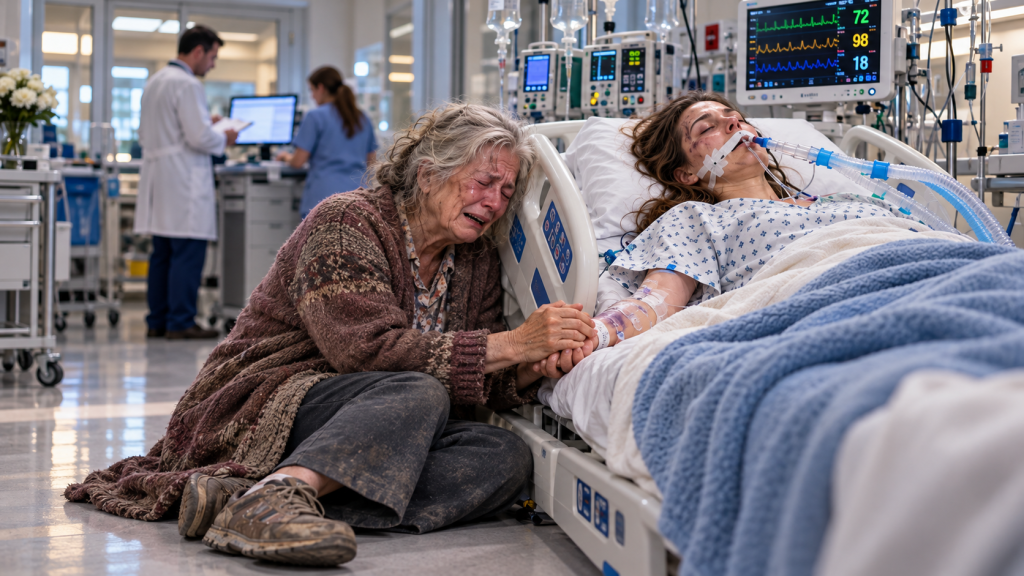
I returned to the hospital before sunrise.
The sky had begun turning gray.
The kind of gray that makes the whole world look exhausted.
Daniel—
No.
There was no Daniel in this story.
Only me.
Only Samantha.
Only Chloe.
Only the daughter I had almost lost while thinking revenge would somehow make death bearable.
Dr. Miller met me outside the ICU.
“She’s still responding.”
My knees nearly gave out.
“Consistently?”
“Enough that we’re cautiously encouraged.”
“What does that mean?”
“It means the initial neurological picture may have been complicated by shock, hypothermia, medication, and swelling.”
He paused.
“I need you to understand something.”
“I know.”
“No promises.”
“Exactly.”
“And the pregnancy?”
His face softened.
“Fetal cardiac activity remains present.”
I covered my mouth.
“But?”
“There are concerns.”
“Placental bleeding.”
“Maternal instability.”
“Possible premature labor.”
“We are doing everything we can to support both of them.”
I nodded.
Then asked:
“Does Chloe know she’s pregnant?”
“We don’t know how much she understands.”
I looked through the glass.
My daughter’s face was swollen beyond recognition.
Yet one eyelid moved.
Then again.
I went inside.
Sat down.
Wrapped my hand around hers.
“Baby.”
Her fingers twitched.
“I’m here.”
No response.
“I found the safe.”
Her heart monitor continued its rhythm.
“I found everything.”
One finger moved.
I leaned closer.
“And I read your letter.”
Her eyes opened a fraction.
Tears formed.
My entire body collapsed into the chair.
“Chloe.”
Her lips moved around the tube.
No sound.
I cried.
“I didn’t do it.”
She blinked.
“The house.”
“The gasoline.”
“I stopped.”
Her fingers moved slowly against mine.
Once.
Then twice.
I did not know what it meant.
I decided it meant enough.
By noon, news vans were outside Harrington Manor.
The family had spent decades feeding newspapers photographs of charity balls and museum donations.
Now cameras filmed detectives carrying boxes out through the same white columns.
I watched nothing.
Not one minute.
I turned off my phone.
A nurse brought me coffee.
I forgot to drink it.
At three in the afternoon, Detective Alvarez returned.
He looked tired.
I looked worse.
“There’s more.”
Of course there was.
He sat.
“Some of the documents Chloe preserved are not directly related to the assault.”
“I know.”
“Do you know what they are?”
“Bank transfers.”
“Some.”
“Corporate ledgers.”
“Yes.”
“Trust documents.”
“Yes.”
He studied me.
“Why would Chloe have those?”
I shook my head.
“She worked for Garrett’s family foundation part-time.”
That was how they sold it.
A family role.
Something respectable Chloe could do while preparing for motherhood.
“She handled donor correspondence and grant records.”
Alvarez nodded.
“She found discrepancies.”
“How serious?”
“We don’t know yet.”
“What kind?”
He opened a notebook.
“Payments from the Harrington Foundation to consulting entities linked to Garrett.”
My stomach tightened.
“How much?”
“Do not fixate on a number.”
“I’m asking.”
“Potentially over a million dollars across several years.”
I stared.
“But that is not yet a proven theft.”
He added.
“Some may be legitimate payments.”
“Some may have documentation.”
“We’re referring that part to financial investigators.”
“Did Garrett know she copied it?”
Alvarez looked at me.
“We think so.”
My heart sank.
“The silver wasn’t why they beat her.”
He shook his head.
“I wouldn’t say that yet.”
“But—”
“We have evidence of a domestic assault.”
“We have evidence they were angry about something.”
“We have financial records Chloe hid.”
“Those facts may connect.”
“We prove the connection.”
Accuracy.
Again.
I hated how much truth required patience.
Three days later, Chloe was awake enough to squeeze my hand on command.
Five days later, doctors removed the breathing tube.
Her first words were not graceful.
Not cinematic.
She whispered:
“My throat hurts.”
I laughed so hard I sobbed.
Dr. Miller smiled.
“Best complaint I’ve heard all week.”
Chloe looked confused.
Then frightened.
Her hand moved toward her stomach.
The monitor wires stopped her.
“Baby?”
I stood instantly.
“The baby still has a heartbeat.”
Tears rolled from the corners of her eyes.
“Still?”
“Yes.”
She began crying.
Painfully.
Quietly.
I leaned close.
“You don’t have to talk.”
She ignored me.
“Garrett?”
“In custody.”
Her eyes widened.
“Evelyn?”
“Also.”
Then panic.
“The files.”
“Police have them.”
She closed her eyes.
Relief moved across her face like warmth.
Then she looked at me.
“Mom.”
“I’m here.”
Her voice was barely air.
“Did you…”
She stopped.
I knew.
“The house?”
A tiny nod.
I took her hand.
“I poured gasoline.”
Her eyes filled.
“I lit a match.”
Her heartbeat increased.
“But I stopped.”
I swallowed.
“Your message came.”
“The match went out.”
“I called 911.”
“I told them what I did.”
Her face crumpled.
I whispered:
“You saved me too.”
She started crying.
“No.”
“Yes.”
“You were fighting for your life and still knew I might lose mine trying to avenge you.”
I pressed my forehead against her hand.
“I’m sorry you had to know me that well.”
Chloe could not give a full statement for another twelve days.
Doctors limited questioning.
Her speech was slow.
Memory came in uneven pieces.
Some hours were clear.
Others disappeared into fatigue.
The forensic interview happened in short sessions.
I was not in the room.
That was intentional.
I hated it.
It was correct.
Afterward, Alvarez met me in the hallway.
“She remembered the attack.”
My stomach clenched.
“How much?”
“Enough.”
I sat down.
He continued carefully.
“The argument began earlier than you knew.”
“With the financial records?”
“Yes.”
Chloe had discovered that money from the Harrington Family Foundation had been routed to three consulting companies.
Two had little visible activity.
One shared an address with a law office used by Garrett.
She asked questions.
Garrett told her to stop.
She didn’t.
Then she discovered transfers from one consulting company into accounts tied to personal expenses.
A yacht lease.
Club dues.
Renovation bills.
Luxury travel.
Again, investigators had to determine which expenditures were improperly funded.
But Chloe understood enough to become afraid.
She copied records.
She began documenting bruises from previous incidents.
Previous incidents.
That phrase almost destroyed me.
I looked at Alvarez.
“What previous incidents?”
His expression told me I did not want the answer.
Garrett had shoved her.
Twice.
Once into a wall.
Once against a bathroom counter.
Evelyn had slapped her months earlier during an argument about a charity dinner.
There had been threats.
Control.
Financial restrictions.
Garrett monitored spending despite Chloe having her own salary.
He checked her phone.
Insisted on passwords.
Decided what she wore to events.
Mocked her friends until she stopped seeing them.
I stared.
“How did I not know?”
Alvarez said nothing.
I asked again.
“How?”
“Because she hid it.”
“Why?”
“You’ll have to ask her.”
I did.
Weeks later.
Her answer still hurts.
“Because you liked him.”
I felt physically sick.
“What?”
“You said he was polished.”
“Stable.”
“You said I’d never have to worry.”
I covered my face.
“I meant money.”
“I know.”
She cried.
“And every time something happened, I thought if I told you, you’d ask why I stayed.”
“I would never—”
“Mom.”
She looked at me.
“You ask hard questions.”
That was true.
“You raised me to be strong.”
“So when I wasn’t…”
Her voice broke.
“I was embarrassed.”
I reached for her.
“Chloe.”
“No.”
She needed to finish.
“I kept thinking I had to leave before I told you.”
“Because then it would look like I had handled it.”
I cried.
“My baby.”
“I never needed you to handle it beautifully.”
“I know that now.”
She looked toward the window.
“But abused people spend a lot of time planning how to explain why they were abused.”
That sentence lived inside me forever.
The night of the beating, Chloe had decided to leave.
She had packed a small suitcase.
Documents.
Two dresses.
Medication.
Her prenatal records.
The bunny.
She planned to drive to me.
Garrett caught her in the bedroom.
He took her keys.
She told him she had copied the foundation records.
He asked where they were.
She refused.
Evelyn came in after hearing shouting.
Then something absurd happened.
A piece of silver fell from Chloe’s half-packed bag.
Not because she had stolen it.
Evelyn had ordered her earlier that day to polish the family service for an upcoming dinner.
Chloe had carried two pieces upstairs after feeling dizzy.
One spoon ended up on the bed.
Evelyn saw the tarnish.
She accused Chloe of disrespect.
Chloe laughed.
Not because anything was funny.
Because after months of fear, something inside her cracked.
She told Evelyn:
“I am leaving your son and your fake little kingdom.”
That sentence changed the room.
Evelyn grabbed her.
Garrett demanded the files.
Chloe tried to get away.
Evelyn pulled her by the hair.
Garrett struck her first in the shoulder with the golf club.
Then the ribs.
Then the side of the head.
Chloe told them the baby hurt.
Garrett shouted that the pregnancy had “ruined everything.”
Evelyn called the baby a mistake.
Then Chloe lost consciousness.
They did not call an ambulance.
That fact mattered more than every insult.
They waited.
Cleaned.
Argued.
Garrett claimed she woke briefly.
Evelyn insisted they take her to a hospital.
Not out of compassion.
According to later phone evidence, because she feared a death in the house.
Instead, they drove Chloe away from the estate.
Left her at the bus stop.
In a silk nightgown.
In near-freezing rain.
Then drove home.
A passing transit worker noticed her before dawn.
If he had arrived twenty minutes later, Dr. Miller later told me, the outcome might have been very different.
I sent that man Christmas cards for ten years.
The baby survived twenty-three weeks of pregnancy.
Not twenty-three weeks gestation.
Twenty-three more days after the assault.
Then Chloe’s placenta began failing.
Bleeding worsened.
At twenty-eight weeks and two days, doctors performed an emergency cesarean.
I stood outside the operating room shaking.
Not revenge shaking.
Prayer shaking.
There is a difference.
At 2:14 a.m., my grandson was born.
Two pounds, seven ounces.
He did not cry immediately.
Neither did I.
A neonatal team surrounded him.
Chloe kept asking:
“Is he alive?”
The anesthesiologist answered.
“Yes.”
Again.
“Yes.”
Then, finally, the smallest sound I had ever heard broke through the room.
A thin cry.
Chloe sobbed.
I did too.
His name was Ethan Michael.
Chloe chose Ethan because she said it sounded like someone who would grow into his own life.
Not a Harrington life.
Not my life.
His.
Ethan spent nine weeks in the NICU.
Nine weeks of oxygen.
Feeding tubes.
Weight checks.
Monitors.
Tiny socks.
Tiny victories.
Garrett never saw him.
Not then.
His attorney requested photographs.
Chloe said no.
A family court later addressed parental rights separately from the criminal case.
That process was painful.
Garrett was still Ethan’s biological father.
A criminal charge did not magically erase that fact.
But the violence against Chloe while pregnant mattered enormously.
So did the allegations that he had intentionally endangered the fetus.
Supervised legal arrangements were considered while the case moved forward.
Chloe’s attorneys sought protective orders.
No one made Ethan a symbol.
He was a premature baby.
That was enough work.
My own legal consequences arrived quietly.
The district attorney reviewed the gasoline incident.
I had poured fuel on private property.
I had possessed an ignition source.
I had not ignited the property.
I had self-reported immediately.
There were no injuries.
No structural damage.
The mat and stone porch required cleaning and replacement.
For weeks, I did not know what would happen.
I deserved that uncertainty.
Eventually, prosecutors declined the most serious charges but required me to resolve a lesser property and public-safety offense through a diversion agreement.
Restitution.
Counseling.
No contact with Harrington property.
A formal acknowledgment of what I had done.
I accepted everything.
Chloe cried when I told her.
“I’m sorry.”
I shook my head.
“No.”
“This part is mine.”
“But you did it because of me.”
“No.”
I looked directly at her.
“I did it because I chose rage.”
“You were the reason I was grieving.”
“You were not the reason I picked up gasoline.”
I would not put that on her.
I had spent my whole life teaching her responsibility.
Now I had to demonstrate it.
That was when my “past” finally came into the story.
Garrett had never asked much about me.
To him, I was Chloe’s widowed mother who owned a modest transportation company and drove an old truck.
He once asked at Christmas:
“Didn’t you used to work for the government or something?”
I answered:
“For a while.”
He changed the subject.
A person uninterested in other people eventually suffers from missing information.
Before Chloe was born, I had spent eleven years as a financial-crimes investigator with the state attorney general’s office.
Fraud.
Asset concealment.
Charitable misuse.
Procurement schemes.
Not glamorous.
Mostly paper.
My husband, Michael, hated how many nights I worked.
When Chloe was six, he developed cancer.
I left public service.
After he died, I started the small transport company using savings and one ugly bank loan.
Garrett saw the truck.
He never asked about the badge locked in my desk.
The one phone call I made at the hospital that first morning had been to Maria Alvarez, who was not Detective Alvarez’s relative despite the shared surname.
Maria had been my former supervisor.
Now retired.
I did not ask her to destroy the Harringtons.
I asked:
“If someone powerful hurts your child, how do you stop yourself from doing something stupid?”
She went silent.
Then said:
“You call someone before stupid becomes irreversible.”
She gave me Detective Alvarez’s number through the proper channel and told me to preserve everything.
I still took the gasoline.
That part cannot be romanticized.
But her call was one of the thin ropes pulling me back.
Chloe’s alert finished the job.
Financial investigators eventually discovered Chloe had been right.
Partly.
That word matters.
Not every transaction was fraudulent.
Several consulting contracts were real.
Some personal-looking expenses had legitimate event or donor purposes.
Others did not.
Over four years, investigators identified approximately $1.7 million in foundation funds and related charitable assets that had been diverted, falsely described, or spent for impermissible personal benefit.
Garrett was implicated.
So was Evelyn.
But Evelyn was not the mastermind of everything.
Neither was Garrett.
The Harrington family’s longtime chief financial officer, Martin Vale, had designed much of the structure.
That was the first major twist after the arrests.
Martin had worked for the family for twenty-nine years.
Quiet.
Gray-haired.
Invisible.
The man who sat at the end of charity-board meetings and corrected decimals.
He had created consulting companies used to route money.
Garrett benefited.
Evelyn approved transactions.
Martin engineered the mechanics.
When investigators approached him, he initially denied wrongdoing.
Then they showed him Chloe’s copied ledgers.
He asked for a lawyer.
Two months later, he began cooperating.
Martin’s testimony revealed something even uglier.
Garrett had not beaten Chloe solely because of the foundation records.
He was also drowning in debt.
Private debt.
Gambling?
No.
People always assume gambling.
It was more ordinary.
Failed property investments.
Loans.
Leveraged deals.
A luxury life maintained through constant borrowing.
The Harrington family looked wealthy.
They were wealthy.
But not nearly as liquid as outsiders believed.
The mansion itself had substantial debt.
The family business had healthy assets but limited cash distributions.
Garrett wanted more.
He had borrowed personally against expected future trust distributions.
He owed almost $3.2 million across lenders, investment losses, and guarantees.
The foundation money helped support his lifestyle.
Not enough to erase the debt.
Then Chloe became pregnant.
That changed his financial calculations.
Evelyn’s late husband had created a family trust containing a clause providing additional distributions for descendants with children.
Not automatically millions.
Not some magical inheritance.
But enough that a grandchild improved Garrett’s position.
Chloe initially thought the pregnancy would make him happy.
He was.
Until lawyers explained that certain trust distributions for the child would be separately protected.
Garrett could not simply use Ethan’s future trust assets to pay his personal debts.
That is why, according to Martin, Garrett began calling the baby:
“Useless money.”
When I learned that phrase, I had to leave the interview room.
I went to the bathroom.
Locked myself in a stall.
Bit my hand to stop from screaming.
Then I remembered the gasoline.
I washed my face.
Returned.
Sat down.
Asked:
“What else?”
That was growth.
Not calm.
Direction.
Evelyn knew about Garrett’s debt.
She had paid some of it.
She had hidden some from other trustees.
She blamed Chloe.
Not rationally.
Emotionally.
According to recovered messages, Evelyn believed Garrett’s marriage had “softened” him and made him irresponsible.
As though he had not been irresponsible for years.
She also believed Chloe might divorce him and publicly expose the foundation accounts.
That was the real danger.
Not silver.
Not pregnancy.
Exposure.
The attack was domestic violence born from entitlement, anger, panic, and a belief that Chloe was still property they could control.
The silver spoon was simply the match dropped into a room already filled with fumes.
I know something about that now.
Garrett’s attorneys offered a plea eighteen months after the assault.
A substantial sentence.
Chloe refused to take a position at first.
The prosecutor told her:
“This is not your burden.”
“I know.”
“You do not have to tell us whether to accept.”
“I know.”
“Do you want time?”
“Yes.”
She took three days.
Then said:
“I want to testify.”
Not because she needed a trial for healing.
She hated that phrase.
“Healing is not a courtroom service,” she told me.
She wanted to testify because Garrett had spent months calling her confused, unstable, financially motivated, and manipulated by me.
His defense had every legal right to challenge evidence.
But some public filings cut deeply.
Chloe wanted her own voice placed into the record.
The case went to trial.
I sat behind her when she testified.
She walked with a slight limp.
The head injury had left her with headaches and occasional word-finding problems.
Her left hand still weakened when she was exhausted.
But she walked.
She spoke.
She held herself upright.
Garrett did not look at her at first.
Then he did.
Chloe looked back.
The prosecutor asked:
“Mrs. Harrington, why did you stay?”
Garrett’s attorney objected to the phrasing.
The judge handled it.
Question reframed.
Chloe described the marriage.
The good beginning.
Flowers.
Trips.
Attention.
Then corrections.
Passwords.
Clothes.
Friends.
Money.
Isolation.
The first shove.
The apology.
The promise.
The second shove.
Evelyn’s slap.
The fear.
The pregnancy.
The financial records.
Then Easter—
No.
Wrong holiday.
The night.
Always the night.
The prosecutor asked:
“What happened after you said you were leaving?”
Chloe’s hands trembled.
She looked toward me.
I wanted to stand.
I stayed seated.
She turned back.
“Garrett asked where the copies were.”
“What copies?”
“Foundation records.”
“What did you say?”
“That he would never find them.”
Garrett’s head lifted.
The prosecutor continued.
“What happened then?”
“His mother grabbed my hair.”
“And Mr. Harrington?”
“He hit me.”
“With what?”
“A golf club.”
“Where?”
“My shoulder first.”
“Then my side.”
“And then?”
Chloe’s voice disappeared.
The courtroom waited.
Then:
“My head.”
I heard Evelyn begin crying at the defense table.
I did not look.
The prosecutor asked:
“What did you say?”
Chloe closed her eyes.
“I told them my baby was hurting.”
“And what happened?”
“Garrett told me to shut up.”
She swallowed.
“Evelyn said the baby was a mistake.”
The prosecutor paused.
“What is the next thing you remember?”
“Cold.”
That one word changed the room.
“Explain.”
“I remember waking up outside.”
“Where?”
“I didn’t know.”
“Could you move?”
“Not really.”
“Could you call for help?”
“My phone was gone.”
“What were you wearing?”
“A nightgown.”
“What was the weather?”
“Rain.”
“Temperature?”
“I don’t know.”
“Cold.”
The prosecutor said nothing.
Chloe whispered:
“I thought my baby had died.”
I cried silently.
Then she said:
“I thought I had too.”
The defense cross-examination was hard.
It was supposed to be.
The attorney asked about inconsistencies.
Whether Chloe remembered every strike.
No.
Whether she had taken medication.
Prenatal medication and later hospital medication.
Whether she had argued.
Yes.
Whether she had threatened to expose the family.
She had said she would give records to authorities.
Whether she hated Evelyn.
Sometimes.
Whether she had discussed divorce.
Yes.
Whether she had access to family money.
Limited.
Whether she had copied records without authorization.
Some.
The attorney tried to suggest financial motive.
Chloe listened.
Then he asked:
“You expected to benefit financially from divorcing Mr. Harrington, correct?”
Chloe looked at him.
“I expected to benefit from not being hit.”
The prosecutor objected.
The judge addressed it.
The jury heard it anyway.
I almost smiled.
Evelyn did not testify.
Garrett did.
That surprised everyone.
He admitted hitting Chloe once.
One strike.
He claimed he panicked.
Claimed she fell.
Claimed his mother tried to help.
Claimed Chloe later woke and demanded to leave.
Claimed they drove her to the bus stop because she insisted.
A five-month-pregnant woman with a skull injury.
In rain.
Wearing a silk nightgown.
His own attorney’s face tightened while he explained it.
Then the prosecutor showed vehicle data.
Garrett’s SUV remained at the bus stop for forty-three seconds.
No evidence Chloe exited under her own power.
Blood patterns suggested she was lying across the rear seating area.
The prosecution showed a recovered text Evelyn sent Garrett after they returned home:
If she lives, say she left angry.
Then Garrett’s reply:
Delete this.
He had deleted it.
The cloud backup had not.
Sometimes justice is a forgotten synchronization setting.
The jury deliberated two days.
Garrett was convicted of attempted murder, aggravated assault, domestic-violence offenses, evidence tampering, and other related counts.
Not every charge.
Enough.
Evelyn’s case followed separately.
The evidence against her was different.
She had restrained Chloe.
Pulled her hair.
Participated in the assault.
Helped move and abandon her.
Helped clean evidence.
Sent the text.
She ultimately entered a plea before her trial concluded on all counts.
She admitted serious assault-related and evidence-tampering conduct and received a substantial prison sentence.
Garrett received twenty-two years.
Evelyn received thirteen.
Financial charges came later.
Those cases involved Martin, Garrett, Evelyn, and foundation governance.
Some resolved through pleas.
Some civilly.
Martin received reduced punishment for cooperation but did not walk free.
The foundation was restructured under independent leadership.
Several million dollars were restored through settlements, asset sales, insurance, and restitution.
The mansion was sold.
Not seized dramatically the next morning.
Sold eighteen months later because legal fees, debt, frozen assets, and family collapse made keeping it unrealistic.
The house I had almost burned survived.
The Harrington dynasty living inside it did not.
That irony was enough.
When the mansion went on the market, a reporter called me.
“Mrs. Bennett, how do you feel knowing the Harrington estate is being sold?”
I hung up.
My daughter had brain damage.
My grandson had spent nine weeks learning how to breathe.
A real estate listing was not closure.
Chloe divorced Garrett while he was awaiting trial.
The divorce took longer than she wanted.
Money had to be traced.
Assets valued.
Trust interests separated.
Lawyers argued.
She did not get half a fictional empire.
She received what the law and settlement entitled her to.
Support.
Her own property.
A substantial marital settlement.
Protections for Ethan.
Garrett’s parental rights became heavily restricted.
Eventually, after the criminal convictions and family-court proceedings, contact was limited under stringent conditions and later suspended as circumstances developed.
Chloe never used Ethan to punish Garrett.
She did not send prison photographs.
She did not teach Ethan to hate a father he could not remember.
When he was old enough to ask, she answered age-appropriately.
That mattered to her.
Recovery was not cinematic.
Chloe did not stand from a wheelchair while music swelled.
She struggled.
For months.
Speech therapy.
Physical therapy.
Occupational therapy.
Headaches.
Fatigue.
She forgot words.
Once she cried because she could not remember the word “colander.”
She pointed at it.
“The bowl with holes.”
I said:
“Colander.”
She slammed her hand against the counter.
“I know that.”
Then collapsed crying.
I held her.
“I know.”
“No.”
“You don’t.”
She was right.
I didn’t.
People loved saying:
“You’re lucky to be alive.”
True.
Also sometimes cruel.
Survival has paperwork.
Pain.
Physical therapy.
Nightmares.
Bills.
Loss.
A person can be grateful and furious at the same time.
Chloe taught me that.
One afternoon, nearly a year after the assault, I found her sitting on the kitchen floor.
Ethan was asleep nearby.
“What happened?”
She held up a silver spoon.
My heart stopped.
It was ordinary stainless steel.
Nothing Harrington.
Still.
Her hands shook.
“I dropped it.”
I sat beside her.
“Okay.”
“I heard it hit the floor.”
“And?”
“I was there again.”
I reached for her.
She pulled away.
Not rejection.
Space.
I waited.
Then she whispered:
“I hate that they own a sound.”
I looked at the spoon.
“They don’t.”
“It feels like they do.”
“Yes.”
We sat.
Eventually Ethan began crying.
Chloe closed her eyes.
Then stood.
Picked up the spoon.
Put it in the drawer.
“Not today.”
“What?”
“They don’t get the sound today.”
That was recovery.
Tiny acts of repossession.
My own counseling lasted longer than the diversion agreement required.
At first, I hated it.
The therapist asked:
“What did you think burning the house would do?”
I said:
“Make them feel what I felt.”
She asked:
“How can a house feel?”
I glared.
She waited.
I eventually said:
“It couldn’t.”
“What did you want?”
“I wanted their world gone.”
“And if Chloe had died while you were incarcerated for killing them?”
That question cut so deeply I stood up.
“I’m leaving.”
“You can.”
I reached the door.
Then stopped.
Sat back down.
“Ask again.”
She did.
I cried for an hour.
That was the first time I understood Chloe’s letter completely.
Please don’t become like them.
She was not asking me to be gentle.
She was asking me to remain available.
Alive.
Free.
Her mother.
My past as an investigator returned in another way.
The attorney general’s office asked whether I would consult informally on victim-support procedures after the financial case concluded.
Not the Harrington investigation itself.
Conflict.
But broader work.
I said no at first.
Then changed my mind.
I began volunteering with a domestic-violence financial advocacy program.
Not as a cop.
Not as a prosecutor.
As someone who understood documents.
Bank accounts.
Hidden debt.
Coerced signatures.
People think domestic abuse is bruises.
Sometimes it is.
Sometimes it is a husband keeping every password.
A mother-in-law controlling grocery receipts.
A spouse placing assets in names you cannot access.
Someone telling you:
“You wouldn’t survive without me.”
Then making sure the paperwork agrees.
Chloe’s case taught me violence often leaves a financial shadow long before it leaves blood.
Ethan grew.
Slowly at first.
Then like children do.
At two, he ran everywhere.
At three, he loved dinosaurs.
At four, he became obsessed with fire trucks.
I nearly laughed at the universe.
Chloe bought him the biggest red truck she could find.
I said:
“Really?”
She smiled.
“We are not letting my trauma choose his toys.”
Fair.
At five, he asked why his last name was Bennett, not Harrington.
Chloe had legally returned to Bennett after the divorce and later changed Ethan’s name with court approval.
She said:
“Because Bennett is my family name.”
“Was Harrington bad?”
“No.”
She looked at him carefully.
“Some people with that name made bad choices.”
He thought about it.
Then:
“Can I be Batman Bennett?”
“Yes.”
That ended the identity crisis.
Evelyn wrote Chloe letters from prison.
For two years, Chloe returned them unopened.
Then one came addressed only:
For when you are ready, if ever.
Chloe kept it in a drawer for eight months.
One rainy afternoon, she opened it.
I was there.
She asked me to stay.
The letter was six pages.
Evelyn did not blame Garrett.
That surprised us.
She wrote:
I spent years telling myself I was protecting my son when I was protecting his worst behavior from consequences.
Chloe stopped reading.
We looked at each other.
Then continued.
Every debt I paid became permission for the next debt.
Every lie I covered became a larger lie.
Every time he mistreated you, I asked what you had done to provoke him because the alternative was admitting what kind of man I had raised.
Chloe’s hands shook.
On the night I hurt you, I was not confused.
That line mattered.
I knew you were pregnant.
I knew you were afraid.
I knew holding you down was wrong.
I did it anyway.
No excuse.
I am sorry.
I do not ask you to bring Ethan to see me.
I do not ask you to forgive me.
I only want one truthful thing to exist between us before I die: what happened to you was our fault.
Chloe cried.
Then folded the letter.
I asked:
“What do you want to do?”
“Nothing.”
“Okay.”
And nothing was what we did.
An apology does not create a deadline for response.
Garrett wrote too.
His first letters were terrible.
We both made mistakes.
Trash.
Your mother turned you against me.
Trash.
I never meant for things to go that far.
Trash.
Then, years later, one came through his attorney as part of a restorative program he had entered in prison.
Chloe almost threw it away.
Then read it.
Garrett wrote:
I spent years describing the night as the worst thing that ever happened to me.
That sentence was proof I still did not understand.
Chloe stopped.
Then:
It happened because of me. It happened to you.
She cried quietly.
I hit you because you were leaving and I believed losing control over you was an injury to me.
That belief was abusive long before I picked up the club.
Chloe closed the letter.
Did not finish.
She never answered.
She also never burned it.
Years later, she said:
“I don’t need him to stay evil forever.”
I looked at her.
“That doesn’t mean I need him.”
Exactly.
The mansion sold to a hotel developer.
That caused scandal among preservationists.
Not our problem.
The developer restored part of the property and converted the rest into a small luxury retreat.
One newspaper ran the headline:
HARRINGTON MANOR TO BEGIN NEW LIFE
Chloe sent me a screenshot.
Underneath she wrote:
Better it than me.
Dark.
Funny.
We laughed.
One day, when Ethan was eight, he saw a photograph of Garrett.
Not intentionally.
An old wedding album had slipped from a storage box.
He looked at the picture.
“Who’s that?”
Chloe became still.
I was in the room.
I said nothing.
Her answer to give.
“That’s your biological father.”
Ethan frowned.
“The bad-choice guy?”
Chloe almost laughed.
“Yes.”
“What did he do?”
She sat beside him.
“He hurt me very badly when you were still in my belly.”
Ethan stared at her.
“Did he hurt me?”
Chloe swallowed.
“He put you in danger.”
“Why?”
“I don’t know every reason.”
“But none of them were your fault.”
He looked at the photograph.
Then:
“Does he love me?”
The room broke quietly.
Chloe thought.
“I think he believes he does.”
Ethan frowned.
“That’s weird.”
“Yes.”
“Do I have to love him?”
“No.”
“Can I?”
“Yes.”
He leaned against her.
“I don’t know him.”
“That’s okay.”
He closed the album.
Went back to building Lego.
Children sometimes understand boundaries better than adults.
Years later, Ethan chose to write Garrett.
His choice.
He was sixteen.
Chloe did not help him write the letter.
Neither did I.
He asked only one question:
“Should I tell him I forgive him?”
Chloe said:
“Do you?”
“I don’t know.”
“Then don’t write it.”
“What do I say?”
“The truth.”
He wrote:
I know who you are. I know what happened before I was born. I am not ready to meet you. I may never be. I wanted you to know I am alive, healthy, and doing well. Please do not write directly to me unless I ask.
Garrett respected it.
At least that boundary.
Chloe cried when she learned.
Not because she wanted reunion.
Because someone who once believed every boundary was an insult had finally obeyed one.
Growth can matter without restoring access.
Evelyn died in custody near the end of her sentence.
Cancer.
Chloe was informed because she was listed as a victim.
She sat at my kitchen table for a long time.
“Do you want to go to the funeral?”
I asked.
“No.”
“Do you want to send flowers?”
“No.”
“Do you feel anything?”
She looked at me.
“Relief.”
Then she started crying.
“I hate that.”
“Why?”
“Because she was Ethan’s grandmother.”
“She was also the woman who held you down.”
“I know.”
“Both facts can exist.”
Chloe nodded.
Then:
“I hope she meant the apology.”
“So do I.”
That was as close as we came to mourning Evelyn.
Garrett remained incarcerated.
He lost his inheritance expectations in complicated civil litigation after the foundation cases and family trust disputes.
Not everything.
Prison does not automatically erase inheritance.
But trustees, creditors, restitution orders, and legal restrictions changed his financial future.
The image of Garrett walking out one day and returning to a fortune never happened.
Neither did total destitution.
Reality likes middle ground.
He eventually worked in prison education programs.
I heard that from Ethan’s attorney.
I did not investigate further.
Some information is not ours simply because curiosity exists.
Chloe remarried at thirty-three.
His name was Marcus Lee.
He was a physical therapist.
She met him during a hospital fundraiser, not during treatment.
Important boundary.
Marcus knew everything before their fourth date.
Chloe told him:
“My ex is in prison for trying to kill me.”
Marcus blinked.
Then said:
“That sounds like something I should know.”
She laughed.
That was why she went on a fifth date.
He never called her brave when she was crying.
Never told her trauma made her stronger.
He asked:
“Do you want advice or company?”
She married him two years later.
Ethan carried the rings.
I cried harder than anyone.
At the reception, there was silverware.
Of course.
Chloe noticed me looking at it.
She picked up a spoon.
Held it between two fingers.
Then dropped it deliberately.
CLANG.
The table froze.
She smiled.
“Still just a spoon.”
I started crying.
Marcus kissed her temple.
Ethan groaned.
“Mom’s being dramatic.”
Perfect.
I never remarried.
Not because I became bitter.
Because I liked my life.
My transport company grew.
Then I sold it.
Not for Harrington money.
Not with Harrington help.
Mine.
I used part of the proceeds to establish a small legal-support fund for domestic-violence survivors needing forensic accounting.
We called it the Chloe Bennett Financial Safety Project.
Chloe hated the name.
“Mom.”
“What?”
“That sounds like I died.”
“You complained until they changed it.”
We renamed it Open Ledger.
Better.
The program helped people identify hidden debts, protect personal records, understand jointly held assets, and connect with attorneys.
No revenge.
No secret vigilantes.
Paper.
Facts.
Exits.
The things Chloe had needed before the golf club.
Detective Alvarez retired.
At his retirement party, he invited us.
Chloe brought Ethan.
Alvarez looked at him.
“You were very small the last time we met.”
Ethan frowned.
“I don’t remember.”
“Good.”
Then Alvarez looked at me.
“You still carrying gasoline around?”
I stared.
Chloe gasped.
“Detective!”
He smiled.
“Too soon?”
“It has been fourteen years.”
“Still too soon,” I said.
Then I laughed.
Because eventually a memory can become something other than a weapon.
Dr. Miller retired too.
Before he left the hospital, Chloe brought Ethan to meet him.
Miller stared at the teenager.
“You were stubborn.”
Ethan smiled.
“My mom says that.”
“Your mother was worse.”
Chloe laughed.
Then Miller looked at her.
“I told your mother you might not survive the night.”
Chloe nodded.
“I know.”
“I was wrong.”
She took his hand.
“You were honest.”
His eyes filled.
“Sometimes those feel similar in medicine.”
Chloe smiled.
“Mom told me you never lied.”
He nodded.
“That matters.”
Doctors do not control miracles.
They manage uncertainty.
I learned that from him.
The hospital chair I cracked?
For years, Chloe teased me about it.
“Mom went Hulk.”
I hated the story.
Then embraced it.
The hospital sent me a bill.
$186.
I paid it.
Chloe framed a copy.
Under it she wrote:
CHEAPER THAN ARSON.
That hung in my home office.
Dark humor keeps some families alive.
The deepest twist came almost fifteen years later.
Not money.
Not the trust.
Not Martin.
Not a hidden body beneath the mansion.
Nothing like that.
It came from a box of Chloe’s old belongings.
We were clearing my attic.
Chloe found a sealed birthday card.
From Garrett.
Dated two months before the assault.
She almost threw it away.
Then opened it.
Inside he had written:
I know I have been difficult. The baby makes everything feel real. I want to be better before he gets here. I love you.
Chloe sat down.
I froze.
“What?”
She handed it to me.
I read.
Then looked at her.
Her face was devastated.
“He knew.”
“What?”
“He knew he was becoming someone terrible.”
I sat beside her.
“Maybe.”
“No.”
She pointed at the words.
“He knew.”
“He wanted to be better.”
Then she cried.
Not for Garrett.
For the road not taken.
That hurt differently.
If he had been a monster every second, the story would have been easier.
He had held her while she was sick.
Made tea.
Painted the nursery.
Kissed her stomach.
Promised change.
Then nearly killed her.
Chloe whispered:
“I hate that good memories are real too.”
I understood.
Abuse does not retroactively erase every tenderness.
That is one reason leaving can be so hard.
People do not usually grieve a villain.
They grieve the person who was sometimes kind.
The future they thought existed.
The apology that almost became change and then did not.
I gave the card back.
“What do you want to do with it?”
She thought.
“Keep it.”
“Why?”
“Because I don’t want to simplify my life to make it easier to explain.”
I smiled through tears.
That was my daughter.
When Ethan turned eighteen, he received access to certain trust information connected to his Harrington ancestry.
Not vast wealth.
Enough to matter.
He came to Chloe terrified.
“I don’t want their money.”
Chloe asked:
“Why?”
“Because of what they did.”
She sat him down.
“Money is not moral.”
He stared.
“It can come from bad people.”
“Yes.”
“It can also be legally yours without endorsing them.”
“What should I do?”
“I won’t decide.”
He frowned.
“Grandma will.”
I laughed from the kitchen.
“No.”
He groaned.
“Why are all the adults useless?”
“Boundaries,” Chloe and I said together.
He eventually accepted the protected trust distribution.
Used part for college.
Left most invested.
Later donated some to Open Ledger.
Not as penance.
Choice.
That distinction mattered.
At twenty-four, Ethan became a paramedic.
I laughed when he told me.
“What?”
“Nothing.”
“Grandma.”
“Your mother survived because emergency workers found her.”
He became quiet.
“I know.”
“Is that why?”
“Partly.”
I looked at Chloe.
She cried.
Ethan continued.
“But also I hate desks.”
Fair.
He worked nights.
Rain.
Roads.
Bus stops.
Sometimes I imagined him finding someone else’s daughter before it was too late.
Legacy.
Not Harrington money.
That.
Garrett was released when Ethan was an adult.
The date arrived like weather.
We knew it was coming.
No one panicked.
Protective conditions.
Parole supervision.
Legal boundaries.
Chloe had built an entire life.
Garrett could not walk back into it simply because a gate opened.
He sent one message through counsel.
I will not contact Chloe or Ethan unless they request it.
Chloe read it.
Then went to work.
That was power.
Not making him suffer.
Not watching the prison door.
Indifference earned slowly through a life rebuilt elsewhere.
Ethan eventually chose to meet him.
Once.
Chloe hated the idea.
Still supported Ethan’s right.
They met in a supervised setting.
I did not attend.
Afterward Ethan came to my house.
I made coffee.
He sat.
“Well?”
I asked.
“He looks old.”
“What did you expect?”
“I don’t know.”
“Movie villain.”
I almost smiled.
“What did you talk about?”
“He apologized.”
“How did that feel?”
“Weird.”
“Did you believe him?”
Ethan thought.
“I believe he’s sorry.”
“That isn’t the same as trust.”
“No.”
He looked at me.
“Grandma?”
“Yes?”
“Was Mom ever like him?”
The question shocked me.
“No.”
“Never?”
“She has anger.”
“So do I.”
“But she has never made people responsible for controlling it.”
Ethan nodded.
Then:
“He asked if I wanted a relationship.”
“What did you say?”
“No.”
I waited.
“And?”
“He cried.”
“What did you do?”
“Nothing.”
I smiled.
“You learned.”
“From Mom.”
Good.
Chloe never met Garrett again.
Her decision.
When people asked whether she forgave him, she hated the question.
Finally she created an answer.
“I no longer organize my life around what he deserves.”
That became enough.
I grew old.
Annoying.
My knees first.
Then hearing.
Then memory for names.
Chloe joked that I had become impossible.
I reminded her I had always been impossible.
At seventy-eight, I stopped driving at night.
My choice.
At eighty-one, Chloe asked if I wanted to move closer.
I said no.
At eighty-two, I slipped on ice.
Then said yes.
Notice the difference?
She asked.
I chose.
No one dragged me.
No one decided fear made me property.
I moved into a small house six minutes from Chloe and Marcus.
Ethan installed railings.
I complained about the color.
He said:
“You’re welcome.”
Family.
On the wall of my new kitchen hung three framed things.
Chloe’s letter.
A copy, not the original.
The hospital-chair bill.
And one photograph of Chloe holding newborn Ethan in the NICU.
No Harrington mansion.
No newspaper clippings.
No courtroom verdicts.
Those were not the center of the story.
People always think the dramatic parts are the center.
The beating.
The gasoline.
The arrests.
The trial.
The mansion sale.
They were events.
The center was a woman waking from a coma and asking about her baby.
The center was a mother putting down a match.
The center was a premature child learning to breathe.
The center was a daughter rebuilding enough trust in herself to love again.
Everything else was scaffolding.
When Chloe turned fifty, we held a dinner.
Small.
Marcus.
Ethan.
His wife.
Two grandchildren.
Me.
Chloe wore silver earrings.
On purpose.
Ethan made a toast.
“To Mom.”
Chloe groaned.
“No speeches.”
“Too late.”
He continued.
“To the woman who survived things she should never have had to survive.”
Chloe’s eyes filled.
“And who never used surviving as an excuse to become cruel.”
That broke me.
Ethan looked at me.
“And to Grandma Samantha, who taught us that sometimes the strongest thing a person can do with a match…”
He paused dramatically.
I glared.
“…is drop it.”
Everyone laughed.
I laughed hardest.
Then cried.
Chloe reached across the table.
Held my hand.
“Good job, Mom.”
I looked at her.
“For what?”
“For staying.”
Two words.
That was all.
Staying.
Not burning.
Not avenging.
Not destroying.
Staying.
With her.
With Ethan.
With myself.
I thought about that first night one final time.
The rain.
The gasoline.
The polished stone porch.
The smell.
The match between my fingers.
I had believed I was one second away from justice.
I was actually one second away from giving Garrett and Evelyn one final victim.
Me.
If that match had caught, maybe nobody would have died.
Maybe the fire would have been contained.
Maybe I would have gone to prison for property damage.
Maybe something worse.
I no longer speculate.
The important fact is simpler.
I stopped.
And then I let evidence do what fire could not.
Fire would have destroyed a house.
Evidence destroyed a lie.
Fire would have given Garrett another story about a crazy mother-in-law.
Evidence gave Chloe her own voice.
Fire would have made headlines for a week.
Evidence built a case that lasted years.
Fire would have turned my rage into the center of the story.
Evidence kept Chloe at the center.
That is why her letter saved more than my freedom.
It saved the truth.
People sometimes ask what happened to the silver set.
Yes.
That silver.
After the mansion was sold, estate administrators cataloged property.
The family service was not some priceless museum collection.
Valuable.
Not extraordinary.
Chloe was legally offered certain personal possessions through the divorce settlement.
She chose nothing from the dining room.
Except one spoon.
I was stunned.
“Why?”
She held it up.
“Because I want to.”
For years, it stayed in a drawer.
Then when Ethan married, Chloe gave it to him.
He stared.
“Is this the creepy spoon?”
“Yes.”
“Mom.”
She smiled.
“Melt it.”
“What?”
“Make something else.”
Ethan took it to a jeweler.
The spoon became two small silver pendants.
One for Chloe.
One for me.
Mine was shaped like a tiny circle.
Nothing recognizable.
No spoon.
No weapon.
Just silver remade.
That was the closest thing to a metaphor our family ever needed.
I wore that pendant the day Chloe became a grandmother.
Ethan’s daughter was born healthy.
Seven pounds.
Loud.
Furious.
Perfect.
Chloe held the baby and cried.
I watched from the chair beside her.
For a second, I saw twenty-four-year-old Chloe again.
Bruised.
Pregnant.
Machines breathing around her.
Then fifty-something Chloe looked at me.
“Mom?”
“Yes?”
“You’re staring.”
“I’m old.”
“Not an excuse.”
I laughed.
She placed the baby in my arms.
Tiny.
Warm.
Alive.
No Harrington name.
No family curse.
No destiny.
Just a child.
I whispered:
“Hi.”
She opened her eyes.
And for the first time in decades, when I thought of that freezing bus stop, I did not feel rage.
I felt distance.
Not forgetting.
Distance.
The past had finally become somewhere we had been.
Not somewhere we still lived.
I once believed consequences had to look like destruction.
A mansion burning.
A dynasty collapsing.
A guilty man begging.
An arrogant woman losing everything.
Age changed that.
The greatest consequence Garrett faced was not prison.
It was becoming irrelevant to the life he nearly destroyed.
The greatest consequence Evelyn faced was not losing the mansion.
It was learning too late that protecting her son from consequences had helped create the man who destroyed her family.
The greatest consequence I faced was living with the knowledge that for several minutes, I almost answered violence with violence.
And the greatest victory Chloe won was not a conviction.
It was an ordinary life.
Morning coffee.
A husband who asked before touching her when she was upset.
A son who knew the truth without carrying her shame.
A career she rebuilt.
A silver spoon transformed into something harmless.
Ordinary.
People underestimate ordinary after catastrophe.
They shouldn’t.
Ordinary is magnificent when someone once tried to take tomorrow from you.
So if you ask me what I remember most about the morning police found my pregnant daughter bleeding at that bus stop, it is not Garrett.
Not Evelyn.
Not even the rain.
It is Chloe’s hand closing around my wrist.
Barely enough strength to hold me.
Still protecting her stomach.
Still trying to survive.
Years later, I asked what she remembered.
She thought for a long time.
Then said:
“Cold.”
I waited.
“And one other thing.”
“What?”
“I knew you would come.”
My eyes filled.
“How?”
“I just knew.”
That destroyed me more gently than anything else ever had.
I spent years thinking my job as her mother was to punish anyone who hurt her.
I was wrong.
My job was to come.
To stay.
To listen.
To help.
To believe.
To remain someone she could reach without fearing what I might destroy in her name.
That was harder than revenge.
And infinitely more useful.
The Harringtons once believed money could bury what they had done.
They were wrong.
But I had almost made the opposite mistake.
I almost believed rage could uncover the truth faster than patience.
Chloe knew better.
Even lying half-conscious in a hospital bed, she knew.
Please don’t become like them.
I didn’t.
Not because I was stronger than anger.
Because my daughter gave me one last instruction before the darkness took her.
And for once in my life, I listened before acting.
The mansion survived that night.
So did I.
More importantly, so did Chloe.
And years later, when my great-granddaughter reached toward the silver pendant hanging from my neck, I let her grab it.
She pulled hard.
Everyone laughed.
No one shouted.
No one punished her.
No one called her a mistake.
I looked across the room at Chloe.
She smiled.
And I understood that this—this ordinary, noisy, safe room—was the only revenge worth having.