
For a moment, I thought I had misheard him.“My signature?” I whispered.Preston Hail was quiet on the other end of the phone.“Camila, I need you to answer one question carefully. Did you authorize Theo or anyone else to apply for a new loan using your name?”I looked at the open suitcase on my bed.
My gray cardigan lay folded beside my medication. An old photograph of Sebastian stood on the dresser. The little blue notebook where I tracked my physical therapy appointments was tucked beneath my purse.“No,” I said.My voice came out stronger than I expected.
“I didn’t authorize anyone.”Preston exhaled.“Then I’m glad I called before the application moved any further.”My hand tightened around the phone.“How much money are we talking about?” He hesitated. “Eighty-six thousand dollars.” The room seemed to tilt. “Eighty-six thousand?”
“Yes.”
I sat on the edge of the bed.
For years, I’d worked twelve-hour nursing shifts, standing beside hospital beds while other families faced the most frightening days of their lives.
I’d come home exhausted, taken off my shoes, and told Sebastian we were doing all this so we could have security when we were older.
Eighty-six thousand dollars was not a number I heard casually.
It was years of saving.
It was medical care.
It was the difference between having choices and worrying that one bad year might leave me dependent on someone who resented the responsibility.
“Preston,” I whispered, “who submitted it?”
He paused.
“I need our fraud department to establish that formally. The application identifies you as the borrower and gives contact information associated with your son’s household.”
I stared at the wall.
Theo.
My only son.
The boy who used to run toward me with scraped knees, crying because he believed I could fix everything.
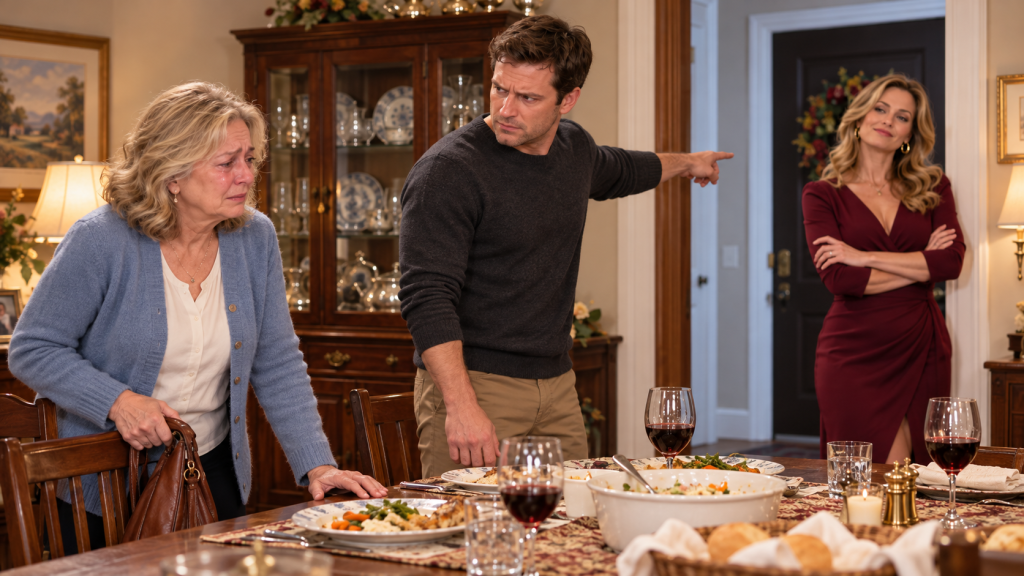
The man who’d pointed toward his front door and told me never to come back.
Now someone associated with his household appeared to be trying to borrow money in my name.
“Has the loan been approved?” I asked.
“Not funded,” Preston replied. “The application is on hold. There were inconsistencies in the information submitted, and our verification process raised questions.”
I pressed my free hand against my forehead.
“Thank God.”
“But Camila, we need to act promptly.”
He explained that I should speak with the bank’s fraud team, formally dispute the application, protect my accounts, and review my credit reports.
He also suggested contacting the major credit bureaus to freeze access to my credit files and reporting any attempted identity misuse through the appropriate channels.
I wrote everything down on the back of a pharmacy receipt.
My fingers were trembling so badly that the letters looked like a stranger’s handwriting.
“And the truck?” I asked.
Preston’s voice softened.
“The existing truck loan is a separate obligation. Because you co-signed it, the lender can hold you responsible under the agreement if Theo doesn’t make the payments.”
I closed my eyes.
“How much is still owed?”
“Approximately twenty-nine thousand dollars, before any additional charges. The account has fallen behind.”
I bent forward.
I could almost hear Sebastian.
Never sign anything without reading it twice, Camila.
I’d read the loan agreement.
I’d known what co-signing meant.
But I had believed Theo would pay for his truck.
And because he’d made the payments for years, I’d stopped thinking about the possibility that he might not.
“Preston,” I whispered, “can I lose my house?”
He didn’t offer false reassurance.
“The attempted new loan hasn’t created a valid new obligation based on what you’ve told me, and we’ll investigate it. Your existing co-signed debt does require attention. Let’s review the documents carefully before assuming the worst.”
I looked toward Sebastian’s photograph.
The house he’d worked so hard to pay off.
The home where I still sometimes reached toward the empty side of the bed.
“No one is taking my house,” I whispered.
Preston heard me.
“Then let’s make sure we protect your position.”
That night, I didn’t sleep.
I sat at my kitchen table beneath the yellow light Sebastian had installed twenty years earlier.
Around me were bank statements, medical bills, and the folder I’d prepared for Newport.
I had already stopped the automatic payments I controlled.
The phone bills.
The dance expenses.
The regular transfers.
The supplementary card I’d allowed Khloe to use for groceries and the children’s needs.
I’d expected anger.
I’d expected Theo to accuse me of abandoning them.
What I hadn’t expected was that stepping away would expose a financial crisis deep enough for someone to use my name without asking.
At two in the morning, I opened the old drawer where Sebastian kept important papers.
Our marriage certificate.
The deed to the house.
Insurance policies.
Copies of tax returns.
And a photograph of Theo on his first day of kindergarten.
His little shirt was tucked into his trousers.
He had a gap where his front tooth should have been.
He was smiling at the camera as though the entire world was waiting to welcome him.
I held the photograph until tears began falling onto the table.
“What happened to us, Theo?” I whispered.
The next morning, I went to the bank.
Preston met me in a private office with a member of the fraud department.
Her name was Elaine Foster.
She greeted me kindly but professionally.
“Mrs. Moreno, we understand you’re disputing a recent application.”
I nodded.
“My name is on a loan I never requested.”
Elaine reviewed the information with me.
The application had been submitted electronically the previous afternoon.
It requested $86,000 in unsecured financing.
My pension income was listed.
So were estimated investment assets.
The application claimed the funds would support household restructuring and family expenses.
At the bottom was an electronic signature adopting the name Camila Moreno.
I stared at it.
Someone had not merely typed my name into a form.
They had entered enough financial information to make the application appear credible.
Information Theo had seen in Sebastian’s old papers when he helped me organize them after the funeral.
“Who gave the bank my pension details?” I asked.
Elaine looked at me.
“We haven’t established who completed each field. The application contains details that warrant investigation.”
Preston leaned forward.
“Camila, we need to verify whether anyone you’ve authorized to access your accounts could have submitted information on your behalf.”
I shook my head.
“No one has authority to borrow in my name.”
Elaine nodded.
“Then we’ll record your dispute and preserve the application details while our investigation continues.”
She didn’t tell me I had been robbed.
She didn’t promise the person responsible would be arrested.
She explained what the bank knew, what it didn’t know, and what would happen next.
For the first time since Theo’s phone call, I felt as though someone was treating me like a person with rights instead of a convenient source of money.
Then Preston opened another document.
“There’s something else I think you should see.”
I looked up.
“This is the contact number entered for the application.”
He turned the page toward me.
The number belonged to Khloe.
My daughter-in-law.
The same woman who’d accused me of being selfish because I’d stopped paying her family’s bills.
I stared at the digits.
I’d called that number hundreds of times.
To ask what groceries she needed.
To check whether Cheyenne had dance class.
To tell her Hugo had left his lunchbox in my car.
And now it was listed as the primary number for a loan application supposedly submitted by me.
I felt something cold settle in my chest.
“Does this mean Khloe did it?”
Elaine shook her head gently.
“It means that number was provided. We shouldn’t draw a conclusion about who submitted the application until we review the evidence.”
I nodded.
I appreciated her caution.
But my heart was already breaking.
I left the bank with copies of the relevant documents, a list of protective steps, and a strange determination I hadn’t felt in years.
I had spent too long making things easier for other people.
Now I had to protect myself.
I called the credit bureaus and arranged freezes.
I changed passwords.
I reviewed authorized users on my accounts.
I made a formal identity-theft report concerning the disputed application.
Then I called an attorney named Margaret Ellis, whom Preston had recommended for financial and estate matters.
I explained everything.
The truck loan.
The attempted new application.
The money I’d spent supporting Theo’s household.
And the ultimatum that had finally driven me away.
When I finished, Margaret was quiet for a moment.
Then she said:
“Camila, you need to separate two things in your mind.”
“What things?”
“Your son’s financial problems and your responsibility for solving them.”
I closed my eyes.
“I’ve always helped him.”
“That doesn’t mean you’re obligated to let someone use your identity.”
Tears filled my eyes.
She continued.
“We’ll address the co-signed loan according to the contract. We’ll preserve the evidence concerning the disputed application. And we’ll make a plan that protects your ability to care for yourself.”
I swallowed.
Then whispered:
“Can I still go to Oregon?”
Margaret’s voice softened.
“Yes, Camila. You can still go to Oregon.”
For some reason, that was the moment I began to cry.
That evening, Theo called.
I stared at his name.
Then answered.
“Hello?”
“Mom.”
His voice sounded tired.
“We need to talk.”
I sat down.
“Yes, we do.”
He exhaled.
“Khloe says you canceled everything.”
“I stopped paying expenses that belong to your household.”
“Do you know how embarrassing that was?”
I looked toward the folder on the table.
“Embarrassing?”
“Cheyenne’s dance studio called. Our phone payment failed. Khloe had to explain to people that you just stopped helping.”
I closed my eyes.
“Theo, I had to explain to my doctor why I’d delayed treatment because I was spending my savings on your family.”
He fell silent.
I continued.
“And now someone has applied for an eighty-six-thousand-dollar loan in my name.”
Nothing.
Not a breath.
Not a word.
I waited.
“Theo?”
Finally, he whispered:
“Who told you?”
My heart seemed to stop.
I gripped the phone.
“So you knew.”
Theo didn’t answer immediately.
I heard a car passing somewhere behind him.
Then he said, “Mom, don’t jump to conclusions.”
I looked at the application on my kitchen table.
“My name is on a loan request for eighty-six thousand dollars. Khloe’s phone number is on the form. And when I asked you about it, you wanted to know who told me.”
He exhaled sharply.
“We were looking into options.”
“We?”
“Khloe and me.”
My hand tightened.
“Did you ask my permission?”
“Not yet.”
I closed my eyes.
“Then why was an application submitted?”
Theo sounded irritated now.
“Because we needed to know whether the bank would consider it before we bothered you.”
I stared at the wall.
“Bothered me?”
“Mom, you have to understand how bad things have gotten.”
“Then tell me.”
Silence.
For the first time in months, I wasn’t offering a solution before he described the problem.
Finally, Theo began talking.
His employer had reduced overtime the previous spring.
Then the company lost a major contract.
His hours fell again.
Khloe had been trying to increase her income, but the childcare schedules made additional shifts difficult.
They’d used credit cards to cover expenses.
Then the truck needed repairs.
Then the roof replacement had exposed damage that wasn’t included in the original estimate.
Their savings disappeared.
I listened.
All the while, I’d been driving the children to school, paying for groceries, and covering bills.
I’d thought my contributions were giving them breathing room.
Instead, they’d become part of a budget that still wasn’t working.
“How much do you owe?” I asked.
Theo hesitated.
“On what?”
“Everything.”
He sighed.
“Mom—”
“The truck. Credit cards. Whatever else you’ve borrowed. How much?”
There was a long pause.
“About seventy thousand, not counting the mortgage.”
I pressed a hand against my chest.
“And that’s why you wanted eighty-six thousand dollars?”
“We were going to consolidate things.”
“In my name.”
He sounded angry again.
“We were going to talk to you before anything happened.”
“The application already happened, Theo.”
“It wasn’t funded!”
I closed my eyes.
I couldn’t believe he thought that made it harmless.
“Would you have told me if Preston hadn’t called?”
Silence.
“Theo?”
“I don’t know,” he whispered.
Those three words hurt more than any excuse he could have invented.
I thought of Hugo crying at the dinner table.
Cheyenne reaching toward her brother.
Khloe telling me I wasn’t welcome.
Theo pointing toward the door.
All that anger had happened while they were quietly considering how to use my financial standing to keep their household afloat.
“Theo,” I said, “you told me to leave your house and never come back.”
He sighed.
“I said that because you disrespected Khloe.”
“I made remarks I should have kept to myself. I can acknowledge that.”
He was quiet.
“But you humiliated me in front of the children.”
“Mom—”
“And now you expect me to borrow money so you can pay debts I didn’t agree to take on.”
“We’re family!”
My throat tightened.
“Yes,” I whispered.
“We are.”
Then I asked the question I’d been afraid to ask.
“Does being family mean I don’t get to say no?”
Theo didn’t answer.
I waited.
Finally, he said:
“Khloe thought you’d understand once we explained.”
I closed my eyes.
“Khloe isn’t the only person responsible here.”
He sighed.
“I’m not blaming her.”
“Then tell me plainly. Did you know my name was being used?”
“Yes.”
“Did you know the application said I was the borrower?”
A pause.
“Yes.”
“Did you authorize someone to put my signature on it?”
His voice became very small.
“I entered your name during the online process.”
I sat perfectly still.
“So you did it.”
“Mom, I never meant to hurt you.”
I felt tears rising.
“Theo, you don’t get to decide whether something hurts me simply because you didn’t want the consequences.”
He began crying.
I had heard my son cry at every age.
As a child with a broken wrist.
As a teenager after his first heartbreak.
As a grown man standing beside Sebastian’s hospital bed.
Usually, the sound made me rush toward him.
This time, I stayed in my chair.
“I can’t fix this for you,” I said.
He sobbed.
“Mom, we’re going to lose everything.”
“I hope that doesn’t happen.”
“You could help us.”
“I have helped you. For years.”
“Not like this.”
I looked toward Sebastian’s photograph.
“That’s because this isn’t help you’re asking for. It’s permission after the fact.”
Theo became quiet.
Then he said bitterly:
“Dad would never have turned his back on us.”
I felt something inside me break.
Sebastian.
My husband who’d worked weekends so we could save.
Who’d insisted on paying off our mortgage.
Who’d reminded me to keep enough money for our own old age because, as he used to say, love didn’t pay the pharmacy.
I took a breath.
“Your father loved you very much.”
Theo sniffed.
“I know.”
“But he would never have wanted me to risk my health and my home to hide something you wouldn’t tell me.”
Theo said nothing.
I continued.
“And he would have been devastated to learn you used my name without asking.”
Then I ended the call.
I sat in silence for almost an hour.
For the first time since Sebastian died, I wished he’d left me instructions about something other than finances.
How do you love a son who has betrayed you?
How do you stop rescuing someone whose tears still sound like the little boy you carried through childhood?
How do you protect yourself without turning your heart into stone?
I didn’t know.
But I knew one thing.
I was leaving for Oregon.
Two days later, Nora arrived.
She drove all the way from Newport because she refused to let me make the trip alone.
When I opened the door, she took one look at me and said:
“Camila, you’ve lost weight.”
I tried to laugh.
“Hello to you too.”
She hugged me so tightly that I began crying.
Nora held me without asking questions.
Then she stepped back.
“Sit down. I’ll make tea.”
I smiled through tears.
“You’ve always been bossy.”
“Someone has to be.”
That evening, I told her everything.
The dinner ultimatum.
The overdue truck.
The attempted loan.
The signatures.
Theo’s admission.
Nora listened without interrupting.
When I finished, she stared at her untouched tea.
Then she said:
“Camila, you have spent six years trying to make sure nobody could accuse you of abandoning your family.”
I looked at her.
She continued.
“Ever since Sebastian died, you’ve been terrified of being alone.”
Tears stung my eyes.
“I know.”
“And you’ve mistaken exhaustion for usefulness.”
I lowered my head.
She reached for my hand.
“Little sister, I love Theo. But I’m not going to watch you destroy yourself to make his life easier.”
I began crying.
“I miss the boy he used to be.”
Nora’s eyes filled.
“I know.”
Then she said softly:
“But he’s a man now. Let him become one.”
The following morning, we packed my car.
I arranged for a trusted neighbor to check on the house, transferred the necessary correspondence, and confirmed my medical appointments in Oregon.
Margaret Ellis remained my attorney for the financial matters, and Preston had the documents needed to communicate about the disputed application.
The bank confirmed that the new loan request would not be funded while the identity dispute was investigated.
I had done what I could.
Now I needed to take care of my body.
Nora carried the last suitcase toward the car.
Then the doorbell rang.
I opened it.
Khloe stood on the porch.
She wasn’t smiling.
Behind her stood Hugo and Cheyenne.
Both children were crying.
And in Khloe’s hand was a folder marked:
TRUCK LOAN — FINAL NOTICE.
She looked at me and whispered:
“Camila, if you drive away today, Theo is going to lose his truck.”
I looked past Khloe at my grandchildren.
Hugo was holding a small backpack.
Cheyenne stood with her arms wrapped around herself, her eyes red from crying.
They shouldn’t have been there.
Whatever financial trouble Theo and Khloe were facing, those children shouldn’t have been brought to my doorstep as witnesses to another confrontation.
I stepped outside and pulled the door nearly closed behind me.
“Khloe,” I said quietly, “we can talk without the children listening.”
She glanced toward them.
“They deserve to know why their grandmother is leaving.”
I felt my throat tighten.
“They deserve to know they’re loved. They don’t deserve to feel responsible for your bills.”
Her expression hardened.
“That’s easy for you to say when you’ve got a house and a pension.”
Nora appeared beside me.
“Khloe,” she said calmly, “let’s not do this.”
My daughter-in-law looked at her.
“Of course. The sister from Oregon has an opinion.”
Nora didn’t flinch.
“Camila’s been invited to stay with me. That’s all.”
Khloe held out the folder.
“Maybe she’d like to look at this before she disappears.”
I took it.
Inside was a letter from the truck lender stating that the account was seriously delinquent and that the vehicle could be subject to repossession if the default wasn’t resolved.
My name was printed beneath Theo’s.
Co-borrower.
There it was again.
The decision I’d made years earlier to help my son.
Only this time, my signature was genuine.
I closed the folder.
“I know about the loan.”
Khloe stared.
“Then you know what happens if it isn’t paid.”
“Yes.”
“So you’re just going to let them take his truck?”
I took a slow breath.
“I’m going to work with the lender and my attorney to address my legal obligations.”
She frowned.
“What does that mean?”
“It means I won’t ignore a debt I signed for. It also means I’m not handing you money without understanding what happened.”
Khloe shook her head.
“Theo needs the truck to get to work.”
“Then Theo needs to help make a plan.”
Her voice rose.
“Do you have any idea what kind of pressure he’s under?”
I looked at her.
“Do you know I’ve been receiving treatment for osteoporosis?”
Khloe’s mouth opened.
Then closed.
I continued.
“My doctor has told me to limit heavy lifting and long periods on my feet. I’ve postponed therapy because I was helping with your children.”
Cheyenne’s head lifted.
“Grandma, you’re sick?”
My heart broke.
I turned toward her immediately.
“Sweetheart, I’m getting medical care. I don’t want you to worry.”
Hugo moved closer.
“Does your knee hurt?”
I crouched carefully, using the porch railing for support.
“Sometimes.”
He looked devastated.
“Is that why you sat down on the stairs after picking us up?”
I stared at him.
He remembered.
The afternoon I’d carried grocery bags into Theo’s house and needed to sit halfway up the stairs because my knee was throbbing.
I’d told him I was tying my shoe.
He’d known something was wrong.
Khloe shifted uncomfortably.
“Camila, you never said it was serious.”
I stood slowly.
“I shouldn’t have hidden how I was feeling. That was my mistake.”
She looked as if she expected me to continue apologizing.
Instead, I said:
“But I shouldn’t have to become visibly ill before I’m allowed to rest.”
Nora placed a hand against my back.
Khloe looked away.
For a moment, no one spoke.
Then Cheyenne stepped forward.
“Grandma, I don’t have to do dance anymore.”
I stared at her.
“What?”
She swallowed.
“If it costs too much, I can stop.”
Tears filled my eyes.
“Oh, sweetheart.”
She continued.
“I thought you liked taking me.”
“I did.”
“Then why did Mom say you’re tired of paying for us?”
I looked at Khloe.
She went pale.
Cheyenne began crying.
“I don’t want you to go because of my costumes.”
I reached for her hands.
“Cheyenne, listen carefully. You didn’t make me leave.”
She looked at me through tears.
“Promise?”
“I promise.”
I squeezed her fingers.
“Your dance classes are something your parents and I need to sort out. You are not responsible for the adults’ money problems.”
Hugo moved closer.
“Then why did Dad tell you not to come back?”
His voice was so small that I nearly couldn’t answer.
I took a breath.
“Your dad and I disagreed about how we were being treated. We both have things to work through.”
He looked up.
“Will you still be our grandma?”
That question broke me.
I hugged him as carefully as my back allowed.
“Always.”
Khloe was crying now.
She wiped at her face angrily.
“I didn’t come here to upset the kids.”
I looked at her.
“Then why did you bring them?”
She couldn’t answer.
I waited.
Finally, she whispered:
“I thought if you saw them, you wouldn’t leave.”
The admission hung between us.
Nora lowered her eyes.
I felt tears rise again, but this time I didn’t let them change my decision.
“Khloe, I love those children more than I can explain. But I can’t prove that love by ignoring my health or signing away my savings.”
She nodded miserably.
I looked at the folder.
“Theo needs to contact the lender. I’m willing to discuss a realistic plan through the appropriate channels.”
Khloe swallowed.
“And the new loan?”
I met her eyes.
“Neither of you had my permission.”
She looked down.
“I’m sorry.”
I waited.
She didn’t add an excuse.
For the first time, that apology sounded like the beginning of something rather than an attempt to end an uncomfortable conversation.
Before leaving, Hugo slipped a folded paper into my hand.
“I made this last night.”
I opened it.
It was a drawing of two little houses.
One had a blue roof.
The other had a red roof.
Between them he’d drawn a long road with a car traveling across it.
Above the road were the words:
GRANDMA’S HOUSE IS FAR, BUT GRANDMA IS STILL OURS.
I covered my mouth.
“It’s beautiful, Hugo.”
He hugged me.
“Can we call you?”
“Of course. We’ll work out good times with your parents.”
Cheyenne hugged me next.
She whispered:
“Please get better.”
I kissed her forehead.
“I’ll do my best, sweetheart.”
After they drove away, I stood on the porch staring at the drawing.
Nora came beside me.
“You all right?”
I shook my head.
“No.”
She slipped her arm through mine.
“Are you still coming?”
I looked toward the packed car.
Then at the house behind me.
The house where Sebastian had held me when Theo moved into his first apartment.
Where we’d celebrated our thirtieth anniversary.
Where I’d spent six years trying to escape loneliness by making myself indispensable.
I took a breath.
“Yes.”
Then I whispered:
“Before I change my mind.”
Nora squeezed my arm.
“Then let’s go.”
We drove west beneath a pale morning sky.
As the miles passed, I watched familiar roads disappear behind us.
I cried when we crossed the state line.
I cried again when we stopped for lunch.
And that night, in a hotel room, I cried because I didn’t know whether Theo would ever forgive me for leaving.
Nora listened.
Then asked one question.
“Camila, what exactly are you asking him to forgive?”
I stared at her.
I couldn’t answer.
And for the rest of the drive, I kept returning to those words.
What did my son need to forgive?
That I’d stopped paying his bills?
That I’d refused an unauthorized loan?
That I’d chosen medical care over babysitting?
The more I thought about it, the more I understood how far I’d moved from believing I had a right to my own life.
Nora’s guesthouse stood at the edge of a quiet property overlooking the marsh outside Newport.
The first morning I woke there, I didn’t recognize the silence.
No phone ringing at six.
No school lunches to prepare.
No message from Khloe asking whether I could arrive early.
No calendar filled with errands that belonged to everyone except me.
I lay in bed and listened to gulls calling somewhere beyond the trees.
For a few moments, I felt peaceful.
Then guilt rushed in.
What time would Hugo leave for school?
Who was packing Cheyenne’s lunch?
Had Theo remembered the permission slip I’d seen on the counter?
I reached for my phone.
Then stopped.
The children had two parents.
Their parents had spent years depending on me, but that didn’t mean they were incapable of caring for them.
I put the phone down.
And stayed in bed for another ten minutes.
It felt almost rebellious.
Nora knocked at nine.
“Coffee?”
I smiled.
“Yes, please.”
She entered carrying a tray.
Coffee.
Toast.
Scrambled eggs.
A little bowl of sliced strawberries.
I stared.
“You didn’t have to bring me breakfast.”
She laughed.
“I know.”
“But I can make my own.”
“I know that too.”
She set down the tray.
“Camila, you’re allowed to let somebody do something nice for you.”
I looked at the food.
Then began crying.
Nora sat beside me.
“Oh, little sister.”
I covered my face.
“I don’t know how to be here without doing anything.”
She rubbed my back.
“Then maybe that’s something you’ll learn.”
The first weeks were harder than I’d expected.
My doctor in Oregon reviewed my treatment history and arranged an updated plan for managing my osteoporosis and joint pain.
Physical therapy began with movements so gentle that I felt ridiculous doing them.
I had spent decades lifting patients, pushing equipment, and rushing between hospital rooms.
Now I was practicing balance beside a sturdy chair.
Learning how to move without increasing pain.
Building strength in small, careful increments.
My therapist, Lydia, reminded me that osteoporosis required ongoing management and fracture prevention, not a promise that a few weeks of exercise would cure everything.
We reviewed my fall risks, medication plan, and safe daily activities.
Some days I felt stronger.
Other days my knees ached and I needed to rest.
It was frustrating.
But this time, when my body told me to stop, I listened.
One afternoon, Lydia asked what I wanted most from treatment.
I thought she meant a medical goal.
Less pain.
Better balance.
Improved strength.
But the answer that came out surprised me.
“I want to go somewhere without worrying about who needs me to leave early.”
She smiled.
“Where would you like to go?”
I looked toward the window.
“The ocean.”
“Then let’s work toward making that comfortable.”
Meanwhile, the financial matters continued.
Margaret Ellis called regularly.
The bank had preserved the new loan application and related electronic records.
The investigation established that the application had been submitted using identifying information belonging to me, without my authorization.
Theo had acknowledged his involvement.
Khloe had supplied contact details and supporting household information.
A scanned authorization page attached to the application contained an image of my handwritten signature.
The bank’s review found that the signature image matched one on an older document concerning the roof repairs I’d paid for.
The application hadn’t resulted in a funded loan, and the bank formally closed it as unauthorized.
I sat in Nora’s kitchen as Margaret explained the finding.
“They used the roof paperwork?”
“It appears a signature image from that document was reused,” she answered.
I looked down.
I’d paid nearly twenty-five thousand dollars to keep rain from leaking into my grandchildren’s bedrooms.
Now my signature from that generosity had been copied onto a document requesting another eighty-six thousand dollars.
For a moment, the betrayal felt almost too precise to bear.
“Does that mean Theo will go to prison?” I whispered.
Margaret didn’t guess.
“The bank has documented the matter, and you’ve made a report. Any criminal investigation or charging decision belongs to the appropriate authorities. We should preserve the evidence and respond to requests rather than predict the outcome.”
I nodded.
I didn’t want my son imprisoned.
I didn’t want him excused either.
Both feelings lived inside me.
And neither made the other disappear.
Theo eventually sent a written acknowledgment to the bank through counsel confirming that I had not authorized the application.
Khloe supplied a separate statement concerning the supporting documents.
The authorities reviewed the report and the available evidence.
I was told what I needed to know about protecting my identity, but the investigation did not become a dramatic trial with reporters outside my house.
What mattered immediately was that the loan had not been funded, the false application was documented, and my financial accounts were protected.
I kept every letter.
Every statement.
Every confirmation number.
Not because I’d stopped loving Theo.
Because I’d finally understood that loving someone was not a substitute for keeping records.
The truck was more difficult.
The lender didn’t release me from my co-signer obligations simply because Theo had treated me badly.
That debt was real.
I’d signed for it willingly.
And the missed payments had financial consequences.
Margaret helped me communicate with the lender while Theo explored his options.
He couldn’t refinance the loan on affordable terms.
His reduced income and other debts made the numbers difficult.
Selling the truck became the most realistic path.
Theo resisted.
He called one evening and said:
“Mom, if I sell it, how am I supposed to get to work?”
I looked toward the ocean visible beyond Nora’s window.
“How much is it costing you to keep?”
He was quiet.
“Too much.”
“Then you need another plan for transportation.”
He sighed.
“You make it sound easy.”
“No. I know it’s hard.”
“Dad would’ve helped me keep it.”
I closed my eyes.
“Perhaps he would have tried. But your father also used to say a vehicle isn’t worth losing your future over.”
Theo didn’t answer.
Eventually, he sold it through a legitimate transaction coordinated with the lender.
The sale proceeds didn’t cover the entire loan.
There was a remaining balance of just over six thousand dollars, including the amounts due under the final accounting.
To protect my own credit and satisfy the obligation I’d undertaken as co-signer, I paid the remaining amount after the sale, with Margaret reviewing the paperwork.
It hurt.
Six thousand dollars was not a small sum.
But it was far less than the continuing exposure I’d faced if the loan remained unpaid and the balance grew.
Margaret prepared a written reimbursement agreement with Theo.
He agreed to repay me in monthly installments when he could, beginning after a documented budget review.
I knew that a promise to repay wasn’t the same as money returned.
But at least the debt was no longer drifting silently toward me.
Two months later, Theo made the first payment.
One hundred fifty dollars.
I stared at the bank notification.
It was the first time in years that money had moved from my son to me instead of the other way around.
I didn’t celebrate.
I didn’t call to thank him for doing something he’d agreed to do.
But I sat quietly with the phone in my hand.
And I felt a tiny measure of hope.
That same week, Khloe sent me a letter.
Not a text.
Not a message demanding a payment.
An actual letter, written on lined paper.
Camila,
When I married Theo, I thought you were the kindest person I’d ever met.
You helped us before we knew how much we needed help.
Then I got used to it.
I stopped asking because you always said yes.
I started believing your time was ours whenever we needed it.
I paused.
The handwriting was uneven.
There were crossed-out words.
I kept reading.
I also felt judged when you gave advice about the children.
Sometimes you did make me feel like I wasn’t doing things properly.
But instead of telling you clearly and kindly, I became resentful.
Then I used that resentment to justify the way I spoke to you.
I swallowed.
There were things I needed to acknowledge in those sentences.
Khloe hadn’t invented every disagreement.
I’d sometimes offered advice that wasn’t requested.
I’d corrected small things in her own kitchen.
I’d made comments that I considered helpful but that might have felt like criticism from a mother-in-law who was always present.
That mattered.
But it didn’t justify humiliating me.
And it certainly didn’t justify using my signature.
The letter continued.
Bringing the children to your house that morning was wrong.
I knew seeing them might make you stay.
I made their feelings into a weapon because I was frightened about money.
I am ashamed of that.
Tears filled my eyes.
Then I reached the final paragraph.
I didn’t understand your health problems. But I also didn’t ask.
I’m sorry I treated your care as a service we were entitled to rather than a gift.
I don’t expect you to start paying our bills again.
I hope someday we can speak without hurting each other.
Khloe.
I folded the letter.
Then unfolded it.
Read it again.
It wasn’t proof that everything would change.
But it was the first time Khloe had acknowledged her choices without demanding something in return.
I placed it beside Hugo’s drawing.
And for the first time since leaving home, I allowed myself to imagine that my family might eventually become something healthier.
Not the family we’d been before.
Something different.
Something that made room for all of us.
Summer arrived in Newport with cool mornings and afternoons that smelled of saltwater.
By then, I’d learned to walk along the paved path near the marsh without needing to rest halfway through.
Some days, I used a walking stick.
Other days, I moved slowly and felt strong enough to leave it at home.
My joints still hurt occasionally.
My osteoporosis hadn’t disappeared.
But I was beginning to understand that recovery didn’t mean becoming the woman I was at forty.
It meant caring for the woman I was at sixty-eight.
And, surprisingly, I was beginning to like her.
Nora introduced me to her friends.
A retired librarian named June.
A former mechanic named Walter.
A woman called Beverly who painted landscapes and claimed she couldn’t cook anything more complicated than toast.
They met every Thursday for coffee.
At first, I felt guilty going.
Thursday had always been one of the days I picked up Hugo from school.
The first time I sat in that little café overlooking the water, I checked my phone six times.
Finally, June smiled at me.
“Waiting for somebody?”
I blushed.
“Habit.”
She tilted her head.
“Someone important?”
I thought about it.
Then answered:
“Yes. But I think he’s probably doing just fine without me.”
June smiled.
“Then perhaps you should enjoy your coffee.”
I began volunteering two mornings a week at a local community center.
Not in a physically demanding role.
My doctor and therapist had encouraged me to stay active without returning to the exhausting schedule that had worsened my pain.
So I helped organize health education events.
I made reminder calls for older residents who wanted them.
Occasionally, I shared general nursing experience with community volunteers, while leaving individual medical advice to the appropriate clinicians.
It felt familiar.
But different.
Nobody handed me a list of chores as though my day already belonged to them.
When I said I couldn’t come on Tuesday because I had physical therapy, people replied:
“Of course. See you Thursday.”
The first few times, I nearly cried.
I spoke with Hugo and Cheyenne regularly.
Theo and Khloe arranged the calls according to the children’s schedules, and I made sure the conversations were about the children rather than the adults’ disputes.
Hugo showed me science projects.
Cheyenne demonstrated dance steps in the living room.
Sometimes they argued about whose turn it was to hold the phone.
Those arguments made me smile.
They were ordinary sibling arguments.
Not frightened children trying to understand why Grandma had been sent away.
One evening, Cheyenne appeared on the screen wearing a blue practice dress.
“Grandma, look!”
She spun across the room.
I clapped.
“Beautiful!”
She grinned.
“I’m learning a new routine.”
My throat tightened.
“I can see that.”
She hesitated.
“Mom says we’re doing dance at the community center now.”
I nodded.
“That sounds lovely.”
She looked down.
“It’s not as fancy as the old place.”
I felt a familiar urge rise.
I could pay for the old studio again.
I could send the money tonight.
I could fix the disappointment before she had to feel it.
Then Cheyenne looked back at the screen.
“But I like my teacher.”
I smiled.
“That’s what matters.”
She nodded.
“And I made two friends.”
I laughed.
“Then it sounds like a wonderful place.”
When the call ended, I sat quietly.
I realized how often I’d tried to buy away every inconvenience the children experienced.
I’d meant well.
But not every disappointment needed a rescue.
Sometimes a smaller dance studio came with new friends.
Sometimes an ordinary afternoon at home was enough.
Sometimes parents needed to make hard decisions without Grandma appearing with her checkbook.
In September, Theo called.
He sounded nervous.
“Mom, can I ask you something?”
I sat down.
“Yes.”
“Would it be okay if I came to Oregon for a weekend?”
My heart jumped.
“Just you?”
“Yes.”
I looked toward Nora, who was watering plants on the patio.
“What for?”
Theo took a breath.
“Because I want to see how you’re doing.”
I was quiet.
Then he added:
“And because there are things I need to say in person.”
I swallowed.
“Will you come expecting me to change my mind about the money?”
“No.”
“And you’re still following the repayment agreement?”
“Yes.”
I thought about it.
Then answered:
“You can visit. But stay at a hotel. We’ll meet somewhere comfortable.”
He was silent for a moment.
Then whispered:
“Okay, Mom.”
Theo arrived on a Friday afternoon.
I met him at a café near the harbor.
When he walked through the door, I almost didn’t recognize him.
He looked thinner.
His hair was shorter.
He wore jeans and an old jacket instead of the expensive clothes he’d always preferred.
But it was his eyes that caught me.
They looked tired.
He stopped beside my table.
“Hi, Mom.”
I stood.
“Hello, Theo.”
He hesitated.
Then asked:
“Can I hug you?”
I nodded.
He wrapped his arms around me carefully.
I’d forgotten how tall he’d become.
How familiar his embrace still felt.
For a moment, I held my little boy again.
Then we sat down.
Theo looked through the window at the harbor.
“It’s beautiful here.”
I smiled.
“Yes.”
“Do you like it?”
“I do.”
He nodded.
Then looked at me.
“You look better.”
I laughed softly.
“I feel better.”
His eyes filled.
“I’m glad.”
For several minutes, we talked about ordinary things.
The weather.
Nora.
The children.
The strange little shop beside the café that sold handmade soaps shaped like sea creatures.
Then Theo took a deep breath.
“Mom, I’ve been seeing a counselor.”
I looked up.
“Have you?”
He nodded.
“Khloe and I have also been working with a financial counselor.”
I waited.
He continued.
“We had to change a lot.”
“Such as?”
“We cut expenses. Sold the truck. Stopped using credit cards for things we couldn’t pay off. Khloe took more regular hours at work, and I changed shifts so we can handle school pickups.”
I listened.
He gave a small, embarrassed smile.
“Hugo says I’m terrible at making sandwiches.”
I laughed.
“He’s particular about the mustard.”
Theo smiled.
“I know that now.”
Then his expression changed.
“I didn’t know how much you were doing, Mom.”
My throat tightened.
“You saw me doing it every day.”
He nodded.
“I saw you. I just didn’t think about what it cost.”
Tears rose in his eyes.
He continued.
“When you stopped coming, the first few weeks were chaos. We were late. The laundry piled up. Cheyenne missed a class because I forgot the schedule.”
I looked down.
“I didn’t want the children to suffer.”
“I know.”
He swallowed.
“But then we started figuring it out.”
He looked at me.
“And I realized we’d been treating your help as though it was a permanent part of our household. Not something you were choosing to give.”
I felt tears sting my eyes.
Theo reached into his jacket and took out a folded paper.
It was a household budget.
Not a loan application.
Not a request for money.
A list of income, bills, and expenses.
He placed it on the table.
“I wanted you to see that we’re doing it ourselves.”
I glanced at the numbers.
They weren’t impressive.
There was no sudden fortune.
The debt was still significant.
But the plan accounted for their actual income.
They’d cut back.
Made arrangements for childcare.
Adjusted activities.
And stopped pretending they could spend money they didn’t have.
I handed the paper back.
“You don’t have to prove every detail to me.”
Theo’s eyes filled.
“I know. But I wanted you to see I’m trying.”
Then he took a breath.
“Mom, I need to apologize.”
I sat still.
He continued.
“For the dinner. For the way I spoke to you in front of the kids. For telling you not to come back.”
His voice broke.
“And for trying to borrow money in your name.”
I looked at him.
He didn’t look away.
“I knew you hadn’t agreed. I told myself you would eventually. That wasn’t permission.”
Tears slid down his face.
“I was scared of losing our house and embarrassed that I couldn’t provide what I thought I should.”
He swallowed.
“Instead of admitting I needed help, I decided you owed it to me.”
My own eyes filled.
Then he whispered:
“Dad would have been ashamed of what I did.”
I reached across the table.
“Theo, your father loved you.”
He nodded.
“I know.”
“But loving you didn’t mean he would have approved of everything you did.”
Theo began crying.
“I know that now.”
I let him cry.
For once, I didn’t rush to rescue him from his own feelings.
When he could speak again, he said:
“I’m not asking you to come back and take care of us.”
I nodded.
“And I’m not asking you to pay anything.”
I took a breath.
“Then what are you asking?”
He looked at me with tears in his eyes.
“Can I learn how to be your son again without making you responsible for my life?”
I stared at my son across the table.
For sixty-eight years, I’d lived through enough difficult moments to know that people could say beautiful things without changing anything.
I’d heard apologies from patients’ families.
Promises from people who were frightened.
Words spoken sincerely in one moment and forgotten the next.
So I didn’t answer immediately.
Instead, I looked at Theo.
Really looked at him.
And for the first time in years, I didn’t see a boy I needed to save.
I saw a grown man who had made serious mistakes and was beginning to understand their consequences.
Finally, I reached for his hand.
“I’d like that,” I whispered.
He began crying again.
“But Theo, we can’t go back to the way things were.”
He nodded.
“I know.”
“I won’t pay your household bills.”
“I understand.”
“I won’t rearrange my medical appointments because you need a babysitter.”
“I won’t ask you to.”
“And I will not accept being threatened, humiliated, or treated as though my money is yours.”
He squeezed my hand.
“You shouldn’t.”
I looked down.
“There’s something I need to acknowledge too.”
Theo lifted his head.
“I sometimes gave Khloe advice when she hadn’t asked for it. I thought I was helping, but I can see how that might have made her feel criticized in her own home.”
He nodded slowly.
“She’s said that.”
“I’d like to apologize to her for that.”
His eyes filled.
Then I continued.
“But those mistakes didn’t give either of you the right to use my identity or speak to me the way you did.”
“No,” Theo whispered.
“They didn’t.”
We walked along the waterfront afterward.
Theo slowed his pace when he noticed my knee bothering me.
“Need to sit down, Mom?”
I smiled faintly.
“Yes, please.”
He led me toward a bench.
I sat and watched the water.
For a moment, neither of us spoke.
Then Theo asked:
“Why didn’t you tell me you were sick?”
I thought about it.
“Because I was afraid you’d think I was making excuses.”
His face crumpled.
“Mom, I would’ve helped you.”
I looked at him gently.
“Maybe you would have.”
He lowered his eyes.
Then I added:
“But I shouldn’t have been afraid to find out.”
We sat quietly.
Finally, Theo said:
“I want you to tell me when you need something from now on.”
I smiled sadly.
“I’ll try.”
He looked at me.
“And I’ll try to listen without making it about me.”
That evening, Theo came to Nora’s house for dinner.
He’d brought flowers.
Not expensive flowers.
A little bunch of yellow daisies from the grocery store.
Nora accepted them with raised eyebrows.
“What’s this?”
Theo smiled awkwardly.
“A peace offering.”
She studied him.
Then said:
“Those had better not be the only flowers your mother ever receives.”
Theo laughed.
For the first time that weekend, it sounded natural.
After dinner, he helped wash dishes.
Nora watched him carry plates into the kitchen.
Then leaned toward me.
“Well,” she whispered, “that’s a development.”
I laughed.
“Don’t get carried away.”
She squeezed my arm.
“I won’t.”
Neither of us believed one weekend could undo years of unhealthy habits.
But watching Theo wash dishes without being asked made me think something might finally be changing.
By Thanksgiving, we’d developed a new arrangement.
I stayed in Oregon.
Theo and Khloe continued managing their own household.
The repayment agreement remained in place, and Margaret Ellis continued handling the remaining legal and financial details.
I updated my estate documents and financial authorizations to reflect my current wishes.
Not to punish anyone.
To make sure my affairs were organized and that no one could mistake family closeness for financial authority.
The children visited during the school break.
Theo and Khloe paid for the trip themselves.
They rented a small place nearby rather than assuming they’d stay with Nora.
And before making plans, they asked what days worked for me.
Such ordinary courtesies.
Yet they meant more than any expensive gift.
On Thanksgiving morning, I stood in Nora’s kitchen making cranberry sauce.
The house smelled of roasted vegetables and fresh bread.
Outside, rain tapped gently against the windows.
Cheyenne was helping Nora arrange flowers.
Hugo sat at the table drawing a picture of the ocean.
Theo came into the kitchen carrying a tray.
“Mom, where do you want these?”
I pointed toward the counter.
“Over there, sweetheart.”
He set them down.
Then looked at me.
“Should I do anything else?”
I smiled.
“Would you mind checking whether Hugo needs another pencil?”
He nodded.
“Sure.”
And he did.
No sighing.
No treating me like the person responsible for every detail.
Just a grown man helping his family.
Later, Khloe approached me while I was sitting near the window.
“Camila?”
I looked up.
“Yes?”
She sat beside me.
“I wanted to say something before we eat.”
I nodded.
She took a breath.
“I’m sorry for what I said that night.”
My throat tightened.
She continued.
“I still think we needed better boundaries about advice and parenting decisions. But I could have talked to you respectfully.”
I nodded slowly.
“I agree.”
She looked surprised.
I smiled faintly.
“And I’m sorry I sometimes made you feel that you weren’t doing things properly.”
Her eyes filled.
“Thank you.”
Then I added:
“But Khloe, I need you to understand that my help can never become something you’re entitled to.”
She nodded.
“I know.”
“And the children cannot be put between us again.”
Her voice broke.
“I promise I’ll work to make sure that doesn’t happen.”
I looked at her for a moment.
Then reached for her hand.
“I’d like us to have a better relationship.”
She began crying.
“So would I.”
That afternoon, we sat around Nora’s dining table.
There were too many dishes.
Not enough serving spoons.
And a small disagreement over whether the potatoes needed more butter.
Hugo announced that he’d eaten four dinner rolls.
Cheyenne scolded him for talking with his mouth full.
Theo laughed.
Khloe passed me the vegetables.
And Nora looked around the table with an expression that told me she was trying not to cry.
For the first time in years, I felt part of a family gathering without feeling responsible for making everything happen.
After dinner, Hugo climbed onto the couch beside me.
“Grandma?”
“Yes, sweetheart?”
“Are you moving back?”
My heart tightened.
I looked toward the window.
The marsh was silver beneath the evening sky.
For months, I’d imagined that one day I’d feel ready to return to my old routine.
But sitting there, surrounded by people I loved, I realized I no longer wanted that life.
I wanted my grandchildren.
I wanted family dinners.
Birthdays.
School concerts.
Phone calls filled with stories about ordinary days.
But I also wanted medical appointments I didn’t cancel.
Morning walks.
Friends.
Time with Nora.
And quiet afternoons that belonged to me.
I turned toward Hugo.
“No, sweetheart. I’m happy here.”
His face fell.
I took his hand.
“But that doesn’t mean I won’t come visit, or that you can’t visit me.”
He looked up.
“Really?”
“Really.”
He thought about that.
Then smiled.
“Can we come next summer?”
“I’d love that.”
Cheyenne joined us.
“Grandma, will you come to my recital?”
I smiled.
“If my health and travel arrangements allow it, I’ll do my best.”
She nodded.
Then surprised me.
“If you can’t, I’ll send a video.”
My eyes filled.
“That would make me very happy.”
She leaned against me.
And I realized something beautiful.
The children were learning that loving someone didn’t require having them physically present for every event.
They could miss me and still know I cared.
They could be disappointed without believing I’d abandoned them.
And I could love them without sacrificing my well-being.
That evening, after Theo and Khloe took the children back to their rental, Nora and I sat outside beneath the covered porch.
The rain had stopped.
A thin mist drifted over the marsh.
She handed me a blanket.
“Cold?”
“A little.”
She sat beside me.
Then asked:
“Any regrets?”
I thought about it.
I regretted that I’d ignored my doctor’s advice.
I regretted not telling Theo sooner that I was exhausted.
I regretted offering unwanted parenting advice and then becoming defensive when Khloe objected.
And I regretted how long I’d allowed my generosity to replace honest conversations.
But I didn’t regret leaving that dinner table.
I didn’t regret protecting my savings.
I didn’t regret refusing the new loan.
And I certainly didn’t regret coming to Oregon.
I looked at Nora.
“Some,” I answered.
She nodded.
“About moving?”
I smiled.
“No.”
The following spring, I returned to my hometown for a short visit.
I stayed in my own house.
I met with my doctor to coordinate ongoing care and visited the cemetery where Sebastian was buried.
For a long time, I stood beside his headstone.
Then I placed a small bouquet of yellow flowers near it.
“Well, Sebastian,” I whispered, “I’ve made a few changes.”
A breeze moved through the trees.
I smiled through tears.
“You would have been worried about the money.”
Then I laughed softly.
“You probably would’ve made me spread every statement across the dining table.”
I thought of Theo.
The apologies.
The debt.
The new boundaries.
The fragile beginning of a healthier relationship.
“I still love our boy,” I whispered.
“I’m learning that I can love him without saving him from everything.”
I stayed there a little longer.
Then I said the words I’d wanted to say for six years.
“I think I’m finally learning how to live without you.”
My voice broke.
“I wish you were here to see it.”
When I returned to Newport, Nora was waiting with dinner.
I placed my suitcase beside the guesthouse door.
From the windows, I could see the marsh stretching toward the distant water.
My phone buzzed.
A message from Theo.
Mom, hope you got home safely. No need to call tonight if you’re tired. Love you.
I stared at the words.
For years, every call from my son had carried a request.
Pick up the children.
Pay a bill.
Change my plans.
Come over earlier.
Stay later.
This message asked for nothing.
I smiled.
Then replied:
Home safely. Love you too.
Sometimes I think about the evening Theo pointed toward his front door and told me to apologize or never come back.
At the time, I believed I was losing my family.
I thought leaving meant admitting I was no longer needed.
But I understand something now that I couldn’t understand then.
Being needed isn’t the same as being cherished.
Helping isn’t the same as being obligated.
And love that leaves no room for your own health, dignity, or future isn’t the kind of love a family should ask you to prove.
I still help my children when I choose to.
Sometimes I send a birthday gift.
Sometimes I arrange a visit.
Sometimes I give advice when they ask for it.
But I don’t fund their lifestyle.
I don’t neglect my treatment.
And I don’t confuse being a good mother with saying yes to everything.
Theo and Khloe are learning to manage their household.
The children are growing.
And I am learning that a grandmother can be deeply loved even when she isn’t the person doing every school pickup.
One evening, Hugo called to show me his latest drawing.
It was another picture of two houses.
A long road connected them.
At one end stood a little family.
At the other stood a woman with gray hair, smiling beside the ocean.
Across the top, he’d written:
GRANDMA STILL LOVES US FROM FAR AWAY.
I covered my mouth.
“It’s beautiful, Hugo.”
He grinned.
“Do you like the ocean?”
“I love it.”
He smiled.
“Then I’m glad you live there.”
And just like that, the guilt I’d carried for so long loosened a little more.
After we hung up, I walked outside.
The evening air smelled of salt and rain.
Nora was sitting on the porch with a book.
She looked up.
“Good call?”
I smiled.
“Very good.”
She moved her chair slightly.
“Come sit.”
For a moment, I stood there looking at the empty chair beside her.
A chair waiting for me.
Not because someone needed a favor.
Not because a bill had to be paid.
Not because a child needed collecting or a kitchen needed cleaning.
Simply because my sister wanted my company.
I sat down.
And as the sun began to set over the marsh, I understood the most important thing my new life had taught me.
I hadn’t abandoned my family when I finally chose myself.
I’d simply stopped abandoning myself for them.