
“Tom, listen to me,” Nora said, gripping her phone so tightly that her knuckles turned white. “Do not let that woman take Ellie.” I stood beside my sister, my heart pounding so violently I could feel it in my throat.
Through the speaker, I heard a woman shouting in the background. “Mr. Bennett, you’re obstructing an official placement review. If you refuse to cooperate, there will be consequences.” Tom’s voice trembled.
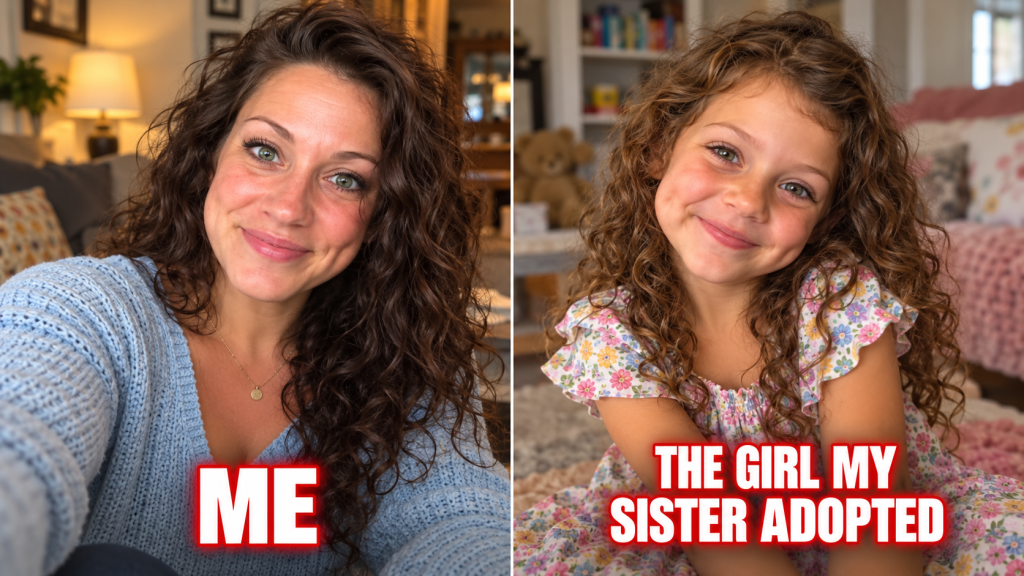
“She says she’s from the agency. She’s got some kind of authorization letter.” “Does she have a court order?” Nora demanded. “I don’t think so.” “Then call our attorney. I’m coming home.” The woman spoke again, louder this time. “Tell your wife she has until noon to surrender the child voluntarily.” My blood turned cold. Surrender the child. Not Ellie.
Not the little girl who loved strawberry pancakes and braided ribbons.
Just the child.
As though she were a misplaced package that needed to be returned.
I took the phone from Nora.
“Tom, this is Claire. Is Ellie frightened?”
His voice softened.
“She’s upstairs watching cartoons. I told her someone came to discuss paperwork.”
I swallowed.
“Good. Don’t let her hear this argument.”
Then I heard the woman’s voice again.
“Who is that? Who are you talking to?”
Tom hesitated.
“My wife’s sister.”
A sharp silence followed.
Then the woman asked:
“Claire Morgan?”
I stopped breathing.
She knew my name.
Before Tom could answer, I spoke.
“Yes. This is Claire. Who are you?”
The woman’s voice became strangely calm.
“Ms. Morgan, you need to stay out of this.”
I looked at Nora.
Her eyes widened.
“Why?” I demanded.
“Because you’re interfering in a situation you don’t understand.”
My hands began trembling.
“Then explain why you know who I am.”
The woman said nothing.
And then she made a mistake.
She whispered something to someone standing beside her.
I heard only five words.
“The birth mother knows now.”
Nora grabbed the phone.
“What did you just say?”
The connection went dead.
For several seconds, neither of us moved.
My sister stared at the dark screen.
I stared at her.
Then she whispered:
“Claire, did you hear that?”
I nodded.
The birth mother.
Not a possible relative.
Not an aunt whose DNA happened to resemble Ellie’s.
The birth mother.
The words echoed through my mind until I felt dizzy.
Five years ago, I’d given birth to a daughter.
I’d seen her for one precious moment.
She had been wrapped in a white blanket, her tiny face still pink from crying.
A nurse had said something about difficulty breathing.
Then she’d been taken away.
The following morning, a doctor told me she’d died.
I’d spent five years mourning her.
Five years waking up from dreams in which I heard a baby crying behind a closed door.
Five years wondering whether she would have had my eyes, my smile, or my stubbornness.
And now a stranger at my sister’s house had just referred to me as Ellie’s birth mother.
Nora was already grabbing her handbag.
“We need to go.”
I caught her arm.
“Wait.”
She turned, furious.
“Claire, Ellie is at home with Tom and somebody is trying to take her!”
“I know.”
My voice shook.
“But if this woman knows who I am, we need to think carefully.”
Nora stared at me.
I took a breath.
“Call your attorney. Tell him exactly what happened. And tell Tom to contact the police if she refuses to leave or tries to enter.”
My sister looked as though she wanted to argue.
Then she nodded.
Nora and Tom had worked with an attorney named Daniel Reeves throughout the adoption process.
He was a quiet man who specialized in family law and had helped them navigate the paperwork surrounding Ellie’s placement.
Although everyone, including me, had been calling Ellie their adopted daughter, the final court order had not yet been entered.
Nora and Tom had received Ellie through an approved pre-adoption placement.
The final hearing was scheduled for the following month.
That distinction had seemed like a technicality two weeks earlier.
Now it felt terrifying.
Daniel answered on the second ring.
Nora explained everything.
The DNA report.
The unknown woman.
The demand for Ellie’s return.
And the terrifying words we’d heard over the speaker.
There was a long silence.
Then Daniel said:
“Nora, do not hand Ellie over based only on an unexpected demand at your door. Ask for identification and written authority. Tom should avoid a confrontation, and if anyone attempts to force entry, he should contact law enforcement.”
Nora closed her eyes.
“Can they just take her?”
“An authorized agency or court may have legal powers under the placement arrangements, but we need to verify who this woman is and what authority she’s claiming. I’m contacting the relevant office now.”
I listened.
For the first time that morning, somebody was responding without panic.
We got into Nora’s car.
She drove.
I sat beside her, holding the envelope containing the DNA report.
The paper had become creased from how tightly I’d been gripping it.
At the first red light, Nora looked toward me.
“Claire.”
I turned.
“I need you to know something.”
My heart tightened.
“What?”
She swallowed.
“When I first saw the results, I was afraid to tell you.”
I stared at her.
“Why?”
Her eyes filled.
“Because I thought you might hate me.”
I could barely speak.
“Nora, why would I hate you?”
“Because I brought home a little girl who might be yours.”
Her voice broke.
“And I was so happy to have her.”
I looked down.
She continued.
“I’ve spent eight years dreaming of being a mother. Then Ellie came into our lives, and for the first time I felt like that dream had come true.”
Tears ran down her face.
“When I realized what the test might mean, I was ashamed because part of me was afraid of losing her.”
I reached for her hand.
“Nora.”
She shook her head.
“I know it’s selfish.”
“No.”
She glanced at me.
I swallowed.
“It’s human.”
We sat quietly until the light changed.
Then I said something neither of us was ready to hear.
“If Ellie is my daughter, I don’t know what happens next.”
Nora began crying.
“Neither do I.”
I squeezed her hand.
“But we are not going to make her pay for what somebody else did.”
My sister nodded.
“Never.”
When we turned onto Nora’s street, I saw a white sedan parked outside her house.
A woman in a dark blazer stood beside it.
She was speaking angrily into her phone.
A man I didn’t recognize waited in the driver’s seat.
Tom stood on the porch with his arms folded.
He looked relieved when he saw us.
Nora barely waited for the car to stop.
She hurried toward her husband.
“Where’s Ellie?”
“Inside. She’s okay.”
The woman turned sharply.
“Mrs. Bennett?”
Nora faced her.
“Yes.”
“I’ve been trying to explain that there has been a placement irregularity.”
My sister’s voice was steady.
“Then you can explain it to our attorney.”
The woman’s eyes flickered toward me.
I stepped forward.
“What’s your name?”
She hesitated.
“Carolyn Voss.”
I studied her face.
“And who do you work for?”
“Larkspur Family Services.”
That was the adoption agency.
The same organization that had told Nora and Tom that Ellie had been found as an infant with no traceable biological family.
“May I see your identification?” I asked.
Carolyn’s expression hardened.
“Ms. Morgan, this is a confidential child-welfare matter.”
I stared at her.
“You knew my name before anyone introduced me.”
She said nothing.
“And you called me Ellie’s birth mother.”
Nora turned toward her.
“Did you know who Claire was before we received the DNA results?”
The woman glanced at the white sedan.
Then reached into her handbag.
“Mrs. Bennett, I strongly advise you to stop asking questions that could complicate your adoption.”
The threat was unmistakable.
But something else was bothering me.
Carolyn hadn’t denied knowing.
Not once.
A second car pulled up.
Daniel Reeves climbed out carrying a briefcase.
He walked directly toward us.
“I’m Nora and Thomas Bennett’s attorney.”
Carolyn straightened.
“Then you understand the seriousness of this situation.”
“I understand that you’re demanding an immediate transfer of a child without explaining the legal basis to her current caregivers.”
He held out his hand.
“May I see your credentials and the document you’re relying on?”
For a moment, Carolyn looked as though she might refuse.
Then she handed him a folded paper.
Daniel read it.
His expression changed.
“This is a letter from Larkspur’s administrative office.”
“Yes.”
“It isn’t a court order.”
Carolyn’s face tightened.
“It gives us authority to review placements.”
“Administrative authority doesn’t eliminate the need to follow the applicable procedures or protect a child’s immediate welfare,” Daniel replied. “We’ll confirm what the agency is entitled to do and respond through the proper channels.”
Carolyn looked past him toward me.
“You’re making a serious mistake.”
I felt a chill.
“Maybe.”
Then I looked directly into her eyes.
“But if someone told me my daughter died when she didn’t, I intend to find out why.”
For the first time, Carolyn looked frightened.
She took back the letter after Daniel had documented it.
Then turned toward the car.
As she opened the passenger door, she glanced over her shoulder.
“Your sister should think very carefully about whether she wants to complete this adoption.”
Nora stepped forward.
“Is that supposed to frighten me?”
Carolyn didn’t answer.
She climbed into the car.
And drove away.
Inside the house, Ellie was sitting cross-legged on the living-room rug.
A stuffed rabbit rested in her lap.
When she saw Nora, she sprang to her feet.
“Mommy Nora!”
My sister knelt and caught her.
“Oh, sweetheart.”
Ellie wrapped her arms around Nora’s neck.
Then looked over her shoulder.
“Auntie Claire!”
I smiled.
Or tried to.
She hurried toward me.
“Can you braid my hair?”
The question nearly shattered me.
I looked at her little face.
The curly hair.
The dimple.
The big eyes that seemed so familiar.
Five years ago, a doctor had told me my daughter was dead.
Now a five-year-old girl who might be that daughter was asking me to braid her hair.
I knelt.
“Of course, sweetheart.”
She smiled.
Then placed her little hand against my cheek.
“Why are you crying?”
My throat closed.
I glanced toward Nora.
She was crying too.
I gently took Ellie’s hand.
“I’m just very happy to see you.”
Ellie considered that.
Then smiled.
“That’s okay. Mommy Nora cries when she’s happy too.”
I spent the next twenty minutes braiding her hair.
My fingers trembled so badly that I had to start twice.
Ellie didn’t seem to mind.
She told me about a butterfly she’d seen in the garden.
About the picture she drew for Tom.
About how she wanted a purple bicycle.
Ordinary things.
Beautiful things.
Things that reminded me she wasn’t evidence.
She wasn’t a mystery.
She was a little girl who wanted to be loved, protected, and allowed to enjoy her childhood.
When she went into the kitchen with Tom for a snack, Daniel asked us to sit down.
His expression was serious.
“I’ve contacted the placement authority. There is no verified emergency removal instruction from the court at this time.”
Nora closed her eyes.
“Thank God.”
He continued.
“But the information you’ve discovered creates a serious issue for the pending adoption. We need to pause the finalization process while Ellie’s identity and legal history are investigated.”
My sister went still.
“Pause?”
“Yes.”
“Does that mean she’ll be taken away?”
“Not necessarily. Any changes must be handled through the appropriate legal process, with Ellie’s safety and welfare at the center.”
He looked at me.
“And Claire, I strongly recommend that you obtain independent counsel.”
I swallowed.
“Why?”
“Because if the biological relationship is confirmed, your rights and interests may be very different from Nora and Tom’s.”
My sister took my hand.
For a moment, we stared at each other.
Two women.
Two kinds of motherhood.
One little girl.
And a truth neither of us had chosen.
Then Daniel said something that made my stomach tighten.
“There’s one more problem.”
Nora looked up.
“What?”
“According to the agency’s file, Ellie was not actually listed as an unidentified infant at birth.”
I stared.
“What?”
He took a breath.
“The placement summary references an earlier private guardianship arrangement.”
My heart began pounding.
Nora whispered:
“They told us nobody knew where she came from.”
Daniel nodded.
“I know.”
I leaned forward.
“Who was her guardian?”
He looked at the papers.
“The name is partly redacted. But there’s a surname.”
My mouth went dry.
“What surname?”
He hesitated.
Then said:
“Morgan.”
My maiden name.
The name I’d been using when I gave birth.
And the name I’d been using when a doctor told me my little girl had died.
For several seconds, nobody spoke.
Then I reached for the placement summary.
Daniel held it out, and I studied the line he’d pointed to.
Original infant identification: Female Morgan.
Below that were references to a private guardianship, a transfer of care, and an earlier adoption file.
Most of the names had been concealed.
But the surname wasn’t.
Morgan.
My name.
I looked up.
“Are you saying Ellie was registered with my name when she was born?”
Daniel shook his head.
“I’m saying the records raise that possibility. We need the original documents before we know exactly what they mean.”
Nora leaned forward.
“Then why did Larkspur tell us she’d been found abandoned?”
“That is one of the questions the authorities will need to ask.”
I stared at the page again.
For five years, I’d carried a hospital discharge letter in a box beneath my bed.
It said my baby had died from complications shortly after birth.
I knew every word of that letter.
I’d read it so many times that the creases had nearly worn through.
But I’d never seen an original birth certificate.
Never seen a complete neonatal chart.
Never received a proper explanation of what had happened during those final hours.
At the time, I’d been too devastated to ask.
And everyone around me had seemed eager to spare me more pain.
“Claire?” Nora whispered.
I looked at her.
“We need to go back to the hospital.”
The hospital was called St. Catherine’s Medical Center.
Five years earlier, I’d entered its maternity ward carrying a small overnight bag and a knitted yellow blanket.
I’d imagined leaving with my baby in my arms.
Instead, I’d gone home with empty hands.
A nurse had placed the blanket in a plastic bag with my belongings.
I’d kept it.
Even when friends suggested putting it away.
Even when I moved apartments.
Even when I stopped being able to look at photographs of newborn babies without crying.
Now I couldn’t stop wondering whether that blanket had belonged to a daughter who had never died at all.
The following morning, I met with an attorney named Rachel Bennett, who handled contested adoptions and cases involving disputed parentage.
She listened to my story without interrupting.
When I finished, she asked to see my hospital documents.
I took the old envelope from my handbag.
Inside were a discharge summary, a letter about the supposed death, and several pages I’d signed while recovering.
Rachel examined each one.
Then she asked:
“Do you remember signing a relinquishment of parental rights?”
I stared at her.
“No.”
“Do you remember consenting to an adoption?”
“Absolutely not.”
“Did anyone tell you your baby was being transferred to another hospital?”
I shook my head.
“They told me she died.”
Rachel studied the discharge summary.
“Claire, we’ll request the original medical records and verify the official birth and death registrations. We’re also going to ask the proper authorities to investigate the adoption records.”
I gripped the edge of my chair.
“Could they have made a mistake?”
She looked at me carefully.
“Several explanations remain possible. A mistake in identification. Incorrect records. Deliberate misconduct. We cannot choose one until we’ve examined the evidence.”
I nodded.
Then whispered:
“But the DNA…”
“The DNA is very important. We should arrange a properly documented direct maternity test, with Ellie’s legal representatives involved and the necessary consent or authorization.”
I stared at the floor.
“And if she’s mine?”
Rachel paused.
“Then we’ll have to determine what happened to your parental rights, whether any purported relinquishment was valid, and what arrangement best protects Ellie.”
The last words frightened me.
Not because I disagreed.
Because I knew what they meant.
Even if Ellie was my daughter, I couldn’t simply appear at Nora’s house and take her home.
Ellie had a life.
Memories.
Attachments.
People she trusted.
Whatever had happened to me, it had happened to her too.
That afternoon, Nora called.
“Claire, there’s something I need to confess.”
I closed my eyes.
“Please tell me we’re not discovering another secret.”
Her voice broke.
“It’s about the DNA test.”
I sat down.
“What about it?”
“I didn’t request it because I thought Ellie was yours.”
I frowned.
“I know. You said Tom wanted medical screening.”
“Yes, but I didn’t tell you the whole reason.”
I waited.
Nora swallowed.
“Ellie has a small mark on her left shoulder. A pale crescent-shaped birthmark.”
My heart stopped.
When my daughter was born, a nurse had briefly lifted her blanket so I could see her tiny shoulder.
I remembered a faint pink mark.
I’d thought it looked like the edge of a moon.
For years, that was one of the only details I could remember clearly.
“Nora,” I whispered, “what did you say?”
“The birthmark. I noticed it the first night.”
I couldn’t breathe.
She continued.
“Then I remembered something you told me after the delivery. About your baby having a little moon on her shoulder.”
Tears filled my eyes.
“You remembered that?”
“Of course I remembered.”
Her voice cracked.
“I thought it was just a coincidence. I couldn’t bear to ask you because I knew it would hurt. But when the agency couldn’t give us a medical history, Tom suggested screening, and I agreed.”
She hesitated.
“I also asked whether the laboratory could compare the results with the genetic information I’d retained from fertility testing.”
I covered my mouth.
“And they found the relationship.”
“Yes.”
Nora began crying.
“I didn’t tell you about the birthmark because I was afraid you’d think I was imagining things.”
I closed my eyes.
A birthmark.
A birth date.
A genetic relationship.
An agency file bearing my surname.
The evidence was growing.
And every new piece made hope feel more dangerous.
We arranged the direct test through the appropriate legal process.
I went to the appointment alone.
Nora and Tom brought Ellie separately, with the testing explained to her in simple, reassuring words.
They told her the adults were checking some family information.
They didn’t tell her she might have another mother.
Not yet.
We wanted professional guidance before giving her news that could change everything she believed about herself.
As I waited in the clinic, I watched a mother tying her toddler’s shoelaces.
The little boy kept wriggling away.
His mother laughed.
“Hold still, sweetheart.”
I looked down at my hands.
For five years, I’d imagined moments like that.
A child asking me to tie her shoes.
Packing a school lunch.
Finding tiny socks in the laundry.
Complaining about bedtime.
I had mourned not just my daughter but every ordinary day I thought we’d never share.
When the nurse called my name, I nearly couldn’t stand.
The sample collection itself took only moments.
Such a small thing.
A simple cheek swab.
And yet I knew my entire life might look different after the results arrived.
Three days later, Rachel called.
“Claire, the hospital has acknowledged receiving our record requests.”
My pulse quickened.
“Have they found anything?”
“Not yet. But I want you to know we’ve also identified discrepancies in the documents you were originally given.”
I sat down.
“What discrepancies?”
She hesitated.
“The death letter contains a physician’s name, but the hospital’s available staffing information doesn’t place that physician on the neonatal service that day.”
I stared.
“Maybe someone signed it later.”
“That’s possible. We need the underlying chart.”
She continued.
“And the document you were given doesn’t appear to be a certified copy of a death certificate.”
My stomach tightened.
“What does that mean?”
“It means we have to verify whether a death was officially registered and, if so, on what evidence.”
I closed my eyes.
For five years, I’d believed a piece of paper because a doctor handed it to me while I was lying in a hospital bed, too exhausted and heartbroken to question him.
Now every word on it seemed to be trembling.
The next morning, someone called my office.
I worked as a purchasing coordinator for a regional furniture supplier.
My supervisor told me a woman was asking to speak with me urgently.
She wouldn’t give her full name.
Only that she’d worked at St. Catherine’s five years earlier.
I felt cold.
I took the call.
“Hello?”
A woman’s voice answered.
“Is this Claire Morgan?”
“Yes.”
There was a long pause.
Then she whispered:
“My name is Esther Bell. I used to be a neonatal nurse.”
My heart began pounding.
“Were you there when my baby was born?”
Silence.
Then:
“Yes.”
I gripped the desk.
“Did she die?”
The woman began crying.
For several seconds, she couldn’t speak.
Then she said:
“Claire, I watched them carry your daughter out of the nursery alive.”
I stood so quickly my chair struck the wall.
“What?”
Esther’s voice shook.
“She was breathing. She’d been stabilized. I knew she was being transferred, but I was told you had agreed.”
I pressed a hand against my chest.
“I didn’t agree to anything.”
“I know that now.”
I stared at the telephone.
“Who told you?”
Esther hesitated.
“A hospital social worker. Miriam Sloan.”
I repeated the name.
It sounded familiar.
Then a memory surfaced.
A woman with short blond hair.
A navy cardigan.
A soft voice telling me I needed to rest.
She’d come into my hospital room shortly after the birth.
I’d been frightened.
Asking to see my baby.
She’d told me the doctors were doing everything they could.
“Miriam Sloan?” I whispered.
“Yes.”
Esther took a shaky breath.
“She handled emergency placement and family-support paperwork. She told us the baby’s mother had consented to a temporary transfer for specialized care.”
I closed my eyes.
“Where was she transferred?”
“To a private neonatal facility that worked with the hospital.”
“Which one?”
Esther was silent.
Then she whispered:
“Willowbrook Children’s Center.”
I wrote down the name.
My hands were trembling.
“Esther, why are you telling me this now?”
She began crying harder.
“Because I saw the news that an adoption agency was being investigated over questionable child-placement records.”
I held my breath.
“And?”
“I recognized Miriam’s name.”
Esther explained that she’d left St. Catherine’s nearly four years earlier.
At the time, she’d believed the transfer was legitimate.
But something had always bothered her.
The infant had been stable enough to move.
The paperwork was unusually rushed.
And Miriam had personally carried the transfer documents instead of following the usual hospital procedures.
Esther had asked questions.
She was told the matter involved confidential family circumstances.
Then, several days later, she heard that the baby’s mother had been informed of a death.
“I thought there must have been complications at the other facility,” Esther whispered.
I stared at the floor.
“Did you check?”
“No.”
Her voice broke.
“I was told the records were confidential, and I accepted that answer.”
I closed my eyes.
Esther continued.
“I’ve regretted it for five years.”
I wanted to scream at her.
Ask why she hadn’t found me.
Why she hadn’t demanded to see the transfer records.
Why she’d let a grieving mother leave the hospital without the truth.
But I could hear the shame in her voice.
And I knew that yelling wouldn’t change what had happened.
“Esther,” I said carefully, “will you speak with my attorney and the investigators?”
“Yes.”
“Will you give them a formal statement?”
“Yes.”
I swallowed.
“Then please do.”
Before hanging up, Esther said one more thing.
“Claire, I remember your baby’s little hand.”
Tears filled my eyes.
“She kept opening and closing her fingers as though she was trying to grab something.”
I covered my mouth.
“I remember thinking she was a fighter.”
Her voice broke.
“I’m so sorry nobody told you she survived.”
After the call, I sat at my desk for nearly an hour.
I couldn’t work.
Couldn’t answer emails.
Couldn’t concentrate on the invoices open on my screen.
I just stared at my hands.
Five years ago, my daughter had been alive.
Someone had carried her away.
Someone had told me she was dead.
And someone had allowed me to bury an empty future while she was growing up somewhere else.
That evening, Nora came over.
She didn’t ask me to explain anything.
She just sat beside me on the couch.
For a long time, we held hands.
Then I whispered:
“Nora, what if she’s really mine?”
My sister’s eyes filled.
“She might be.”
I swallowed.
“What if she hates me because I wasn’t there?”
Nora turned toward me.
“Claire, you didn’t abandon her.”
I began crying.
“But she won’t know that.”
“Then we’ll help her understand.”
I looked at my sister.
Her voice trembled.
“Together, if she’ll let us.”
I leaned against her shoulder.
For eight years, I’d watched Nora grieve the children she couldn’t conceive.
For five years, she’d watched me grieve the daughter I believed I’d lost.
Now our sorrows had collided around the same little girl.
And I knew we were both frightened.
Not of loving Ellie.
That part was easy.
We were frightened of what would happen when the truth asked us to decide how to love her without hurting her again.
The maternity test results arrived on a Tuesday.
I remember the weather.
A gray morning.
Steady rain against the windows.
The kind of day when everything seems quieter than it should.
Rachel called shortly after ten.
“Claire, are you somewhere you can sit down?”
My heart began pounding.
I was standing in my kitchen.
I pulled out a chair.
“Yes.”
There was a pause.
Then Rachel said:
“The laboratory results support a biological mother-and-daughter relationship between you and Ellie.”
I closed my eyes.
She continued, giving me the formal probability and explaining that the testing had been completed through a documented process.
But the numbers blurred.
All I could hear were five words.
You and Ellie are related.
My daughter.
Alive.
Five years old.
Living twenty minutes away.
I began crying.
Not the quiet tears I’d grown accustomed to after losing her.
These were uncontrollable sobs that seemed to come from somewhere deep inside my chest.
For five years, I’d imagined what I might say if I could hold my baby again.
Now I couldn’t find a single word.
Rachel waited.
Eventually, I whispered:
“Are you sure?”
She answered gently.
“Yes, Claire. The evidence is clear.”
I covered my face.
And cried harder.
Nora arrived half an hour later.
I hadn’t called her.
Rachel had contacted Daniel with the results, and he had told Nora and Tom.
When I opened the door, my sister was standing on the porch holding a small bouquet of daisies.
Her eyes were red.
Neither of us spoke.
Then she whispered:
“She’s yours.”
I nodded.
Nora began crying.
I reached for her.
We held each other in the doorway while the rain fell behind her.
For a long time, we didn’t move.
Then Nora whispered:
“Claire, I’m so happy for you.”
I pulled back.
Her expression was complicated.
Joy.
Grief.
Fear.
Love.
I knew that face.
She’d worn a version of it in the hospital five years earlier when I lost my daughter.
Now it was my turn to hold her while the future she’d imagined became uncertain.
“Nora,” I whispered, “you don’t have to pretend this isn’t hard.”
Her face crumpled.
“I love Ellie.”
“I know.”
“I love her so much.”
I took her hands.
“So do I.”
She began crying again.
We sat in my living room.
The flowers rested on the coffee table.
Nora kept twisting her wedding ring.
Finally, she looked at me.
“Are you going to ask for custody?”
I swallowed.
“I don’t know what the court will decide.”
“But what do you want?”
I stared at the framed photographs on the mantel.
My parents.
Nora and me as children.
One photograph from my pregnancy.
My hands resting over my stomach.
My face bright with hope.
Then I looked at my sister.
“I want to be her mother.”
Nora closed her eyes.
I continued.
“But I don’t want to make Ellie feel like everyone she trusts can disappear overnight.”
Tears slid down Nora’s cheeks.
I reached for her hand.
“I won’t turn this into a fight with you.”
She nodded through tears.
“And I won’t keep her from you.”
That afternoon, Tom came over.
He looked exhausted.
He sat beside Nora and took her hand.
“Daniel explained the possible next steps.”
I nodded.
“The agency’s records need to be reviewed. The court will decide what legal arrangements are appropriate while that happens.”
Tom swallowed.
“We told him we want Ellie to stay connected to both of you.”
I looked up.
He continued.
“Claire, she’s your daughter. We understand that now.”
His voice broke.
“But for two weeks, we’ve been telling her this is her forever home.”
I closed my eyes.
“I know.”
“We don’t want to make another promise we can’t keep.”
I looked toward him.
“Neither do I.”
Tom leaned forward.
“I’ve been thinking about something.”
“What?”
“Maybe forever doesn’t have to mean only one house.”
I stared at him.
He glanced toward Nora.
“Maybe it means she won’t lose the people who love her whenever something changes.”
My sister began crying.
And for the first time since the DNA results, I felt the faintest possibility that we might find a way through this without turning Ellie’s life into another battleground.
The hospital records arrived over the following weeks.
Some were copies.
Some were incomplete.
Others required further requests because St. Catherine’s had transferred older records to an archive.
Rachel worked with medical experts and investigators to establish an accurate timeline.
What they found was horrifying.
The neonatal records showed that my daughter had experienced breathing difficulties shortly after birth.
She was treated.
Her condition improved.
She was then transferred to Willowbrook Children’s Center for additional observation.
The transfer documentation listed her as Baby Girl Morgan.
Alive.
Stable.
And receiving care.
I stared at the word.
Stable.
For five years, I’d believed she died during that night.
But the record showed she’d been breathing when she left St. Catherine’s.
The doctor who’d spoken to me had apparently been relying on a report that did not match the full medical chart.
Investigators would later examine who created that report and what he knew.
Then Rachel showed me another document.
A purported parental consent form.
My name appeared at the bottom.
Claire Morgan.
The signature wasn’t mine.
I knew immediately.
Not because it was sloppy.
It was very close.
But the C curved differently.
And I never put a loop at the end of my surname.
Someone had tried to imitate my handwriting.
“Look at the time,” Rachel said quietly.
I studied the form.
It was dated less than an hour after my delivery.
According to my medical chart, I was still receiving treatment and was not in a condition to participate in the consent discussion the form described.
My stomach turned.
“Someone signed for me.”
Rachel nodded.
“That appears to be a serious possibility. A handwriting expert will assess it, and the original records must be examined.”
I stared at the paper.
A signature.
A few lines of typed language.
And somebody had used them to separate me from my child.
The following document made me feel physically ill.
It described a private placement arrangement between Willowbrook and Larkspur Family Services.
The named recipient was a couple called Pamela and Andrew Kline.
They had cared for Ellie during her earliest years.
The papers claimed I’d voluntarily relinquished my parental rights.
I looked at Rachel.
“I never did.”
She nodded.
“We’ll challenge that record.”
Then she turned another page.
“Claire, the Klines may not have known anything was wrong. According to the information available so far, they were told the placement had been properly authorized.”
I closed my eyes.
More people.
More adults whose lives had been shaped by someone else’s documents.
The Klines had wanted a baby for years.
They were approved for a placement through Larkspur and took Ellie home when she was only a few weeks old.
Pamela had kept photographs of her first smile, her first steps, and her second birthday.
When Ellie was three, Pamela became seriously ill.
She died the following year.
Andrew, struggling with his own health and the loss of his wife, arranged for Ellie to return to licensed care.
She spent time with a foster caregiver named Isabel Cruz before being matched with Nora and Tom.
At each transition, Ellie had been told the adults were trying to find her a permanent family.
Nobody had told her that the woman who gave birth to her was alive and searching for answers she’d never been allowed to ask.
Rachel looked at me.
“The previous caregivers’ records may help us reconstruct Ellie’s history.”
I swallowed.
“Can we speak with Andrew?”
“We can request contact through the appropriate people. He may have important information, and Ellie’s welfare needs to come first.”
I nodded.
I wasn’t angry with him.
Not yet.
I wanted to understand what he’d been told.
And I wanted Ellie to know that the people who’d loved her before Nora hadn’t simply vanished because their names no longer appeared on her newest paperwork.
Then came the hardest discovery.
The original hospital record did not support the statement that my daughter had died.
The supposed death notice I’d received appeared to have been prepared separately from the completed neonatal chart.
An official records search found no matching registered infant death for the child identified in my birth records.
The funeral arrangements I’d remembered were also inconsistent.
The funeral director’s surviving records described a closed memorial service arranged after the hospital notified the family of an infant death, but they did not establish that my daughter’s remains had ever been transferred into the funeral home’s custody.
I stared at the page.
For five years, I’d believed I’d buried my little girl.
I’d stood beside a tiny closed casket.
I’d watched my father place one white rose on top.
I’d pressed my palm against the wood and whispered goodbye.
Now I was being told that the funeral records couldn’t confirm what the casket had contained.
I didn’t ask for it to be opened.
I couldn’t.
Not then.
I sat in Rachel’s office and cried until my entire body ached.
“Claire,” Rachel said softly, “you were given information that wasn’t true.”
I looked at her.
“They made me bury her.”
My voice broke.
“They let me stand there and say goodbye while she was alive.”
Rachel handed me tissues.
I shook my head.
“I kept going to the cemetery.”
Tears streamed down my face.
“On her birthday. On Christmas. Every Mother’s Day.”
I could barely breathe.
“And she was somewhere else learning to walk.”
That night, Nora came to stay.
She found me sitting on the floor of my bedroom.
The yellow blanket rested in my lap.
I’d taken it from the box beneath my bed.
For years, I’d been afraid to wash it because I imagined some trace of my daughter’s scent might remain.
Nora sat beside me.
She didn’t try to take the blanket.
She just rested her shoulder against mine.
“I don’t know how to be happy about this,” I whispered.
My sister’s eyes filled.
“I know.”
“I got her back.”
“Yes.”
“But I lost five years.”
Nora took my hand.
“Yes.”
I stared at the yellow fabric.
“She was alive the whole time.”
My voice cracked.
“I was grieving a child who needed me.”
Nora began crying too.
For a long time, we sat together.
Then she whispered:
“Claire, we can’t give you those years.”
I nodded.
“But we can make sure you don’t lose the years ahead because you’re trapped inside what happened.”
I looked at her.
She took my hand.
“And whatever the court decides about where Ellie lives, I want you to know her. All of her. Not just the little girl she is now, but everything that made her who she is.”
I leaned against my sister.
And for the first time, I understood how much courage her love required.
The investigation widened.
Authorities obtained records from the hospital, Willowbrook, and Larkspur.
Independent reviewers examined the consent forms, transfer notes, financial transactions, and communications among the people involved.
What emerged was not a single careless mistake.
There were indications of a deliberate arrangement involving a hospital social worker, agency personnel, and intermediaries who received money connected to private placements.
The investigators also found other families whose records required review.
Not every case involved the same misconduct.
Some were legitimate adoptions.
Others contained inconsistencies that demanded explanation.
But the pattern was serious enough that Larkspur’s operations came under formal scrutiny.
Miriam Sloan was interviewed.
So was Evelyn Price, Larkspur’s director.
Carolyn Voss, the woman who’d appeared at Nora’s house, was questioned about her demand to remove Ellie.
The paperwork she’d presented did not support the immediate handover she’d demanded.
Investigators also examined whether she had been acting under instructions intended to prevent Ellie’s original records from being reviewed.
I never forgot her voice on Tom’s telephone.
The birth mother knows now.
Those words had terrified me.
Eventually, they helped investigators establish that at least some people at Larkspur knew the agency’s account of Ellie’s origins was false.
One afternoon, Rachel called with another update.
“Claire, we found why the agency’s original records listed Ellie as an unidentified infant.”
I sat down.
“Why?”
She took a breath.
“Her earlier placement file was separated from her later care records after the Klines’ arrangement ended. Information about her birth and first placement was omitted from the summary used to match her with new caregivers.”
I stared.
“Accidentally?”
“The evidence doesn’t support assuming it was accidental. The investigators are looking at who ordered those changes.”
I closed my eyes.
Then she continued:
“And when Nora requested genetic screening and asked questions about the records, the agency realized the original identity might be uncovered.”
My stomach tightened.
“That’s why Carolyn came to the house.”
“It appears that may have been part of the reason. Her conduct is under review.”
I stared at the window.
For years, people had spoken about my daughter’s death as an unavoidable tragedy.
Now I was beginning to see how many deliberate choices had been required to keep the truth hidden.
A false consent.
A transfer.
An incorrect death notice.
An incomplete adoption file.
An unexplained demand to retrieve Ellie.
Every step gave somebody another chance to stop.
And every time, someone had chosen silence.
The first time we told Ellie the truth, we didn’t do it alone.
A child psychologist named Dr. Hannah Price helped us prepare.
She specialized in children who had experienced changes in caregivers, adoption-related uncertainty, and family separation.
She met with Nora and Tom first.
Then with me.
And eventually with Ellie.
She reminded us that a five-year-old didn’t need every frightening detail about fraudulent documents, hospitals, or lawyers.
She needed to know three things.
She was loved.
None of this was her fault.
And the adults would not disappear simply because her family story had changed.
We sat together in Nora’s living room on a sunny Saturday morning.
Ellie wore a pink dress with little white flowers.
Her stuffed rabbit rested in her lap.
Nora sat beside her.
Tom sat on the other side.
I took the chair nearby.
My hands wouldn’t stop trembling.
Dr. Price began gently.
“Ellie, do you know what a birth mother is?”
Ellie thought for a moment.
“Someone who has a baby in her tummy?”
Dr. Price smiled.
“That’s right.”
Ellie looked pleased.
Then the psychologist asked:
“Do you know that sometimes children have more than one grown-up who loves and takes care of them?”
Ellie nodded.
“Like Mommy Nora and Daddy Tom and Auntie Claire?”
Nora covered her mouth.
I felt tears rise.
“Yes,” Dr. Price said softly. “Exactly like that.”
Then Nora took Ellie’s hand.
“Sweetheart, we found out something important about your family.”
Ellie looked up.
“Am I in trouble?”
My heart broke.
“No,” Nora whispered immediately. “Never.”
Tom leaned closer.
“You haven’t done anything wrong.”
Ellie relaxed slightly.
Then looked at me.
Nora took a shaky breath.
“Claire is not only your aunt.”
The little girl frowned.
“What else is she?”
My eyes filled.
Dr. Price gently explained that the woman who gave birth to Ellie had been told, incorrectly, that Ellie had died as a baby.
She explained that I had been looking for answers and had only recently discovered Ellie was alive.
We used simple words.
We answered only what Ellie asked.
And we made sure she understood I had never chosen to leave her.
Ellie stared at me.
“You had me in your tummy?”
I nodded through tears.
“Yes, sweetheart.”
She looked confused.
“Then why didn’t you come get me?”
The question felt like a knife.
I swallowed.
“Because I was told you were gone, honey.”
Her eyes widened.
“Gone where?”
I glanced at Dr. Price.
She nodded gently.
I took a breath.
“Some grown-ups gave me information that wasn’t true. I didn’t know where you were.”
Ellie studied my face.
Then whispered:
“Were you sad?”
Tears streamed down my cheeks.
“Very.”
She sat quietly for a moment.
Then climbed down from the couch.
I stopped breathing as she walked toward me.
She stood in front of my chair.
Reached up.
And touched my cheek.
“Are you happy now?”
I began crying so hard I could barely answer.
“Yes, Ellie.”
My voice broke.
“I’m very happy I found you.”
She considered that.
Then climbed into my lap.
I wrapped my arms around her carefully.
Afraid to hold too tightly.
Afraid to let go.
For five years, I’d dreamed of holding my daughter again.
I’d imagined a baby.
A tiny bundle wrapped in white.
But the child who climbed into my lap was five.
She smelled of strawberry shampoo.
Her little shoes bumped against my knees.
She had questions I couldn’t always answer.
And she had a whole life I was only beginning to know.
Ellie looked toward Nora.
“Can I still call you Mommy?”
My sister’s face crumpled.
“Oh, sweetheart.”
She knelt beside us.
“Of course you can.”
Ellie looked toward Tom.
“And Daddy Tom?”
He nodded through tears.
“Always.”
Then she looked back at me.
“What do I call you?”
I swallowed.
“Whatever feels comfortable to you, honey.”
She thought about it.
Then smiled.
“Can I still call you Auntie Claire for now?”
I laughed through tears.
“Of course.”
She hugged me.
And I finally understood that motherhood wasn’t something I could demand from a child because a DNA test had confirmed a fact.
It was a relationship we would build.
One safe day at a time.
The months that followed were not simple.
There were more meetings.
More paperwork.
More questions.
Ellie sometimes became frightened that she would have to leave Nora’s house without warning.
Other times, she asked whether I would disappear again.
We learned not to make promises about things we couldn’t control.
Instead, we made smaller promises.
I would pick her up when I said I would.
Nora would call if plans changed.
Tom would explain where everyone was going.
And no adult would tell Ellie she had to choose whom to love.
Her relationship with Nora and Tom remained an essential part of her world.
The court considered the false relinquishment records, my biological and legal relationship to Ellie, the history of her placements, and her current attachments.
The invalid documents were challenged through the proper process.
Eventually, the court recognized my parental rights and approved a carefully supported reunification plan, with professional guidance and continuing contact with Nora and Tom.
Nothing changed overnight.
At first, Ellie visited my house for a few hours.
Then for afternoons.
Then for an occasional evening.
Eventually, when she felt secure enough, she began spending nights there.
The first time she slept in my house, I barely slept at all.
I’d prepared a little bedroom with pale yellow curtains.
There were books on the shelves.
A soft quilt.
A lamp shaped like a moon.
Nora helped me choose everything.
She insisted the room shouldn’t look like a nursery.
“Claire, she’s five,” she reminded me gently. “She needs a room for the girl she is, not the baby you lost.”
I knew she was right.
That didn’t make it easy.
That night, Ellie woke at eleven.
I heard her calling softly.
“Claire?”
I hurried down the hallway.
She was sitting up in bed holding her rabbit.
“What’s wrong, sweetheart?”
She looked frightened.
“Can I call Mommy Nora?”
My heart tightened.
“Of course.”
We called her.
Nora answered immediately.
Ellie asked about the cat at home and whether her favorite purple cup was still in the cupboard.
Nora reassured her.
Then she asked whether Ellie wanted to come home.
Ellie looked toward me.
Thought for a moment.
And shook her head.
“I think I can stay.”
I smiled.
Nora’s voice softened.
“Okay, sweetheart. I’ll see you tomorrow.”
After we hung up, Ellie reached for my hand.
“Can you sit here till I fall asleep?”
I nodded.
“Of course.”
I sat beside her bed.
She held my fingers while her breathing grew slower.
And for the first time in five years, I watched my daughter fall asleep.
The investigation continued alongside our family’s healing.
Evidence eventually established that Miriam Sloan and people connected with Larkspur had participated in creating or using false records to support unauthorized infant placements.
Financial records revealed payments disguised as administrative and medical-placement fees.
The inquiries extended beyond Ellie’s case.
Other families were contacted where investigators had identified credible reasons to question their records.
Charges followed in some cases, and the people involved were afforded legal representation and the ordinary protections of the judicial process.
Some allegations resulted in admissions of wrongdoing and court-imposed penalties.
Other questions took longer to resolve.
I attended the hearing at which the falsity of the documents concerning my daughter was formally addressed.
Nora sat beside me.
Tom held her hand.
When the court recognized the evidence showing I had never consented to relinquish Ellie, I began crying.
Not because any ruling could return the years we’d lost.
Because the truth was finally part of the official record.
Afterward, a reporter asked me whether I considered the outcome justice.
I looked at the courthouse steps.
Then answered:
“It’s accountability. And it’s important.”
I swallowed.
“But my daughter is still going to have questions when she’s older. She still has memories and losses that can’t be erased by a court order.”
The reporter lowered her microphone.
I continued.
“Children aren’t paperwork. They are people. They deserve the truth, safety, and adults who put their needs first.”
We also met Andrew Kline.
He brought a small wooden box containing photographs and keepsakes from Ellie’s early childhood.
There were pictures of her first Christmas.
Her tiny handprints.
A little red shoe.
And a birthday card Pamela had written shortly before she died.
Andrew cried while explaining how much they’d loved Ellie.
He said they had believed the agency’s statements about her birth and placement.
They hadn’t known another mother had been told her daughter died.
I took his hand.
“Thank you for loving her when I couldn’t be there.”
He shook his head.
“I wish we’d known.”
“So do I.”
But I meant what I’d said.
Whatever had happened around Ellie’s placement, she’d had people who loved her.
I wasn’t going to take those memories away simply because they were painful for me.
A year after the truth came out, Ellie turned six.
We held her birthday party in Nora’s backyard.
There were balloons, a chocolate cake, and a ridiculous number of presents.
Tom grilled hamburgers.
Nora hung paper butterflies from the fence.
I braided Ellie’s hair into two pigtails.
She insisted on wearing a crown with pink plastic jewels.
At one point, Ellie ran toward me carrying a drawing.
“Look what I made!”
I knelt.
The picture showed three houses.
One was mine.
One belonged to Nora and Tom.
The third was much smaller.
I pointed to it.
“Whose house is that?”
She smiled.
“That’s where the bunny lives.”
I laughed.
“Of course.”
Then I noticed she’d drawn four people holding hands.
Nora.
Tom.
Me.
And Ellie.
“Who’s this?” I asked, pointing to the little girl in the middle.
“Me!”
“And these?”
“Mommy Nora, Daddy Tom, and you.”
I smiled.
She leaned closer.
“Claire?”
“Yes, sweetheart?”
She looked suddenly shy.
“Would it be okay if I called you Mama Claire?”
For a moment, I couldn’t speak.
Then I nodded through tears.
“Yes, honey.”
She smiled.
“Okay, Mama Claire.”
Two words.
Simple.
Ordinary.
Yet they filled a place inside me that had been empty for five years.
I hugged her.
Then looked over her shoulder at Nora.
My sister was crying.
I reached out a hand.
She came toward us.
And the three of us held one another beneath the birthday balloons.
Later that evening, after the guests left, Nora and I sat on the porch.
The yard was scattered with wrapping paper and little pieces of ribbon.
Tom was inside helping Ellie wash frosting off her hands.
My sister rested her head against the back of the chair.
“Do you remember when I first brought her to meet you?”
I smiled.
“How could I forget?”
Nora laughed softly.
“She asked you to braid her hair.”
I nodded.
“I remember thinking she looked like me.”
My sister’s eyes filled.
“I remember thinking the same thing.”
For a while, we sat quietly.
Then Nora whispered:
“Claire, there were moments when I thought I was going to lose her.”
I looked toward her.
“I know.”
“I was afraid that once everyone knew she was yours, there wouldn’t be any place left for Tom and me.”
My throat tightened.
I reached for her hand.
“Nora, there will always be a place for you.”
She smiled through tears.
“You don’t have to promise that just to make me feel better.”
“I’m not.”
I glanced toward the house.
“You loved my daughter before either of us knew she was mine. You made her feel safe. And when you discovered the truth, you came straight to me.”
My voice broke.
“You could have stayed silent.”
Nora began crying.
“But you didn’t.”
She squeezed my hand.
“I couldn’t do that to you.”
I smiled sadly.
“And you didn’t do it to Ellie.”
The next morning, Ellie came into my kitchen wearing mismatched socks.
She climbed onto a chair and announced that she wanted pancakes.
“With strawberries,” she added.
I smiled.
“Anything else, Your Majesty?”
She thought seriously.
“Chocolate chips.”
I laughed.
“Of course.”
As I mixed the batter, she sat at the table coloring.
Every few minutes, she asked me a question.
Why did birds sing?
Could rabbits dream?
Did clouds ever get tired?
I answered what I could.
Admitted when I didn’t know.
And promised we could look up the rest together.
Then she stopped coloring.
“Mama Claire?”
I turned.
“Yes?”
She looked at me with those enormous familiar eyes.
“Were you looking for me when I was little?”
My hands went still.
I set down the mixing bowl.
Then sat beside her.
“Sweetheart, I thought you had died. I didn’t know there was somewhere I could look.”
She studied my face.
“Did you miss me?”
Tears filled my eyes.
“Every day.”
She reached for my hand.
“Even when you didn’t know me?”
I smiled through tears.
“Even then.”
Ellie considered that.
Then she leaned forward and hugged me.
“I’m here now.”
I closed my eyes.
Wrapped my arms around her.
And whispered:
“Yes, sweetheart.”
My voice broke.
“You are.”
For five years, I believed my daughter had died the morning after she was born.
I buried my dreams of raising her.
I learned how to smile at baby showers.
How to celebrate other people’s children.
How to walk past playgrounds without stopping.
And how to survive a grief I thought would never end.
Then my sister adopted a little girl who looked strangely familiar.
A little girl with curly hair.
A dimple in her left cheek.
And a pale crescent moon on her shoulder.
The truth brought pain none of us had expected.
It revealed a terrible deception.
It forced us to confront lost years, frightened adults, and documents that should never have existed.
But it also gave us something extraordinary.
A chance to build a family around honesty instead of secrecy.
Nora and Tom didn’t have to stop loving Ellie so I could become her mother.
And I didn’t have to erase the people who’d cared for her to acknowledge the years stolen from us.
That afternoon, Ellie helped me put away her toys.
She held up the old yellow blanket I’d kept from the hospital.
I’d finally told her its story in a way she could understand.
She liked wrapping her stuffed rabbit in it.
“Was this mine when I was tiny?” she asked.
I nodded.
“Yes.”
She smiled.
“Can I keep it?”
My eyes filled.
“Of course, sweetheart.”
She hugged the blanket against her chest.
Then ran into the living room.
I watched her go.
For years, that little piece of yellow fabric had been all I thought I had left of my daughter.
Now she was carrying it through my house, laughing.
Alive.
Loved.
Home.
And I understood something that would stay with me forever.
I hadn’t been given a second daughter.
I’d been given a second chance to know the daughter I’d never truly lost.